
Legislator Urges Reform of Attorney General's Office Regulations
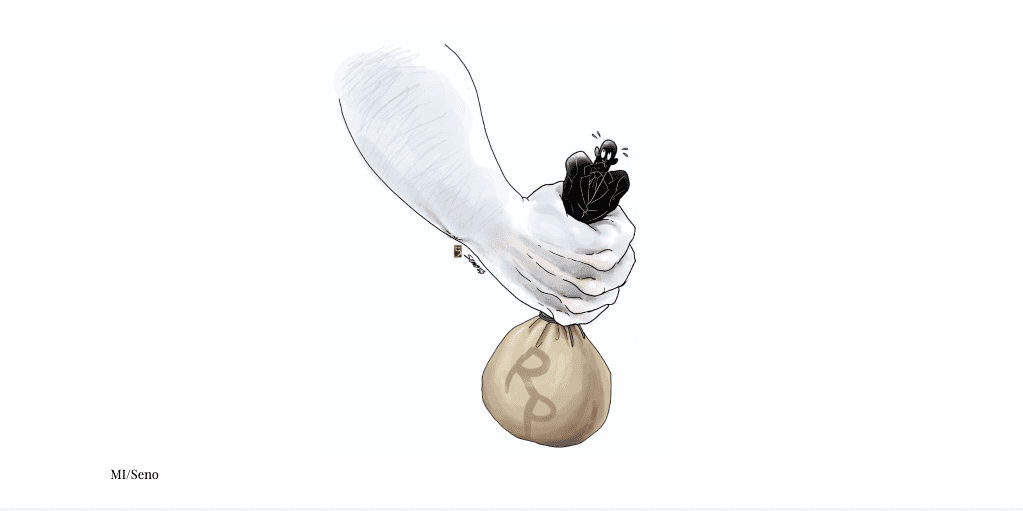
House Commission XIII member Rieke Diah Pitaloka has stated that the discussion of the Ministry of State Secretariat’s 2025 Central Government Financial Report (LKPP) must be used as momentum to thoroughly reform regulations on managing assets derived from criminal acts. She made the statement during a working meeting of House Commission XIII with the Minister of State Secretary on Wednesday (15/7). Rieke stressed the need for reform in the governance of seizure, forfeiture, auction, and return of criminal assets to align with the constitutional mandate.
In her opening remarks, Rieke appreciated the performance of the Ministry of State Secretariat, which again received an Unqualified Opinion (WTP) from the Audit Board of Indonesia for the 17th consecutive year, from 2009 to 2025. Furthermore, the ministry recorded Non-Tax State Revenue (PNBP) realisation of IDR 1.062 trillion, or 144.38 percent of the IDR 736.07 billion target. Its budget absorption reached IDR 6.278 trillion, or 92.12 percent of the IDR 6.815 trillion ceiling, with managed state assets valued at IDR 638.967 trillion.
According to Rieke, these achievements reflect sound state financial management. However, she reminded that the mandate of Article 23 of the 1945 Constitution of the Republic of Indonesia emphasises that the success of state budget management is not sufficiently measured solely by administrative compliance or audit opinions. ‘The success of state budget management must lead to effective, accountable governance, and be for the greatest prosperity of the people as mandated by the constitution. Therefore, regulatory quality is an inseparable part of state financial management accountability,’ said Rieke.
She explained that Presidential Regulation Number 1 of 2026 provides a strategic mandate to the Ministry of State Secretariat to strengthen policy analysis and regulatory harmonisation functions. With this mandate, the Ministry acts as a constitutional gatekeeper ensuring that every regulation signed by the President aligns with the 1945 Constitution, the General Principles of Good Governance (AUPB), and the national development direction under Asta Cita.
Rieke assessed that this role is increasingly important given the continued enforcement of Government Regulation Number 11 of 1947 concerning the Management of Seized Goods and Evidence, as amended by Government Regulation Number 43 of 1948, as one of the legal bases for managing state confiscated goods. She noted that this rule was born in the early independence period with a legal paradigm different from the current national legal system. Although it has been adopted into several Attorney General’s Regulations, the regulation is considered not fully adjusted to the development of newer rules, such as Law Number 1 of 2004 concerning the State Treasury, Law Number 13 of 2022 concerning the Formation of Legislation, and Law Number 1 of 2023 concerning the Criminal Code (KUHP).
‘This condition indicates a legal gap that has the potential to cause norm disharmony, particularly in the governance of seizure, forfeiture, auction, and return of criminal assets to the state. Regulations must be continuously adjusted to the development of the national legal system to provide legal certainty and protection of rights for all parties,’ Rieke stated.
She further referred to the ASABRI case as an example that the success of state asset recovery is not solely determined by the value of assets successfully seized or forfeited. According to her, the state requires a legal framework that explicitly distinguishes the management mechanism for state confiscated goods from assets originating from fiduciary funds. She assessed that this distinction is important so that the asset recovery process guarantees legal certainty, protects the rights of all parties, and maintains accountability in state financial management.
Based on this, Rieke submitted three strategic recommendations to the government. First, the Ministry of State Secretariat is asked to optimise its policy analysis and regulatory harmonisation function as mandated by Presidential Regulation Number 1 of 2026 through a comprehensive evaluation of all regulations governing the seizure, forfeiture, auction, and return of criminal assets, including Government Regulation Number 11 of 1947 in conjunction with Government Regulation Number 43 of 1948. This evaluation is expected to serve as a basis for the President to revoke, replace, or adjust regulations that are no longer aligned with the 1945 Constitution, the General Principles of Good Governance, or the development of the national legal system.
Second, the Ministry of State Secretariat together with the Ministry of Law needs to accelerate the harmonisation of all laws and regulations governing the mechanisms of seizure, forfeiture, auction, and return of criminal assets. This step is considered important to strengthen legal certainty, eliminate norm disharmony, and clarify the division of authority among agencies in the national asset recovery system.
Third, the Ministry of State Secretariat is encouraged to initiate the drafting of a new regulatory framework that clearly distinguishes the management mechanism for state confiscated goods from assets originating from fiduciary funds. According to Rieke, such regulation will provide legal certainty in handling cases like ASABRI, protect the rights of parties, and ensure that the results are truly returned for the benefit of the state and the prosperity of the people.
Source: jawawa.id (https://jawawa.id/newsitem/legislator-urges-reform-of-attorney-generals-office-regulations-1784109118)
Originally published by Media Indonesia (https://mediaindonesia.com/politik-dan-hukum/911173/legislator-desak-aturan-kejaksaan-direformasi), translated from Indonesian