
Legislator urges government to update strategy to prevent human trafficking
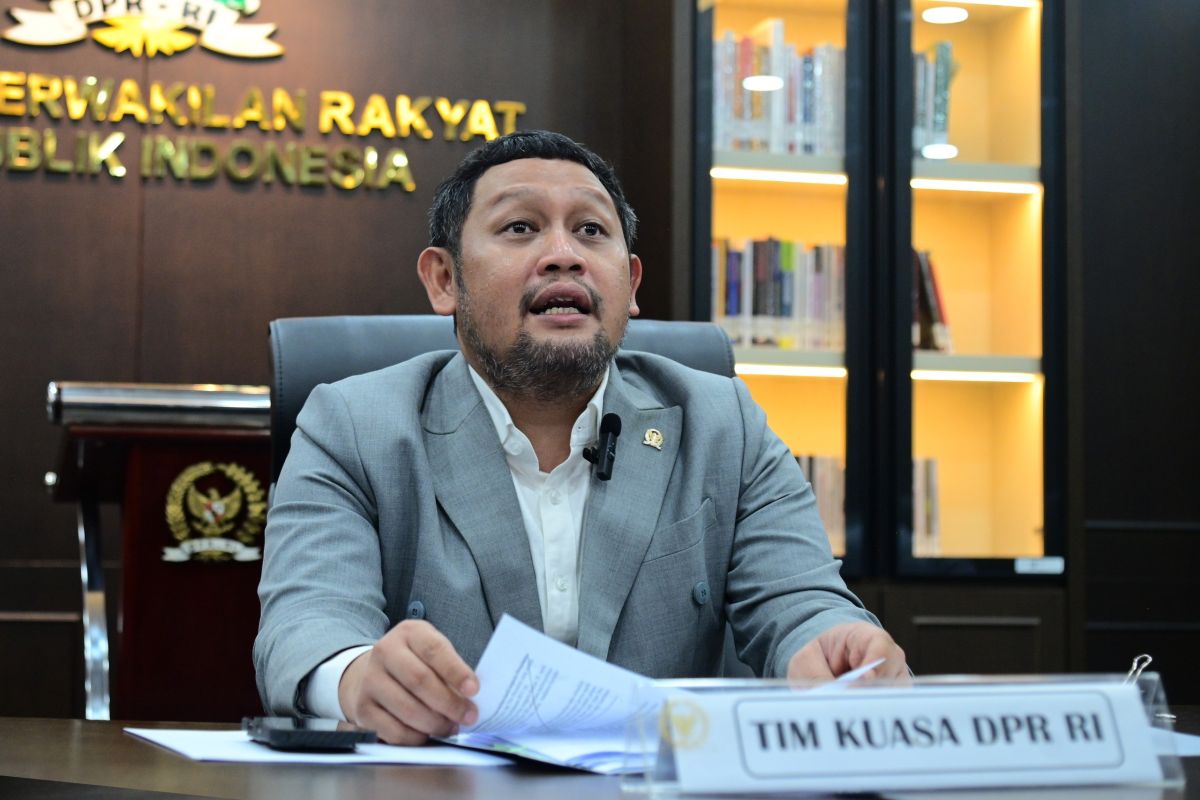
Jakarta (ANTARA) — Abdullah, a member of the Indonesian House of Representatives’ Commission III, has urged the government to update its strategy for preventing the crime of trafficking in persons (TPPO) following the arrest of a fugitive wanted for smuggling illegal workers to Cambodia under the guise of tourist travel.
In a statement received in Jakarta on Tuesday, Abdullah said the government, through the relevant ministries and agencies, needed to formulate a trafficking prevention strategy that is adaptive to increasingly sophisticated criminal methods.
“There must be a new, adaptive strategy to prevent the evolving methods of trafficking in persons. That strategy must be applied comprehensively from upstream to downstream, from prevention and early detection through to enforcement,” he said.
According to him, the government needs to shift from an approach based on documents or administrative checks at departure to a system capable of detecting criminal patterns from the start.
Beyond criminal patterns, the prevention system must also be able to recognise the characteristics of recruitment, digital communication patterns, layered travel routes, and the relationships between journeys that form the modus operandi of trafficking.
“That is why I urge the government to make every trafficking case uncovered the basis for building a national profile of criminal methods,” he said.
Abdullah added that this profile of methods must be used by all law enforcement agencies, immigration, customs, the Indonesian Migrant Workers Protection Agency (BP2MI), and airport authorities as material for updating prevention strategies.
The legislator, who focuses on law enforcement, said all data held by the government on trafficking methods should be promptly converted into national risk indicators so that recurring patterns can be recognised earlier.
“The state must not allow syndicates to keep creating new methods while the oversight system still relies on old patterns,” he said.
It is understood that a joint team from the National Police (Polri), immigration, and aviation security arrested an international fugitive subject to an Interpol red notice, Leny Agustya, at the Arrival Terminal 3 of Soekarno-Hatta International Airport on 29 July 2026.
Leny is suspected of being the mastermind of a syndicate smuggling illegal migrant workers to Cambodia. Based on investigations, Leny acted as the chief coordinator, recruiting victims through chat groups named “Holiyay” and “Liburaaannn”.
The suspect is alleged to have arranged all travel documents and coached victims to deceive officers with the alibi that they were merely going on holiday to Malaysia for four days. From Malaysia, the victims would be sent on to Cambodia.
Abdullah commended the National Police’s Criminal Investigation Department (Bareskrim Polri), together with the Directorate General of Immigration and Interpol, for the successful arrest.
According to him, uncovering this case not only succeeded in shutting down one trafficking network, but also revealed a shift in the syndicate’s modus operandi, which has become increasingly organised and harder to detect with conventional systems.
He asked the National Police to broaden the investigation. The inquiry is expected not to stop at field-level perpetrators, but also to expose the entire ecosystem supporting the criminal operation.
“Every link in the chain is part of a criminal organisation that must be severed simultaneously. As long as only field-level perpetrators are prosecuted, trafficking networks will keep regenerating using ever more sophisticated methods,” he said.
He added that this case should mark a turning point in changing the national strategy for eradicating trafficking. The state must not remain in the position of chasing perpetrators only after victims have been sent abroad.
“The success of law enforcement can no longer be measured solely by the number of suspects arrested, but by the state’s ability to turn every uncovered method into a new prevention system that deprives trafficking organisations of room to operate,” Abdullah said.