
Legislator Urges Government to Strengthen Water Management to Combat Drought
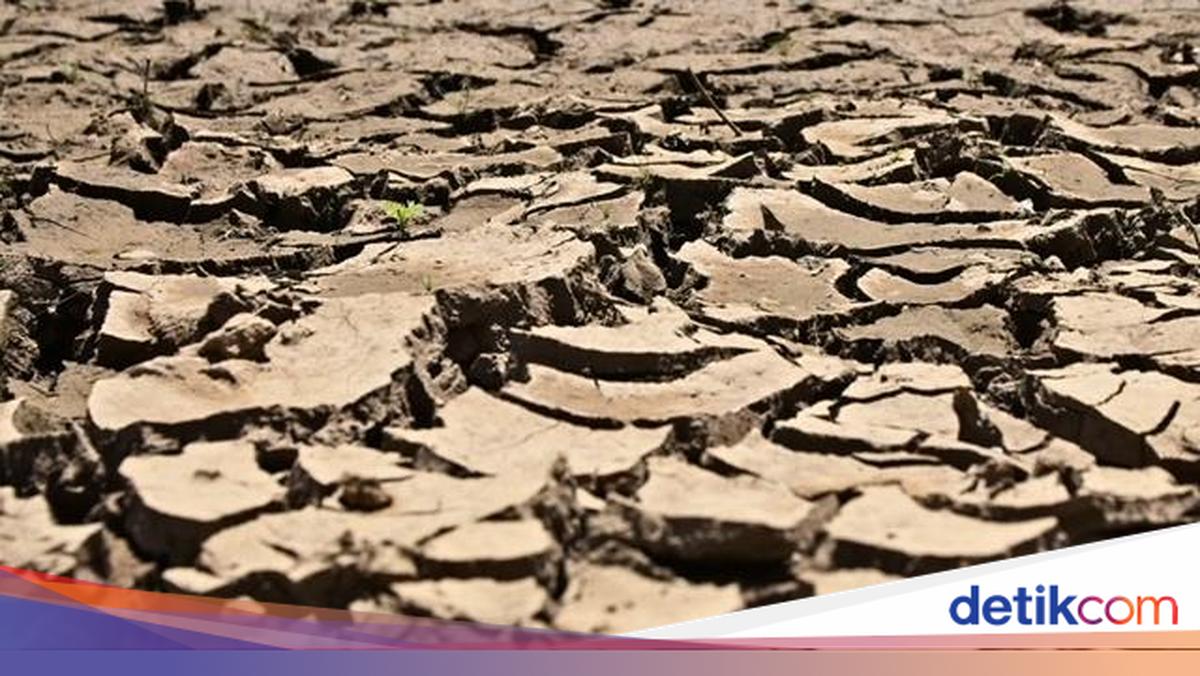
A member of Commission IV of the Indonesian House of Representatives (DPR RI), Rina Saadah, has requested that the government strengthen drought management. She assessed that the success of drought mitigation cannot be measured solely by the amount of aid or the number of pumps distributed.
“In a water crisis, success is not measured by how many pumps are distributed, but by how many hectares of paddy fields are truly saved. Pumps must be deployed based on water source availability, crop requirements, growth phases, and the level of harvest failure risk,” Rised told reporters on Tuesday (8/9/2026).
She noted that pumpisation and the utilisation of surface water remain necessary to face droughts. However, she stated that the distribution of pumps cannot be carried out uniformly without considering the specific conditions of each region.
Rina also reminded that water crisis management should not stop at emergency measures. According to her, the government needs to improve irrigation networks, water channels, and reservoirs, as well as protect catchment areas and river basins (DAS).
“A water crisis cannot be addressed simply by adding more pumps. We need agricultural water management from upstream to downstream, starting from protecting catchment areas, ensuring reservoirs and irrigation networks are functional, to determining which paddy fields must be prioritised for rescue,” she emphasised.
Rina stated that drought management must also go hand-in-hand with the protection of farmers. She assessed that farmers’ harvests must continue to be absorbed by the market and prices at the producer level must be maintained.
“Food sovereignty is not just about how much rice is available in warehouses. Food sovereignty also means ensuring farmers have water for planting, the means for production, and fair prices at harvest. Every rupiah of the agricultural budget must result in tangible outcomes for farmers,” she said.
Previously, the BMKG (Meteorology, Climatology, and Geophysical Agency) noted that conditions in September remain relatively dry in most parts of Indonesia. In fact, the maximum temperature during the third ten-day period of August reached 37.9 degrees Celsius in Melawi, West Kalimantan.
These hot conditions put people engaging in outdoor activities at a higher risk of dehydration and heat exhaustion. Consequently, the public has been advised to maintain adequate fluid intake and use protection such as sunscreen to reduce direct exposure to sunlight, especially when active outdoors during the day.
On the other hand, dry conditions also increase the potential for forest and land fires (karhutla). BMKG recorded 463 hotspots in Kalimantan and 264 hotspots in Sumatra.
Source: jawawa.id (https://jawawa.id/newsitem/legislator-urges-government-to-strengthen-water-management-to-combat-drought-1788879688)
Originally published by detikcom (https://news.detik.com/berita/d-8654447/legislator-minta-pemerintah-perkuat-manajemen-air-hadapi-kekeringan), translated from Indonesian