
Legislator urges government to build fish cold storage for fishermen
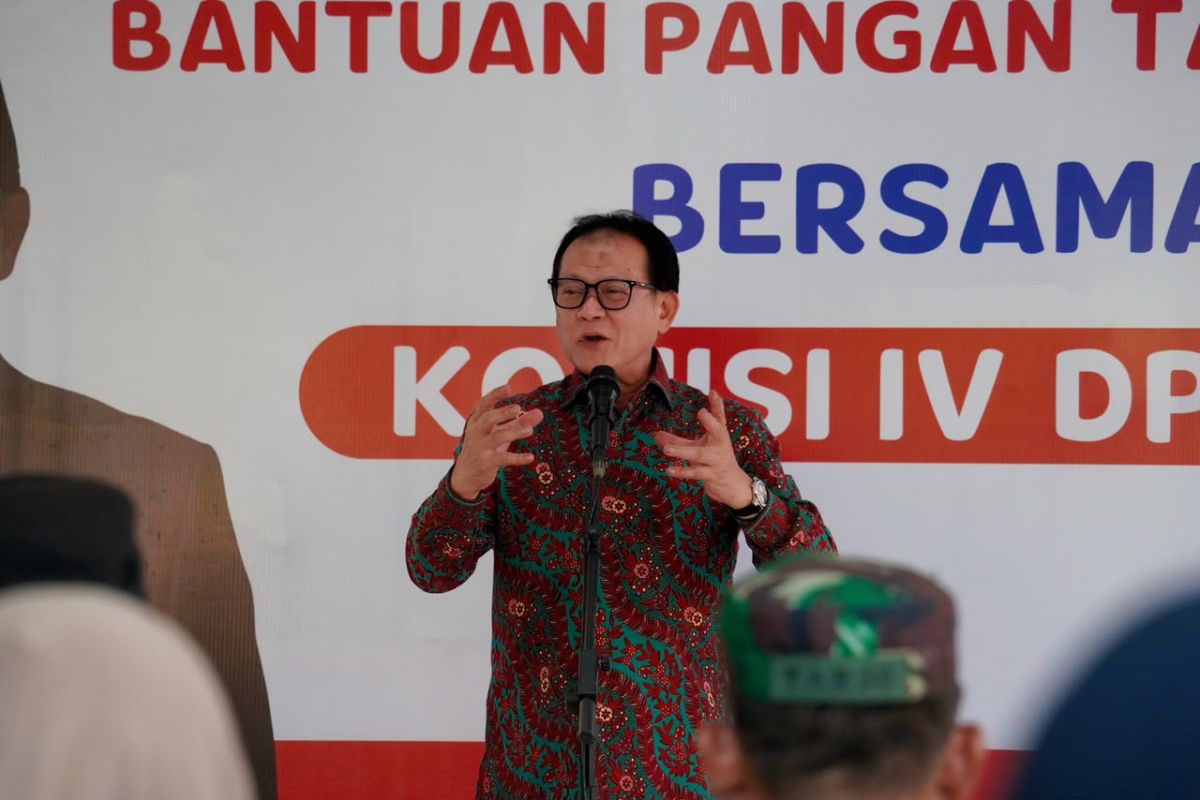
Jakarta (ANTARA) - A member of Commission IV of the Indonesian House of Representatives (DPR RI), Prof Rokhmin Dahuri, is urging the government to develop cooling and storage infrastructure. This initiative aims to maintain the quality of caught fish, thereby preserving its market value for fishermen, particularly in supporting the success of the Red and White Fishing Village (Kampung Nelayan Merah Putih - KNMP) programme.
“If the quality of fish and seafood declines, it does not only impact the economy through lower selling prices or even unsellable products. There are also impacts on health and a reduction in our export value,” Prof Rokhsem Dahuri stated in Jakarta on Tuesday.
He noted that limitations in the cold chain can directly affect fishermen’s incomes, as declining fish quality leads to a subsequent drop in selling prices. Beyond economic aspects, product quality is also linked to food safety and Indonesia’s ability to meet international export market requirements.
Rokhmin mentioned that Indonesia’s fishery production reaches approximately 15 million tonnes per year, originating from both capture fisheries and aquaculture. However, the utilisation of cold chain systems remains limited, accounting for less than 12 per cent of total production.
According to him, strengthening the cold chain system is a vital necessity to reduce fishery post-harvest losses, maintain product quality, increase added value, and strengthen the competitiveness of the Indonesian fishery industry. He assessed that this condition is a challenge that must be addressed so that Indonesia does not merely remain a large fishery producer, but is also capable of increasing added value and its position in global fishery product trade.
He stated that the strengthening of the cold chain needs to be carried out comprehensively, starting from ships or production sites, landing and collection points, storage, processing, and distribution until the product reaches the consumer. He also encouraged the use of more efficient and low-emission technologies, including the use of solar energy.
“More advanced technology, especially related to low-carbon or zero-carbon technology, must be utilised. Indonesia is a treasure trove of solar energy,” he said. He added that the use of renewable energy can be implemented gradually on fishing vessels, cold storage, refrigerators, and cool boxes.
According to him, the idea of using solar energy in the fisheries sector was initiated during his tenure as Minister of Marine Affairs and Fisheries for the 2001-2004 period, through collaborations with universities such as the Bandung Institute of Technology (ITB) and the Sepuluh Nopember Institute of Technology (ITS). He noted that the development of such technology needs to be adapted to the needs and operational conditions in fishery centres.
He emphasised that the entry of foreign technology must be accompanied by efforts to strengthen national industrial capabilities. If the required technology cannot yet be produced domestically, cooperation with foreign companies can still be undertaken. However, it must result in benefits such as technology transfer, increased Domestic Component Level (TKDN), value addition, and local job creation.
“The benefits of cooperation with foreign nations must be achieved immediately, namely technology transfer, added value must remain with us, and the benefit of labour must also be ours. We must not simply import bulk goods without any components being produced domestically,” he said.
He added that strengthening the cold chain also requires cross-sector collaboration or a pentahelix approach involving the government, private industry, academics and researchers, fishing communities and fishery business actors, and the media. The government is seen as playing a crucial role in providing regulation, budget, and a policy ecosystem, while industry can provide technology and investment, academics support innovation, communities act as users and beneficiaries, and the media assists in expanding public education.