
Legislator Suspects Tax Leakage Due to Inconsistent Electricity Customer Data
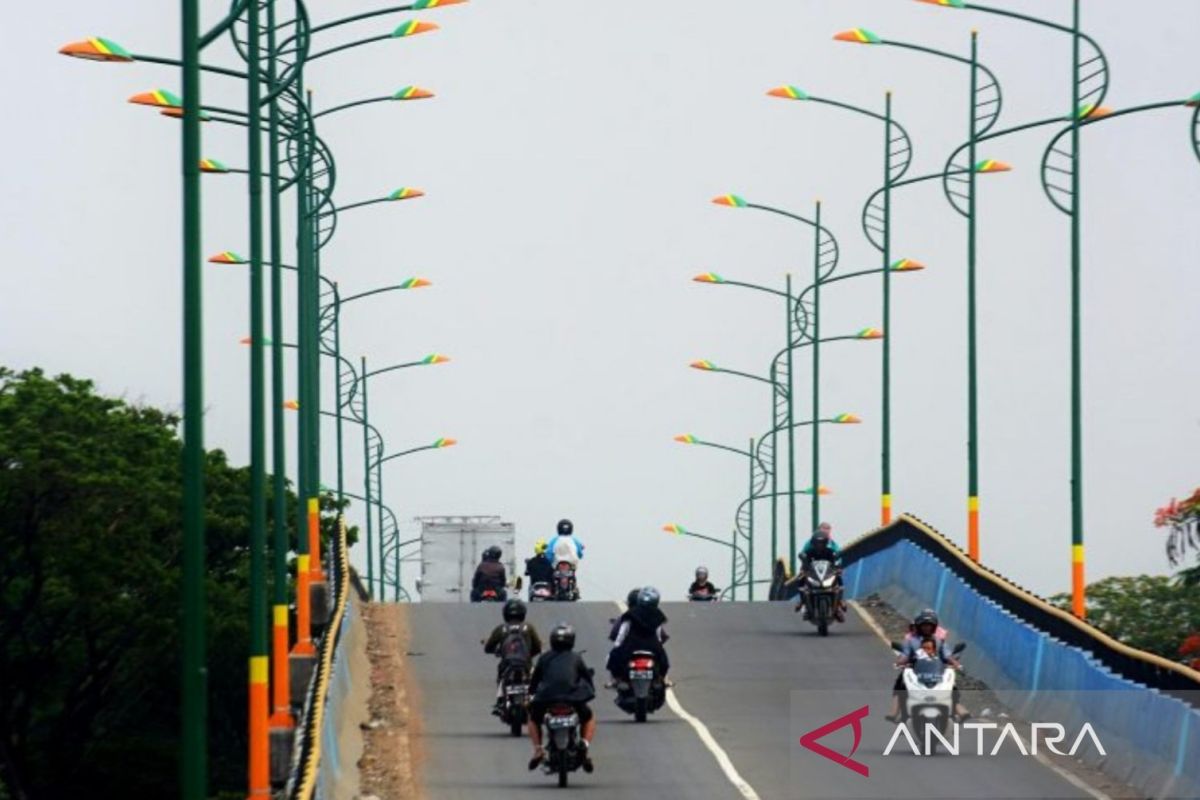
Bekasi Regency (ANTARA) - The Regional People’s Representative Council (DPRD) of Bekasi Regency, West Java, has detected signs of local revenue leakage from the Street Lighting Tax (PPJ) sector as a result of inconsistencies and the opacity of electricity customer data, which is no longer seen as merely an administrative issue.
“The DPRD, along with the Bekasi Regency Revenue Agency (Bapenda), has never received precise figures on the number of electricity customers. Ironically, the data provided by PLN often changes without clear explanations,” said Chairman of Commission I of the Bekasi Regency DPRD, Ridwan Arifin, in Cikarang on Monday.
He revealed that the DPRD has issued official summons to PLN’s Cikarang Distribution Unit (UP3) twice. However, to date, there has been no clarification that addresses these anomalies, thereby raising significant questions for the local government.
This situation has sparked speculation that the issue may involve an unsynchronised reporting system or even undisclosed loopholes.
The lack of data openness could amplify the risk of tax leakage that rightfully belongs to the region.
The DPRD is now pushing for firmer measures, including the possibility of an independent audit of the electricity customer data held by PLN. Additionally, the local executive is urged to intervene promptly to mediate this protracted issue.
“If necessary, a joint audit should be conducted. Because this concerns public money,” stated this Gerindra Party politician.
The Head of the Bekasi Regency Revenue Agency (Bapenda), Iwan Ridwan, has openly questioned the validity of the data, viewing the situation not as a mere technical obstacle but as an indication of weak transparency that could directly impact regional finances.
“The data keeps changing. This is not a trivial matter. If the data base is unclear, there is a high likelihood of untapped tax potential,” he said.
Iwan emphasised that PPJ itself is an important source of Original Local Revenue (PAD), calculated from community electricity consumption. “Without accurate customer data, tax calculations are at risk of inaccuracy and even open the door to substantial revenue losses,” he stated.
To date, there has been no official explanation from the local PLN regarding the data inconsistencies. This silence only strengthens public pressure on the importance of transparency, particularly from state-owned enterprises managing vital sectors.
“If this issue is allowed to persist without resolution, not only is the PAD potential at risk, but also public trust in financial governance and energy sector services in the region,” he said.
PPJ has now been renamed and reconceptualised as the Electricity Power Tax (PBJT) under Law No. 1/2022 on financial relations between the central and regional governments, effective from 2024.
PBJT for Electricity Power represents a modernisation of PPJ with stronger legal integration and more stringent regional allocation obligations, given that fund usage allocations are now more tightly regulated by local governments.
Local governments are required to allocate at least 10 percent of the tax receipts to public street lighting facilities and their infrastructure. According to Bekasi Regency Bapenda data, the realisation of Electricity Power Tax for 2026 has reached Rp173.89 billion as of Sunday (19/4) at 4:00 PM WIB.