
Legislator requests subsidised fertiliser transport to pass through disaster-affected routes
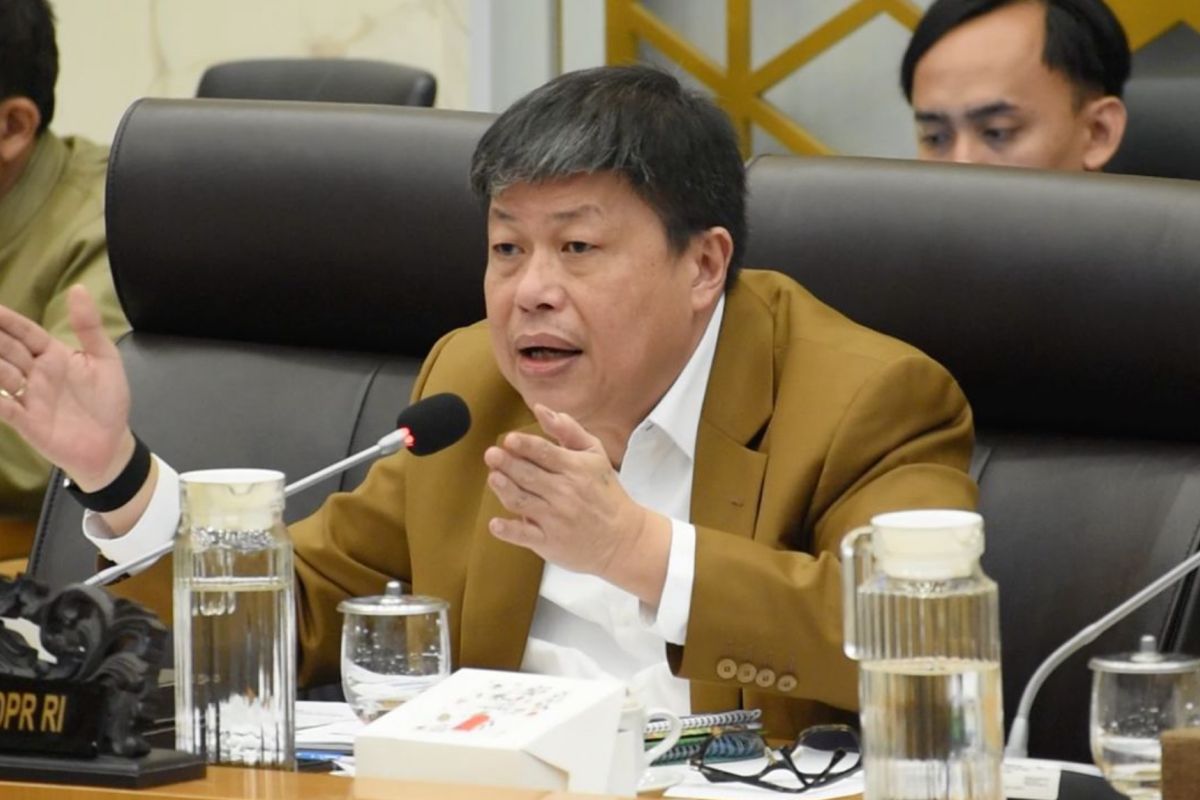
Jakarta (ANTARA) - Deputy Chairman of Commission IV of the Indonesian House of Representatives, Alex Indra Lukman, has requested that subsidised fertiliser transport be permitted to pass through disaster-affected routes currently experiencing vehicle restrictions.
According to him, subsidised fertiliser distribution transport needs to be prioritised to avoid impacting agricultural production.
“Subsidised fertiliser distribution transport should be treated on par with Pertamina fuel tankers carrying fuel when passing through disaster-affected roads, especially given the recent widespread queues for diesel at fuel stations,” said Alex in Jakarta on Monday.
He stated that this special treatment would also support the implementation of Ministry of Agriculture Regulation Number 15 of 2025 on the Governance of Subsidised Fertilisers, covering determination, procurement, distribution, and supervision.
This latest regulation has shortened the distribution routes, from the distributor’s warehouse (PUD) at Line 2 directly to the Complete Fertiliser Kiosk (KPL) at Line 4.
“Regulatorily, the subsidised fertiliser distribution mechanism has been streamlined. Now a new challenge has emerged: the unavailability of subsidised diesel,” he said.
He emphasised that this should not become a factor hindering farmers from receiving fertiliser on time at Line 4, which is the frontline of subsidised fertiliser distribution.
He cited the Lembah Anai road section as a vital access connecting Padang, the provincial capital, with districts and cities in northern West Sumatra, including neighbouring provinces Riau and North Sumatra.
Specifically for West Sumatra, he continued, besides facing long queues, trucks used for subsidised fertiliser distribution also have to take detour routes due to these restrictions.
According to Alex, this is due to vehicle restrictions on the national road repair site in Lembah Anai, which was severely damaged by flooding at the end of November 2025.
The Chairman of the Commission IV DPR RI Working Committee on Land Use Conversion also added that timeliness in fertiliser supply for farmers is crucial.
“This is important because fertilisation schedules have specific timings aligned with crop age,” he said.
According to him, if fertilisation is done outside the schedule, it could potentially disrupt harvest yields.
And availability must be ensured across all Line 4 outlets every planting season.
“Fertilisation delays will affect harvest results, ultimately impacting the food self-sufficiency targets, which are part of President Prabowo Subianto’s Asta Cita,” he said.
Alex added that the availability of subsidised fertiliser poses no issues because supplies have been arranged accordingly by dividing distribution regions based on fertiliser factory locations.
“If the war in the Middle East prolongs, fertiliser production factors will certainly be disrupted. Therefore, anticipatory steps to ensure subsidised fertiliser availability at Line 4 must continue to be pursued,” he said.
Previously, the regional division of subsidised fertiliser distribution areas is as follows: Regional 1 covers Sumatra and surrounding areas, generally managed by PT Pupuk Iskandar Muda and PT Pupuk Sriwidjaja.
Regional 2 covers West Java, Central Java, and DIY, generally managed by PT Pupuk Kujang and PT Pupuk Jawa Tengah.
Regional 3 covers East Java, Bali, and NTB, managed by PT Petrokimia Gresik, and Regional 4 covers Kalimantan, Sulawesi, Maluku, and Papua, managed by PT Pupuk Indonesia (Persero) through subsidiaries such as PT Pupuk Kalimantan Timur, focusing on uptake in Eastern Indonesia.
Meanwhile, the distribution lines are divided into Line 1 (producers), namely warehouses at fertiliser factories (producers) or ports. Here, fertiliser is produced and prepared for distribution.
Line 2 is the distribution centre, starting from warehouses at the provincial level or Line II central warehouses (producers).
Line 3 is the distributor or supplier, starting from warehouses at the district/city level or appointed distributors.
Line 4 (retail kiosks) is the official retail kiosks at the sub-district or village level. This is the endpoint of distribution where farmers redeem subsidised fertiliser directly.
For information, in 2026, the government has set a national allocation of subsidised fertiliser at 9.8 million tonnes, with 9.5 million tonnes allocated for the agricultural sector, and the remainder for the fisheries sector.
The specific agricultural allocation consists of 4.4 million tonnes of Urea, 4.47 million tonnes of NPK Phonska, 81,000 tonnes of NPK Kakao, 558,000 tonnes of organic fertiliser, and 16.4 thousand tonnes of ZA.