
Legislator pushes for NIK to become single identity number through Population Administration Law revision
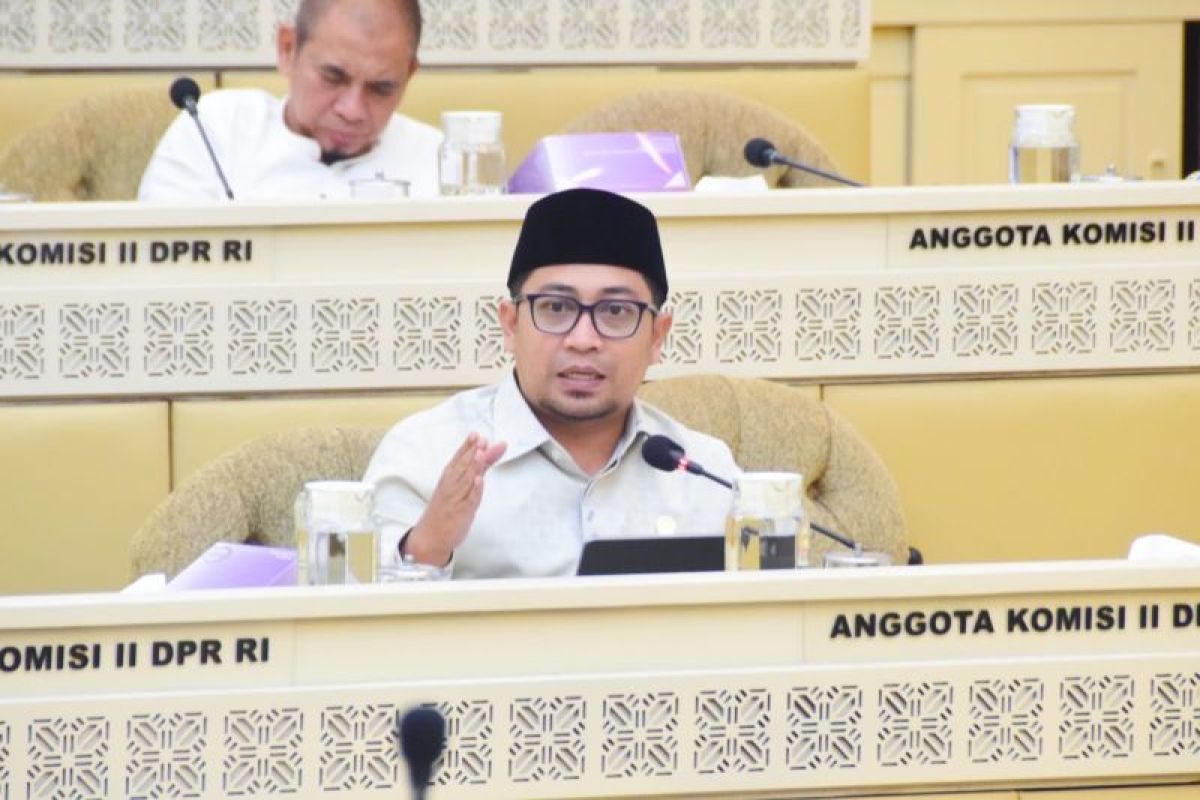
Jakarta (ANTARA) - Muhammad Khozin, a member of Commission II of the Indonesian House of Representatives (DPR RI), stated that the revision of the Population Administration Law (UU Adminduk) is aimed at expanding the function of the National Identification Number (NIK) to serve as a Single Identity Number (SIN).
This move is intended to accelerate the digital transformation of public services in Indonesia. Speaking in Jakarta on Monday, Khozin noted that the change will integrate population data into various public services, ensuring that citizens no longer need to rely on physical documents, including photocopies of electronic ID cards (KTP-el), to access various services.
“The transformation of NIK into a SIN will trigger a total change in our public services. The starting point for digital transformation will begin with this Population Administration Law,” said Khozin.
According to him, the current use of NIK is still limited to a number of services, such as the Taxpayer Identification Number (NPWP), BPJS Health, and Driving Licences (SIM).
Through the revision of the Population Administration Law, population data will be utilised more broadly for education, banking, healthcare, development planning, budget allocation, general elections, as well as law enforcement and crime prevention.
“In this Draft Law, population data will be utilised for public services such as education, banking, healthcare, and others; development planning; budget allocation (determination of General Allocation Funds/DAU and Special Allocation Funds/DAK); general elections; and law enforcement and crime prevention,” he said.
He assessed that the revision of the Population Administration Law is of high urgency, as it serves as the foundation for developing an integrated national population data ecosystem while supporting the government’s digital transformation agenda.
“The Population Administration Law represents an important and historic momentum for Indonesia’s digital transformation,” Khozin added.
Currently, Commission II of the DPR RI is discussing the second draft amendment to the Population Administration Law. The revision seeks to shift the paradigm of population administration from a quasi-active system, as regulated under Law Number 24 of 2013, to an integrated digital active system based on a national population data ecosystem.
Khozin hopes that strengthening the function of the NIK as a single identity can increase the efficiency of public services, strengthen the accuracy of government data, and make it easier for the public to access various services without repetitive administrative procedures.