
Legislator pushes for affirmative spending in Archipelagic Regions Bill
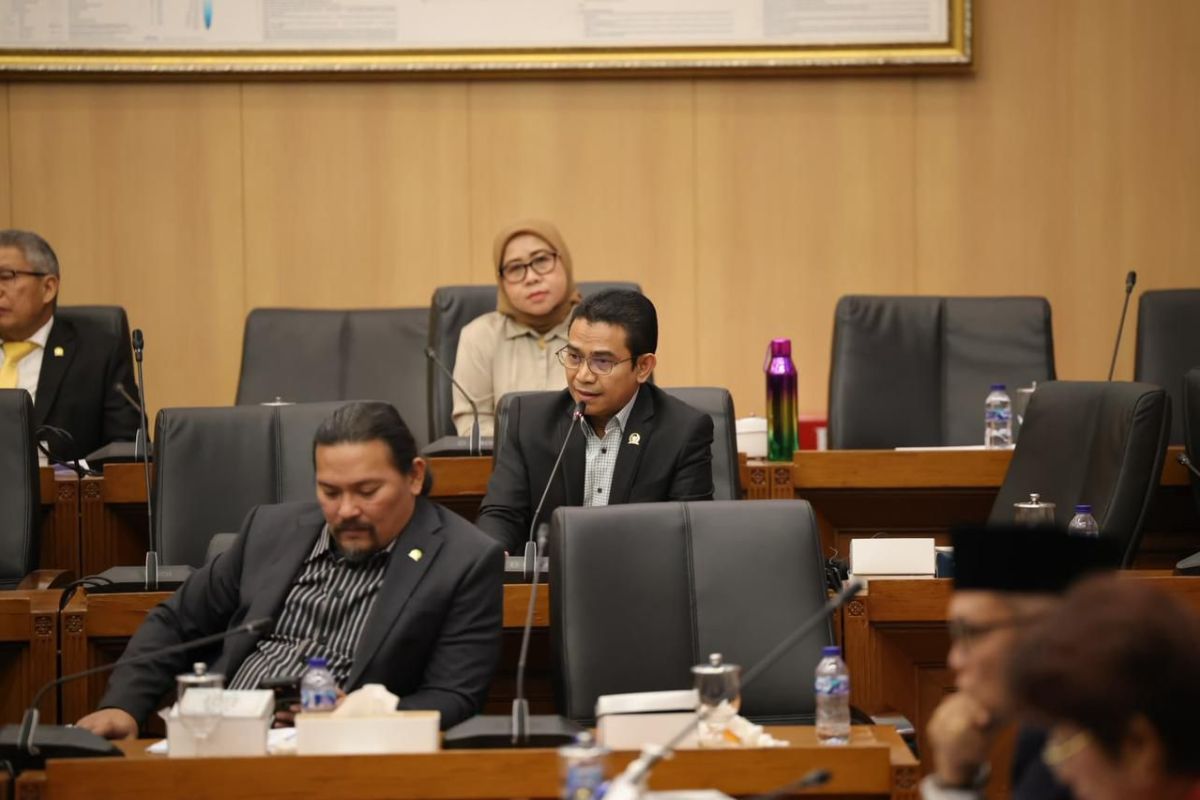
Jakarta (ANTARA) - A member of the Special Committee for the Archermic Region Bill of the Indonesian House of Representatives (DPR RI), Hendry Munief, is pushing for the implementation of affirmative budgeting within the Archipelagic Region Bill to strengthen the even distribution of development across island territories.
Hendry stated that archipelagic regions face developmental challenges that differ from mainland areas, necessitating a more flexible budgeting scheme that prioritises the real needs of the community.
“The issues in every archipelagic region are different, and therefore require different handling. Thus, we are proposing that our budget regulations be based on ‘affirmative spending’. Expenditure should be adjusted to the specific needs of each region,” Hendry said in a statement in Jakarta on Wednesday.
‘Affirmative spending’ refers to the allocation of funds or budgets intentionally designed to provide equal opportunities, support, or empower specific disadvantaged or marginalised groups.
These remarks were made during a Hearing of the Special Committee for the Archipelagic Region Bill at the Parliament Complex, Jakarta, on Tuesday (30/6).
According to him, several coastal and island areas in Riau Province, such as the Meranti Islands, Bengkalis, Rokan Hilir, and Indragiri Hilir regencies, still face limitations in basic infrastructure, connectivity, and a high level of economic dependence on neighbouring countries.
“I have travelled through my constituency, and it is distressing to see the condition of the people. Their dependence on neighbouring countries like Malaysia and Singapore remains high, regarding commodity sales, employment, and more,” he said.
He noted that these areas also continue to struggle with issues regarding road access, bridges, high prices for basic necessities, and limited access to information and internet networks.
“Signals such as radio, television, and even internet from Indonesia are outperformed by neighbouring countries. Decent roads and bridges are non-existent. The price of basic foodstuffs is high,” he added.
Hendry believes the Archipelagic Region Bill needs to serve as a legal instrument to bring developmental justice to island regions that face geographical, economic, and public service challenges distinct from mainland areas.
The Special Committee for the Archipelagic Region Bill is also gathering various inputs from local governments regarding inter-island connectivity, high logistics costs, limited basic infrastructure, and the need for a transfer fund formula that is more favourable to archipelagic regions.
These inputs will serve as material for the discussion of the Archipelagic Region Bill to ensure the regulation can strengthen the even distribution of national development.