
Legislator: Need to Accelerate MBG Implementation in Papua Tengah's 3T Regions
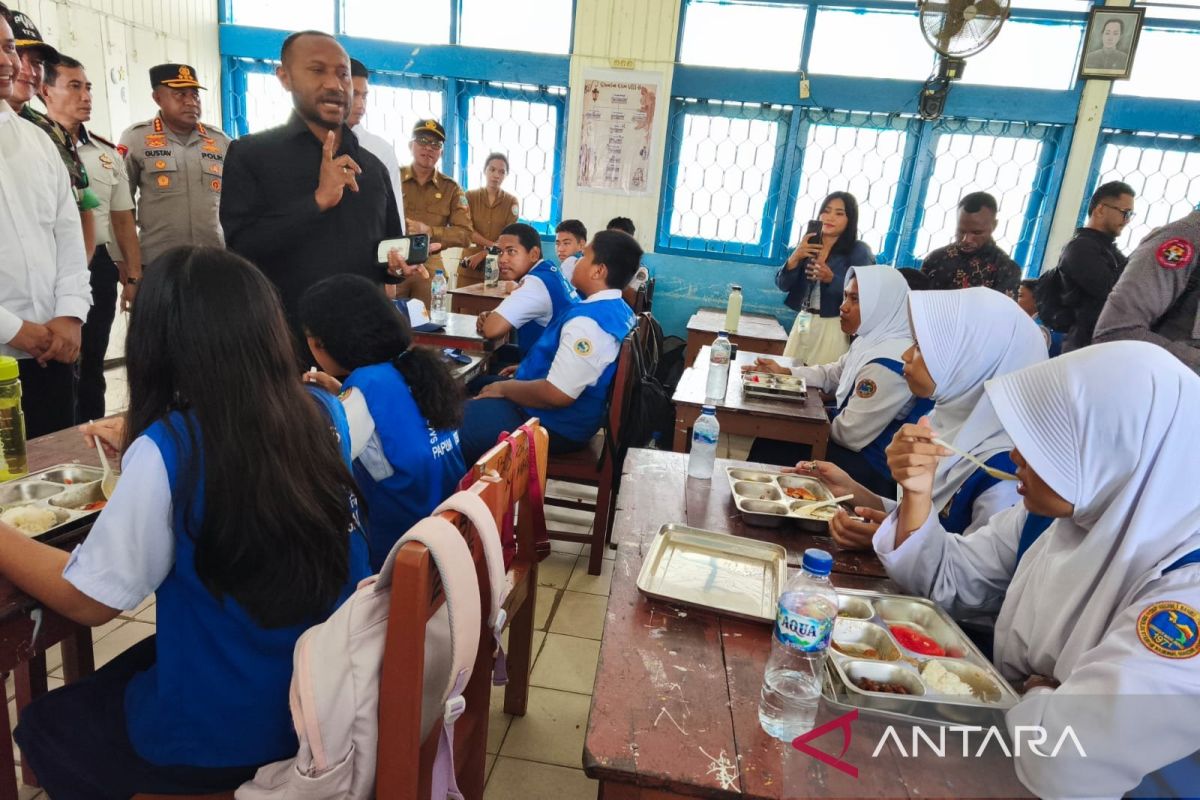
Nabire (ANTARA) - Member of the Indonesian House of Representatives Yan P. Mandenas has emphasised the need to accelerate the implementation of the Free Nutritious Meals (MBG) programme in underdeveloped, remote, and outermost (3T) areas of Central Papua Province to support the quality of children’s education and health.
“The response of children to MBG is quite positive. However, the distribution of this programme should not be limited to urban areas like Nabire and Mimika; it must reach mountainous regions, as they are in great need,” Mandenas said in Nabire on Monday.
He revealed that there are still many complaints from students in remote areas who arrive at school without breakfast, resulting in concentration disturbances, and some even fainting during lessons.
He assessed that accelerating the construction of Nutrition Fulfilment Service Units (SPPG) is key to enabling the MBG programme to reach peripheral areas, including 3T regions.
According to him, proper nutritional fulfilment will help students focus better during learning, thereby impacting improvements in academic achievements.
“If children eat sufficiently, they can learn calmly, with focus, and their learning outcomes will also improve,” he said.
The implementation of the MBG programme, an initiative of President Prabowo Subianto, not only aims to enhance children’s nutrition but also to drive economic growth among the community.
“We continue to conduct monitoring. If there are kitchens that do not prioritise local labour and produce, we will evaluate them,” he stated.
He encouraged adjustments to the technical guidelines for MBG implementation in Papua, including per-portion price standards to suit the geographical and economic conditions of the region.
According to Mandenas, the MBG programme also helps reduce the economic burden on families, as children can obtain meals at school without additional costs.
Coordinator of the National Nutrition Agency (BGN) Regional Office for Central Papua, Nalen Situmorang, stated that the number of SPPG units in Central Papua has now reached 33, spread across three regencies.
This number consists of 14 SPPG in Nabire Regency, one SPPG in Deiyai Regency, and 18 SPPG in Mimika Regency.
She explained that in the future, they plan to add SPPG in five regencies that currently lack such facilities, including additional units in Deiyai Regency.
The five regencies in Central Papua not yet covered by the MBG programme are Dogiyai, Paniai, Intan Jaya, Puncak, and Puncak Jaya.
According to her, the development of SPPG in those areas is still being coordinated with local governments, given that most of the planned locations fall under 3T categories.
“We continue to collaborate with local governments because building SPPG in these areas involves unique challenges, particularly in terms of access and distribution,” she said.
She hopes that with the addition of SPPG, the coverage of nutritional services for the community, especially children and pregnant women, can become wider and more equitable across all of Central Papua.