
Legislator: Library sector budget is Indonesia's long-term investment
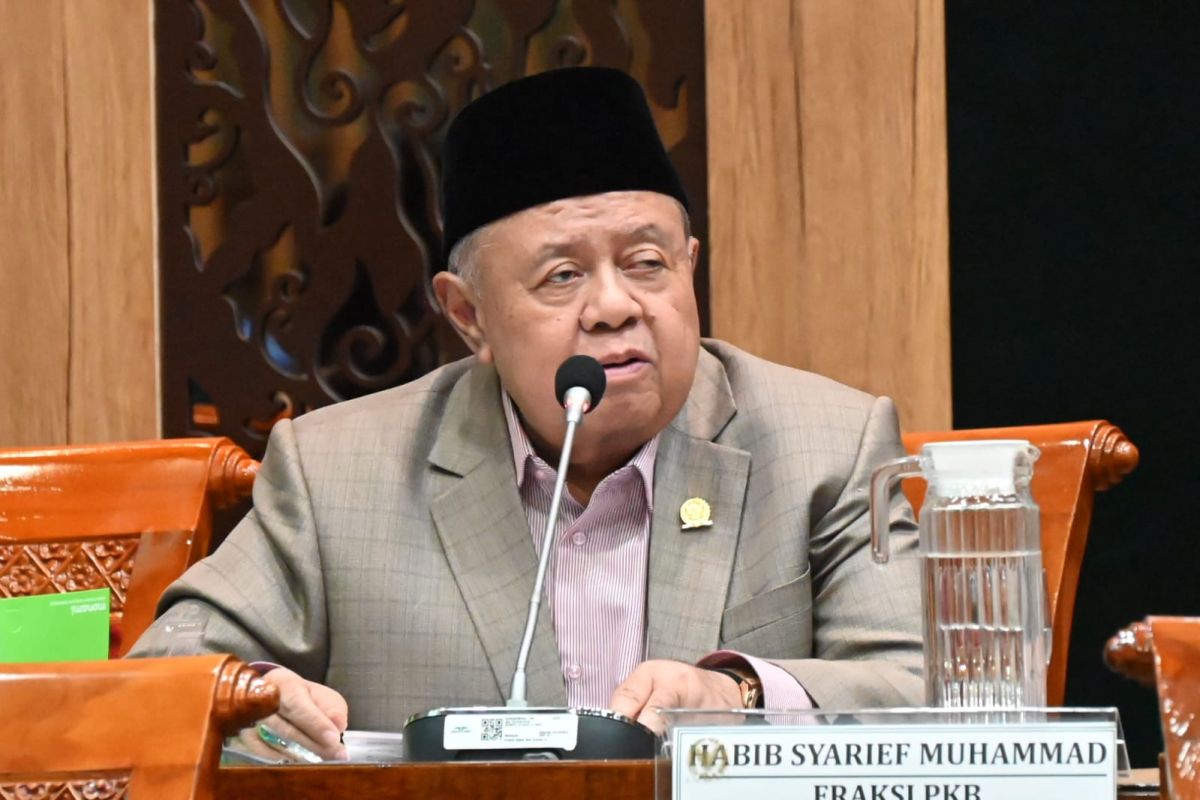
Jakarta (ANTARA) - Member of Commission X of the Indonesian House of Representatives (DPR RI) Habib Syarief Muhammad stated that a proposed budget increase for the library sector constitutes a long-term investment, serving as an effort to produce a globally competitive and upright future generation.
Habib Syarief, speaking in Jakarta on Friday, expressed full support for the additional budget proposal submitted by the National Library (Perpusnas). He argued that the government must pay special attention to strengthening and developing literacy.
The proposed budget increase is primarily aimed at expanding reading access for communities in peripheral areas and highly vulnerable groups. The total budget required by Perpusnas for 2026 amounts to Rp725.50 billion.
He assessed that fiscal policy directed at developing library institutions, increasing the quantity and quality of book collections, and enhancing the capacity of librarians must not be reduced in meaning to merely a state expenditure burden.
“Therefore, it is an imperative for the government to give full attention to the Perpusnas budget posture,” he said.
According to him, it would be deeply regrettable if, in the future, essential programmes that directly touch the pulse of public intelligence—such as the equitable distribution of books to remote areas or literacy training—were to be hampered, shrink, or even disappear due to budget rationalisation policies.
The legislator from the West Java I electoral district said all parties must have a collective awareness that cutting the library budget is tantamount to extinguishing the light of our nation’s own future.
He highlighted the issue of information inequality still faced by Indonesia. Quality books and modern literacy facilities are often concentrated exclusively in metropolitan cities, particularly on Java Island.
“Meanwhile, the nation’s children residing in underdeveloped, frontier, and outermost (3T) regions must still grapple with a scarcity of reading materials. This centralisation of knowledge is a form of social injustice that violates the constitutional mandate,” he stressed.
Therefore, he said, all parties must ensure that Indonesia continues to grow not only with sturdy concrete bridges but also with bridges of knowledge that connect every child of the nation to their noble aspirations.