
Legislator hopes working committee will produce fair and sustainable Hajj cost scheme
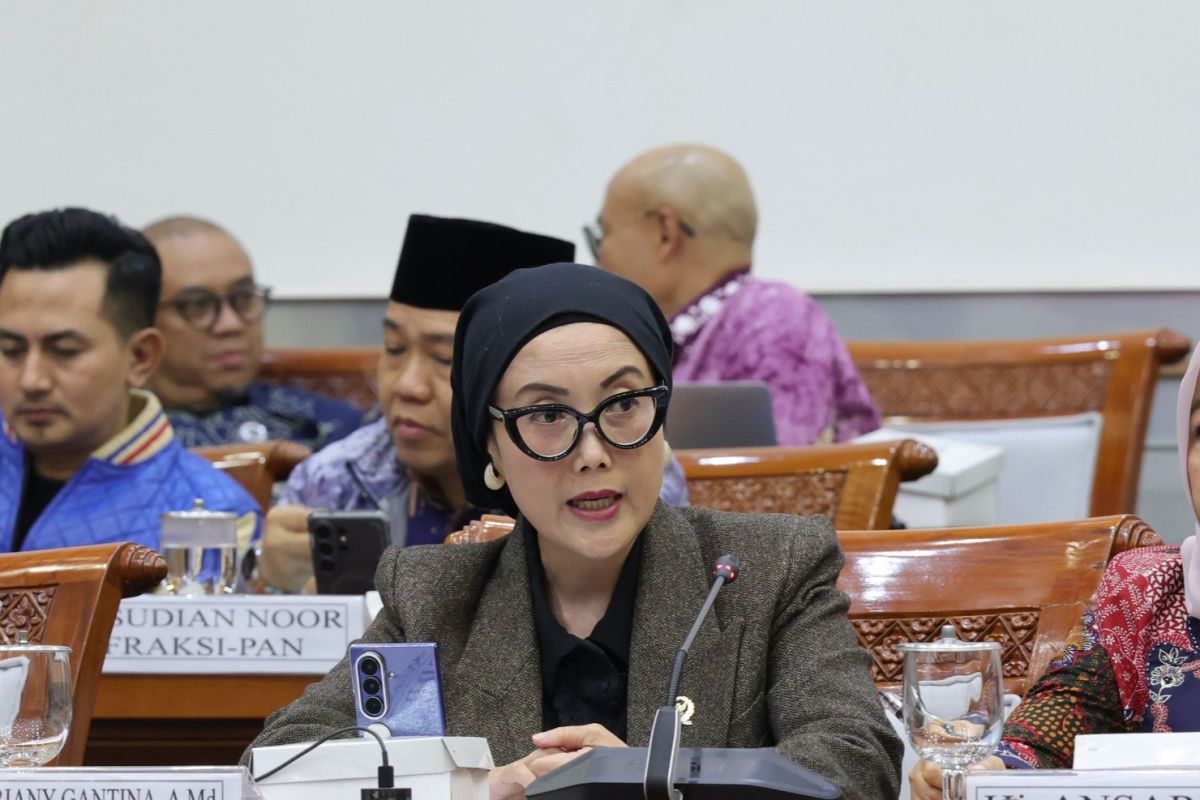
Jakarta - Member of Commission VIII of the Indonesian House of Representatives (DPR RI), Selly Andriany Gantina, hopes the Commission’s Working Committee (Panja), which will discuss the Hajj Pilgrimage Costs (BPIH), can produce a decision on a Hajj cost scheme that is fair and sustainable. “In the upcoming discussions, the Commission VIII’s review of the BPIH proposal must not be flawed,” Selly stated in Jakarta on Wednesday. During a working meeting between Commission VIII and the Ministry of Hajj and Umrah, the government proposed a 2027 Hajj pilgrimage cost (BPIH) of Rp107.34 million per person, an increase from the previous year’s cost of Rp87.4 million. The Ministry of Hajj and Umrah conveyed that the proposed cost adjustment is influenced by several factors, including the assumed rupiah exchange rate, increases in flight costs, accommodation in Makkah and Madinah, land transportation, and Masyair services. Other factors include health services, strengthening the health service eligibility programme, provision of ready-to-eat (RTE) meals, adjustments to consumption costs in Makkah and Madinah, accommodation distribution in Madinah, and financing needs for prospective pilgrims whose departures are cancelled. To maintain the affordability of costs paid directly by pilgrims, the Ministry of Hajj and Umrah proposed a financing scheme with a composition of 60 percent sourced from the returns managed by the Hajj Financial Management Agency (BPKH) and 40 percent from the Hajj Travel Costs (Bipih) paid directly by prospective pilgrims. Responding to this, Selly assessed that all financing components need to be carefully reviewed so that the decisions taken truly consider the interests of the pilgrims and the sustainability of Hajj fund management. She highlighted the financing composition that still utilises the returns from the Hajj fund. In her view, the use of these returns must consider a sense of fairness, especially for the millions of prospective pilgrims still waiting for their turn to depart. “The returns should actually be used for the pilgrims on the waiting list, not for the pilgrims who are about to depart. But why is the portion today actually larger for the pilgrims who are departing,” she said. Therefore, Selly hopes the DPR RI Commission VIII Working Committee can discuss all BPIH components thoroughly, from the cost structure and the use of returns to the impact on the sustainability of the Hajj fund. According to her, a comprehensive discussion will serve as a foundation to produce a fairer financing formulation for current pilgrims and future prospective pilgrims. Previously, Commission VIII of the DPR RI was set to immediately form a working committee (Panja) to discuss in more detail the evaluation results of the 1447 H/2026 M Hajj pilgrimage and the proposed Hajj Pilgrimage Costs (BPIH) for 1448 Hijriah/2027 M. The working committee will be tasked with drafting recommendations for improving the Hajj pilgrimage based on the evaluation results of the 2026 Hajj season, while also discussing the 2027 Hajj financing components.