
Legislator Flags Looming Open Dumping Ban, Demands Urgent Waste Management Reforms
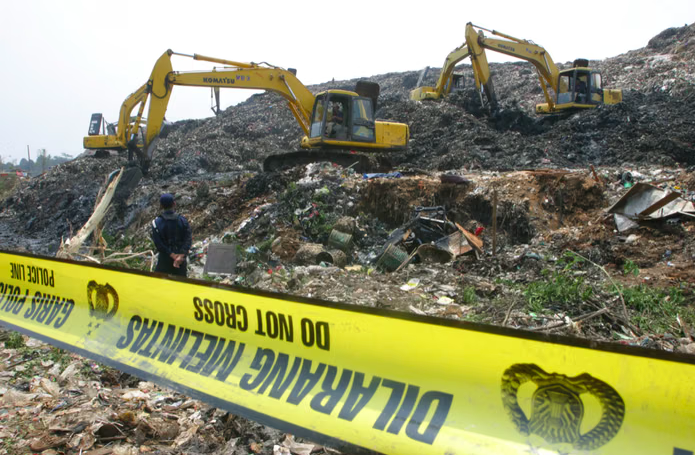
The discontinuation of open dumping practices, set to take effect in August 2026, is considered a serious wake-up call for the DKI Jakarta Provincial Government to immediately overhaul waste management. Failure to do so could lead to waste accumulating in various areas due to limited processing capacity and a reduction in the number of trips transporting waste to the Bantargebang Integrated Waste Processing Site (TPST).
The Chair of Commission D of the DKI Jakarta Regional People’s Representative Council (DPRD), Yuke Yurike, asserted that the waste problem can no longer be resolved using old methods that focus solely on transporting rubbish from residential areas to final processing sites. According to her, this approach is no longer relevant given the increasingly limited capacity of Bantargebang and the demand to stop open dumping.
“The waste issue has been a recurring problem from one term to the next. Therefore, the solution cannot rely only on the downstream end. The upstream and midstream stages must also be addressed through more massive and measurable movements,” Yuke said on Thursday (11/6).
Yuke assessed that ceasing open dumping actually exposes a fundamental issue that remains unresolved: the low rate of waste processing at the source. In fact, Gubernatorial Regulation No. 77 of 2020 mandates community-level waste management through waste banks. However, its implementation is deemed not yet capable of significantly reducing waste volumes.
On the other hand, several processing facilities touted as solutions are also not operating optimally. The Bantargebang refuse-derived fuel (RDF) plant, the Rorotan RDF facility, and various Reduce-Reuse-Recycle (TPS3R) sites still need to be maximised to achieve waste reduction targets before the open dumping ban is enforced.
The Rorotan RDF plant, which has a capacity of up to 2,500 tonnes per day, for instance, is not yet operating at its ideal capacity. This condition means the burden of waste management still rests on Bantargebang, which has been Jakarta’s mainstay for decades.
According to Yuke, the biggest challenge currently is no longer regulation, but rather time constraints and infrastructure readiness. This is because once open dumping is halted, waste entering the final processing site must be processed first, leaving only residue.
“This condition impacts the reduced frequency of waste transport to Bantargebang, causing the collection process in several areas to slow down,” she stated.
She appreciated the Jaga Jakarta Bersih programme launched by the Jakarta Provincial Government to encourage waste sorting from households. However, Yuke cautioned that the programme will not be effective if the sorted output is not supported by adequate processing systems and markets.
Therefore, Commission D has requested that the Environmental Agency not only focus on building physical facilities but also map out waste banks, waste processing communities, and circular economy opportunities such as compost processing and maggot cultivation, which can absorb large amounts of organic waste.
She noted that digitalising data down to the community level is crucial so that fleet requirements, waste generation points, and processing capacity can be calculated more accurately.
“Jakarta has many young innovators in the field of waste processing. This potential must be given space because it can be part of the solution,” she said.
Regarding plans to implement waste retribution fees, Yuke reminded the government not to rush into charging the public before service quality genuinely improves. She stressed that implementing retribution must be accompanied by improvements in infrastructure and services to avoid public resistance.
“The main requirement is infrastructure readiness. When services are good, the public will more easily accept the policy,” she concluded.