
Legislator Firman Soebagyo proposes removal of fortified rice classification
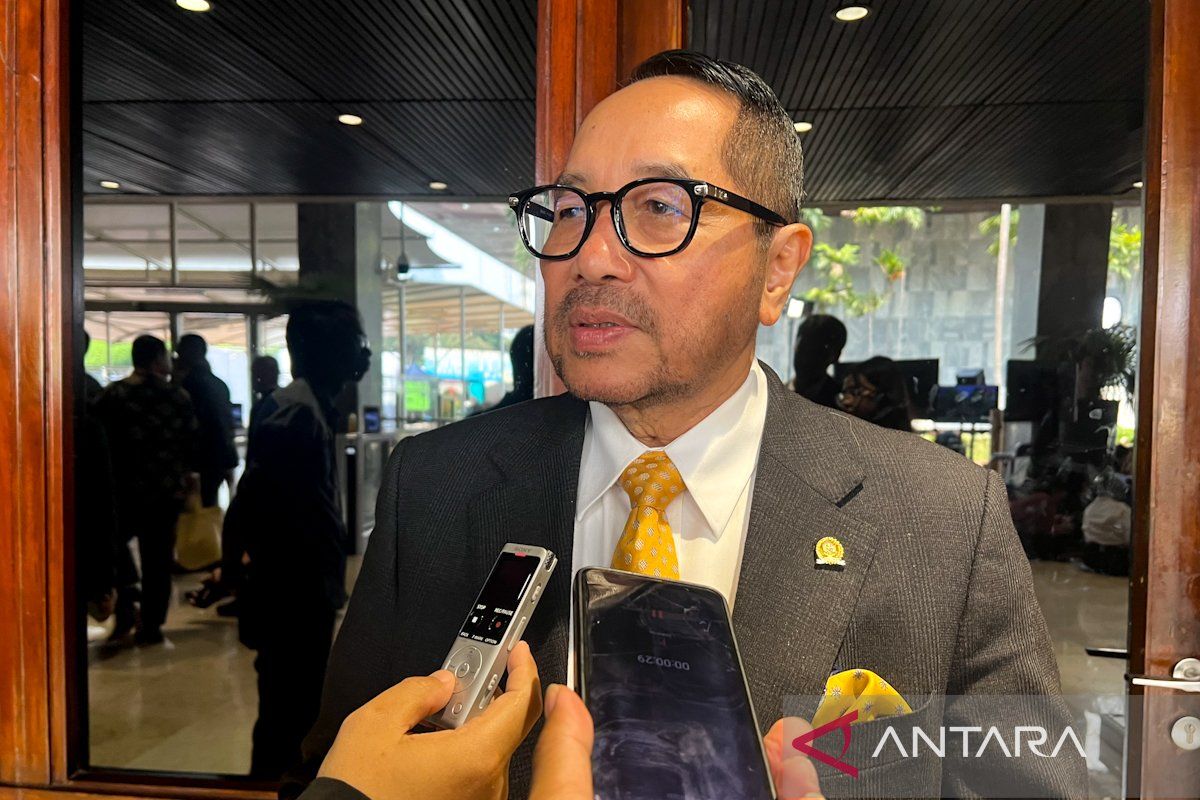
Member of Commission IV of the Indonesian House of Representatives (DPR), Firman Soebagyo, has proposed simplifying the classification of rice circulating in the community by removing fortified rice and establishing only premium and medium types.
Firman stated that this step is necessary to provide certainty to the public and business actors, while simultaneously preventing the recurrence of issues within the national rice sector. “The demand volume for fortified rice is small; let’s just abolish it. If left alone, it will become a political tool again. Another issue, and another issue. This is what needs to be trimmed,” Firman said when contacted in Jakarta on Sunday.
Issues regarding fraud in fortified rice emerged after the government, through the Head of the National Food Agency and Minister of Agriculture, Andi Amran Sulaiman, alongside the Food Task Force, announced findings of 25 fortified rice brands suspected of having compositions on their packaging that do not reflect their actual contents.
According to Firman, while fortified rice aims to increase public nutritional intake, particularly to support stunting prevention, its implementation must adhere to regulations. “But the fact is, if those findings are true, there is significant manipulation. Manipulation regarding specifications, such that the added vitamins do not match. This is what we see in the findings announced by the Minister of Agriculture and law enforcement officers recently,” he said.
Firman considers these alleged discrepancies a serious matter as they relate to food quality as regulated under Food Law Number 18 of 2012. As a member of Commission IV, which oversees agriculture, environment, forestry, and marine affairs, Firman is urging the government to take firm action against businesses proven to have committed violations to prevent practices that harm the public.
However, to avoid prolonged controversy, Firman suggested that fortification should not be applied to rice, but rather directed towards alternative foods such as flour. He proposed that rice in the market should be categorised into only two types: premium and medium, with clear quality standards.
According to Firman, the standards for premium and medium rice already have references through the Indonesian National Standard (SNI) and Food and Agriculture Organization (FAO) regulations, which govern quality aspects such as moisture content and broken rice percentage. “To prevent manipulation of rice circulating in the community, there must be certainty regarding product standards,” he said.
Firman believes that halting fortified rice will not disrupt the national supply because the consumption volume of such products is relatively small compared to general public needs. He emphasised that the government needs to resolve rice sector issues comprehensively to create legal certainty, business certainty, and consumer protection.
“If fortification is problematic and consumption is only small, rather than it becoming a continuous political issue, let’s just stop it so a resolution can be reached,” he stated.
He expressed hope that the government and all stakeholders could maintain national rice governance through strong supervision and transparent product standards. “If left unchecked, the accumulated loss to the public will be quite large. We must certainly protect consumer rights,” he added.
Previously, the Head of the National Food Agency (Bapanas) and Minister of Agriculture, Andi Amran Sulaiman, announced findings that 25 brands of fortified rice allegedly did not meet the standards and contents listed on their labels, potentially harming consumers by up to Rp89 trillion. These 25 brands failed to meet the requirements of SNI 9314:2024 for fortified rice kernels and SNI 9372:2025 for fortified rice. The brands suspected of violations include WFO, TKS, IMF, NUR, TKL, HOK, BRV, IMR, IHJ, IAK, PBK, GNB, DTR, TKR, WJK, PLK, MKY, IMC, PTK, ARP, ARN, SKM, GNM, TAR, and CMS. In response to these findings, the government has taken firm action by ordering product recalls, revoking permits, and processing the parties suspected of involvement according to applicable laws.