
Legislator: Excise Policy for Illegal Cigarettes Weakens Law Enforcement
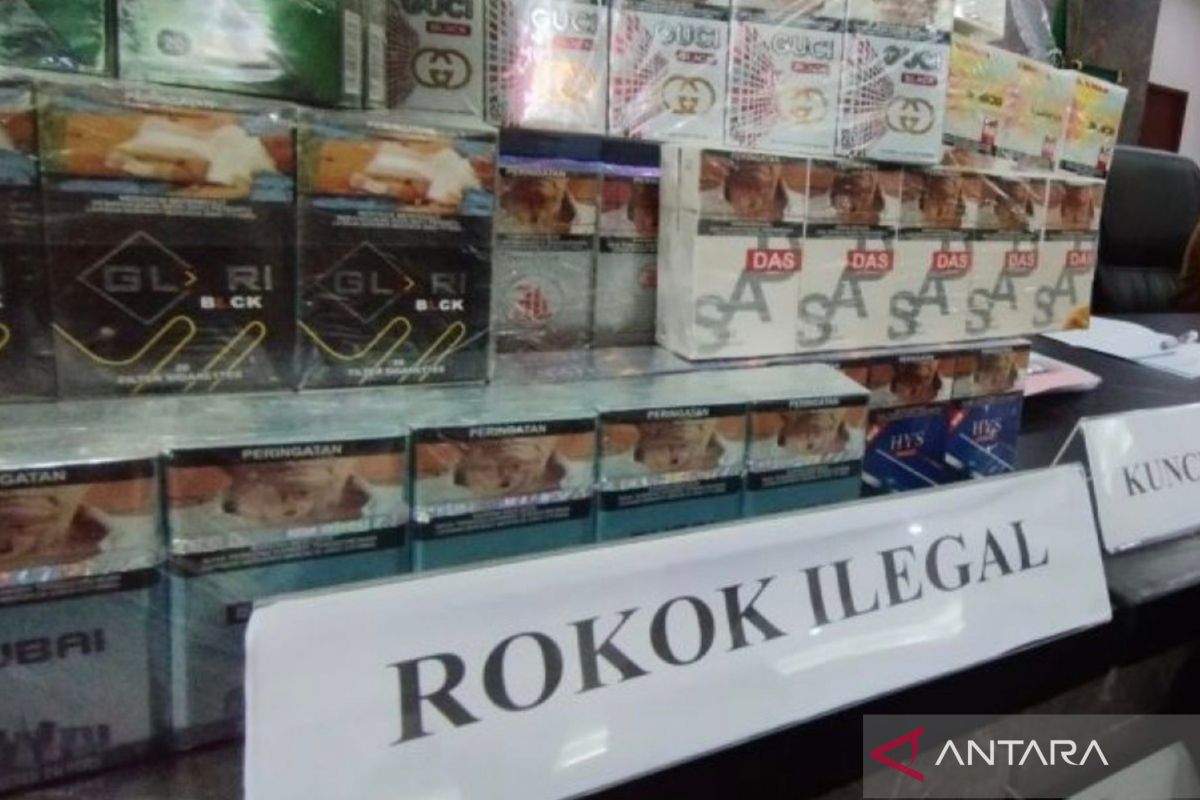
Jakarta (ANTARA) - Agung Widyantoro, a member of Commission III of the House of Representatives (DPR RI), has assessed that the proposal to add a new excise tariff layer for class 3 tobacco products as a means of bringing illegal cigarettes into the formal system will weaken law enforcement.
Therefore, the member of Commission III, which oversees legal affairs, human rights, and security, reminded the government not to ignore aspects of law enforcement and the protection of state revenue.
According to him, the main issue in optimising excise revenue is the rampant practice of producing and distributing illegal cigarettes, which causes state revenue leakage and creates unfair business competition.
"Every fiscal policy, including adjustments to excise structures or tariffs, must place law enforcement as the top priority," Agung said in a statement in Jakarta on Thursday.
He continued that the government needs to be careful so that the new policy being prepared does not create a perception that the state is more focused on regulatory adjustments than on eradicating actual violations occurring in the field.
He emphasised that the basic principle of a state of law is that every violation must be processed according to applicable regulations. Law enforcement must proceed indiscriminately against producers, distributors, or parties suspected of protecting or facilitating the circulation of illegal cigarettes.
Agung assessed that illegal cigarettes constitute a legal violation that must be handled through strict supervision and enforcement. Therefore, the creation of a new excise layer or various schemes linked to attracting illegal operators into the formal system must not be perceived as a form of compromise with legal violations.
"There must be no impression that operators who previously operated illegally are given an easy path without going through adequate legal accountability mechanisms," he said.
Furthermore, Agung also stressed the importance of maintaining a deterrent effect in law enforcement to avoid creating a moral hazard perception in society.
"The deterrent effect is one of the main objectives of law enforcement. If business actors see that violations can eventually be followed by room for adjustment or certain relaxations, then there is a potential misperception that the legal risk has become lower."
"In a sector with significant economic value such as the tobacco products industry, every policy change must be accompanied by a transparent and accountable supervision system so as not to open opportunities for irregularities or corrupt practices," he said.
Agung reminded that the government must ensure that no excise policy is exploited by illegal operators to gain legitimacy or new room for compromise.
In addition, he continued, policy adjustments must not erase the legal consequences or responsibility for violations that have already occurred.
"Periodic evaluations must be carried out to ensure that policies are not exploited as loopholes by illegal operators to obtain legal status without fulfilling the legal consequences for previous violations," he said.