
Legislator Calls for Shipping Safety Overhaul After Virgo Ship Incident
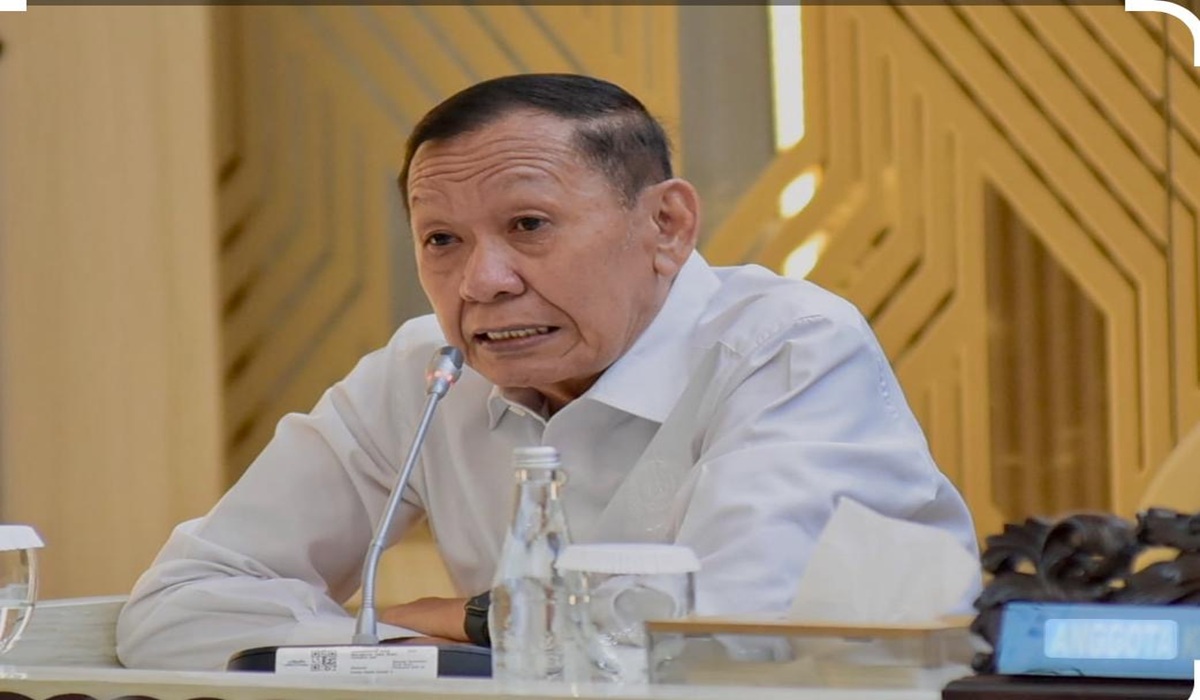
A member of Commission V of the Indonesian House of Representatives from the Golkar Party faction, Hamka B. Kady, has asserted that the accident involving the Virgo Transport 8 in the Java Sea must serve as a moment for a thorough evaluation of shipping safety regulations and oversight. He expressed deep condolences over the loss of life in the accident, which occurred on Sunday (13 September).
“This shipping safety issue is not one I have raised for the first time. The recurrence of ship accidents indicates that problems remain in seaworthiness inspections, the issuance of Sailing Approval Letters (SPB), manifest accuracy, cargo supervision, weather information coordination, and the readiness of safety equipment,” said Hamka, quoted from a press release received on Tuesday (15 September).
The vessel, which was on the Surabaya–Banjarmasin route, was reported to have encountered bad weather and high waves before listing, losing contact, and eventually being found capsised.
According to the manifest, the ship was carrying 243 people, comprising 213 passengers and 30 crew members, as well as 89 vehicles. Data from the Ministry of Transport as of 14 September 2026 recorded 108 survivors, six dead, and 129 people still being searched for.
According to data from the National Transportation Safety Committee (KNKT), throughout 2025 there were eight shipping accidents investigated, comprising six sinkings, one fire, and one collision. Specifically for Ro-Ro vessels, the KNKT recorded 46 accidents in Indonesian waters between 2003 and August 2026.
KMP Virgo Transport 8 was a Ro-Ro vessel built in Japan in 1987 and approximately 39 years old. According to Hamka, a ship’s age does not automatically render it unseaworthy. However, a vessel’s age and operational history should be risk factors in inspections of hull construction, plate thickness, machinery, electrical systems, watertight doors, stability, and safety equipment.
“The Ministry of Transport needs to disclose the results of the ship’s last inspection, its classification status, maintenance history, stability test results, and the basis on which the Harbour Master issued the SPB. Ship safety must not be declared solely on the completeness of documents, without verifying actual conditions in the field,” he asserted.
Hamka also highlighted the availability of lifeboats and rescue equipment. The KNKT was asked to confirm whether the number and capacity of lifeboats and liferafts were sufficient for all passengers and crew, given that lifeboats must be tested periodically, be easily accessible, and be releasable when a ship experiences extreme listing.
“The availability of life jackets, evacuation routes, alarms, emergency lighting, EPIRB, communication devices, the conduct of safety briefings, and emergency drills for the crew must also be examined,” he said.
From a regulatory standpoint, Hamka stressed that Article 219 paragraph (4) of Law Number 17 of 2008 on Shipping, as most recently amended by Law Number 66 of 2024, grants the Harbour Master the authority to postpone departure if a vessel fails to meet seaworthiness requirements or on weather considerations.
“Even if the ship’s safety certificate remains valid, the Harbour Master may still postpone departure if information from the BMKG indicates dangerous waves and weather. Therefore, it must be examined whether BMKG warnings were received by the Port Authority Office (KSOP), the operator, and the captain, and what considerations led to the ship being allowed to depart or continue its voyage,” he explained.
Hamka urged an evaluation of Ministry of Transport Regulation Number PM 28 of 2022 on procedures for issuing SPBs. In his view, the regulation needs to establish firmer operational indicators regarding wave height, wind speed, vessel type and capability, and route characteristics as the basis for postponing departures.
In addition, the implementation of PM 57 of 2021 and its amendments concerning the inspection, testing, and certification of ship safety should be directed towards a risk-based inspection system. Elderly Ro-Ro passenger vessels must undergo more thorough inspections of structure, engines, stability, lifeboats, and evacuation systems.
Hamka also requested that the KNKT investigate the possibility of cargo shifting, the effectiveness of cargo lashings, the captain’s decisions in facing bad weather, the functioning of alarms and emergency communication equipment, and the inspection and SPB issuance process.
“The results of the KNKT investigation must not stop as an administrative report. Every recommendation must have an implementation deadline, its follow-up must be announced, and it must be supervised by the Ministry of Transport and Commission V of the House of Representatives. We must not wait for the next victims before making improvements,” Hamka concluded.
Source: jawawa.id (https://jawawa.id/newsitem/legislator-calls-for-shipping-safety-overhaul-after-virgo-ship-incident-1789447846)
Originally published by Media Indonesia (https://mediaindonesia.com/ekonomi/933507/legislator-minta-evaluasi-keselamatan-pelayaran-setelah-insiden-kapal-virgo), translated from Indonesian