
Legislator calls for probe into intermediaries over anomalous chicken prices
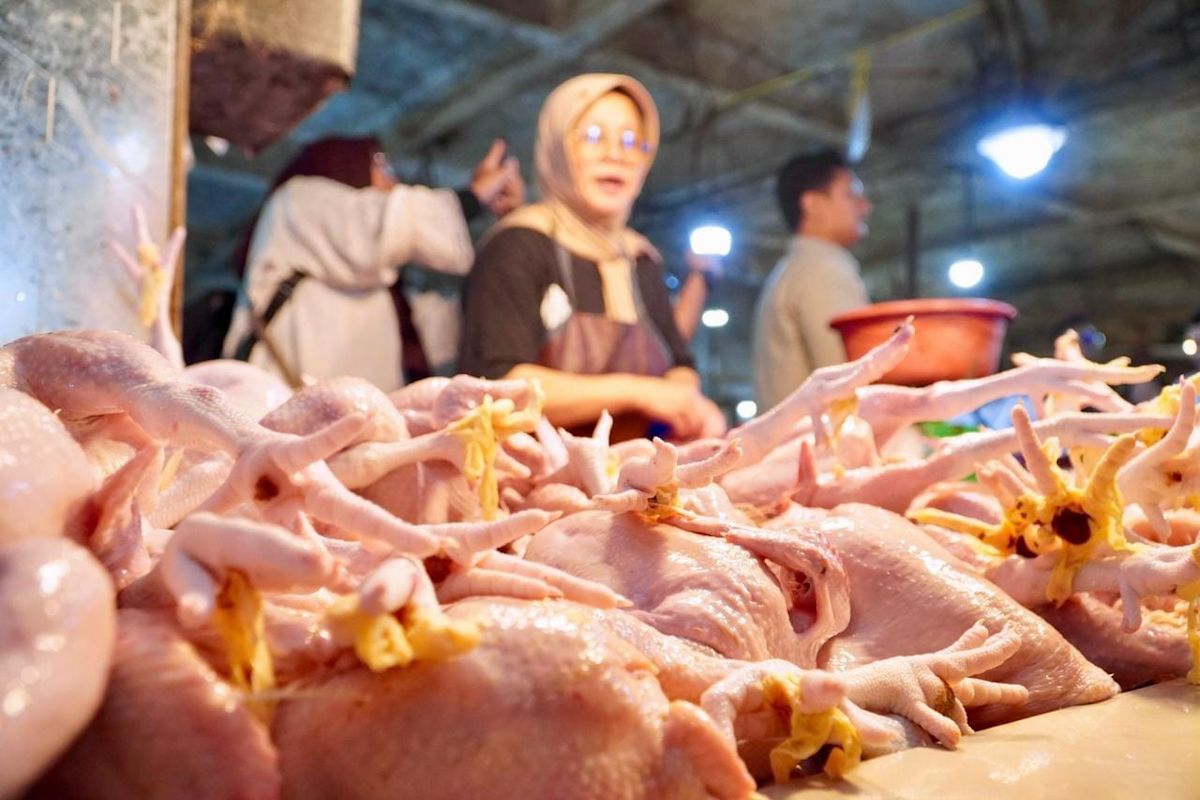
Jakarta (ANTARA) – Bambang Haryo Soekartono, a member of Commission VII of the House of Representatives (DPR), has called for an investigation into suspected manipulation by intermediaries in the distribution chain after finding what he described as an unreasonable gap between the price of chicken paid to farmers and the price charged to consumers.
“Is the problem with the factory or the distributor? This needs to be established. I will keep checking and seeing for myself what is happening on the ground,” Bambang said in a statement confirmed in Jakarta on Saturday.
Retail prices for chicken frequently fluctuate sharply, while poultry farmers face the opposite situation: prices are low and fall short of the government’s Purchase Reference Price (HAP) for producers.
Bambang found this price anomaly at Medokan Sawah Market in Surabaya, East Java. Traders there complained that chicken had reached Rp40,000 per kilogram, in line with the ceiling set by the HAP for consumer prices.
Despite the high market price, traders said their turnover had fallen. Poultry farmers, meanwhile, have yet to receive the price they want, which would at least meet the HAP for live chickens at the producer level, of around Rp25,000 per kilogram of live weight.
“According to the Agriculture Minister, farmers are getting only Rp19,000. That could fall further, but the government has set the price at Rp19,000 so farmers do not go under. So why has the market price risen to Rp40,000? This is a matter for the National Food Agency or the Food Task Force to investigate. This must not be allowed to happen,” Bambang said.
He called on the government and law enforcement agencies to trace the distribution chain all the way to factories and distributors. The anomalous practices must be pursued and must not be allowed to recur.
Meanwhile, National Food Agency (Bapanas) chief and Agriculture Minister Andi Amran Sulaiman called for suspected price manipulation in the distribution chain, including by intermediaries, to be followed up in coordination with law enforcement agencies.
Amran said the price disparity between producers and consumers could not be allowed to persist, as it risked harming both farmers and consumers.
“What is striking is inflation in eggs, chicken and rice. These three stand out, but it is strange that producer prices are below the HAP set by the government. Because prices are low, farmers are protesting. At the same time, consumers are also complaining,” Amran said.
He said the price anomaly could be addressed through law enforcement and stressed the need for coordination across agencies to investigate and act on practices that harm farmers and consumers.
“These middlemen are manipulating prices. We have written to the National Police Chief. We have agreed that, through collaboration, we must fight this. This will not be resolved while the mafia remains entrenched among us. This cannot continue,” Amran said.
The government has also introduced upstream measures targeting poultry farmers, including the Food Supply and Price Stabilisation (SPHP) programme for feed corn.
The first phase of the 2026 feed-corn SPHP programme began in early May. Its total distribution quota was set at 213,200 tonnes to meet the feed-corn needs of micro, small and medium-sized poultry farming businesses.
As of 14 October, distribution under the first and second phases had reached 81.81 per cent of the combined target of 241,200 tonnes. A total of 197,320 tonnes had been accessed by 7,553 farmers through 151 cooperatives in 29 provinces.
The government has also demonstrated its support for the national poultry farming sector by adding to the feed-corn SPHP allocation. An additional 150,000 tonnes is being processed by the government and will increase the allocation assigned to state-owned logistics company Perum Bulog.