
Legislator Backs Agriculture Minister Amran to Stabilise Farmers' Palm Oil FFB Prices
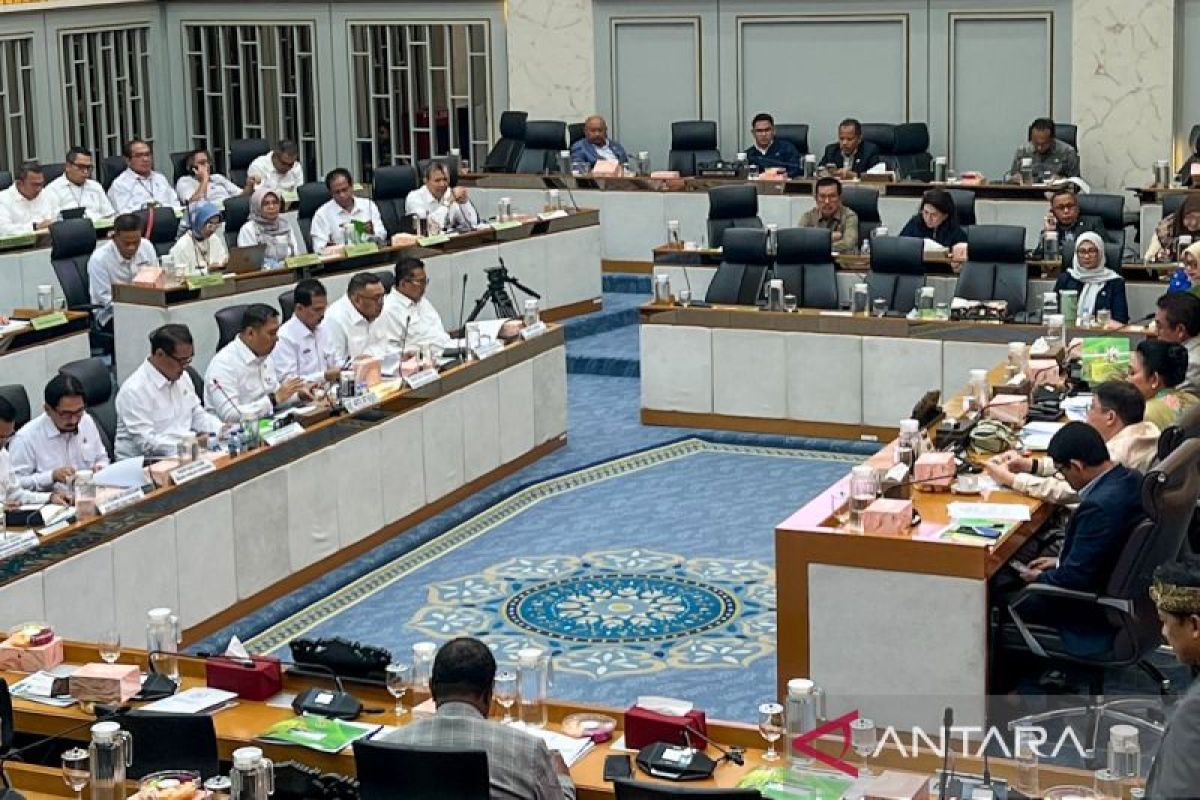
The prompt and responsive presence of the government is greatly needed to maintain the stability of agricultural businesses while protecting farmers’ welfare. Jakarta (ANTARA) - Deputy Speaker of Commission IV of the House of Representatives (DPR RI), Alex Indra Lukman, supports the swift action taken by Agriculture Minister Andi Amran Sulaiman in responding to the issue of fresh fruit bunch (FFB) prices for oil palm smallholders, which has been a long-standing concern for growers. According to Alex, various coordination efforts and strategic measures undertaken by the Ministry of Agriculture are beginning to show positive results on the ground. “Thank you, Mr Minister, palm oil FFB prices are now creeping up,” Alex said during a Working Meeting and Hearing Session of Commission IV DPR RI discussing the Ministry of Agriculture’s 2027 Work Plan and Budget in Jakarta on Wednesday. He assessed that the government’s rapid response through the Ministry of Agriculture is crucial for maintaining the stability of agricultural and plantation businesses while providing certainty for farmers and growers in running their operations. “The prompt and responsive presence of the government is greatly needed to maintain the stability of agricultural businesses while protecting farmers’ welfare,” Alex stated. Responding to this, Agriculture Minister Andi Amran Sulaiman acknowledged he had gathered a number of oil palm farmers to address the falling FFB prices. Amran revealed the issue had received direct attention from President Prabowo Subianto while he was in the Holy Land performing the Hajj pilgrimage. At that time, the President questioned the cause of the FFB price drop, which was deemed inconsistent with global price developments. Upon returning from Hajj, the Ministry of Agriculture immediately conducted an analysis and held meetings with various stakeholders, including palm oil associations, farmers, exporters, the Food Task Force, and the Special Criminal Investigation Directorate from 25 provinces. According to Amran, the FFB price decline was an anomaly because it occurred when global crude palm oil (CPO) prices were around Rp27,000 per kilogram. Furthermore, the roughly 10 percent strengthening of the US dollar exchange rate should have supported domestic palm oil commodity prices. He deemed it illogical for FFB prices to fall when global CPO prices were rising, the dollar exchange rate was strengthening, and domestic cooking oil prices were also increasing. Consequently, the government suspects certain parties are manipulating the palm oil trading system, thereby impacting the prices received by farmers. Amran disclosed that during the meeting, several companies claimed they were still making adjustments or were “shocked” by policy changes and market conditions. However, the government considered these reasons unacceptable because the price decline had lasted two to three weeks. The government’s evaluation results showed there were still 274 companies that had not adjusted their prices as expected. In light of this condition, the Ministry of Agriculture has written to the Chief of the Indonesian National Police, sending copies to regional police chiefs and Special Criminal Investigation Directorates across Indonesia to conduct inspections. According to Amran, this measure is necessary because the impact of the FFB price drop is felt by approximately 15 million people whose livelihoods depend on the palm oil sector. He stressed that the actions of a few parties must not harm millions of farmers and business operators in this sector. The government also found indications that several large companies failed to make purchase offers according to the established mechanisms. This caused transactions to stall, filling up storage tank capacity at mills, leading to a chain reaction that drove down FFB prices at the farm level. Due to the stalled bidding process, activities at several palm oil processing plants were hampered, contributing to the weakening of FFB prices received by farmers in various regions. Nevertheless, Amran noted that conditions are now improving following the government’s intensive oversight and coordination measures. He stated that around 70 to 80 percent of companies that had previously not adjusted prices are now beginning to comply with applicable regulations. The government also emphasised that not all palm oil companies committed violations. Based on monitoring results, around 85 percent of business operators had complied with the established mechanisms, while the remaining 15 percent have been referred for further investigation by law enforcement officers through the National Police Food Task Force.