
Legislator: Asset Forfeiture Bill must build national asset recovery system
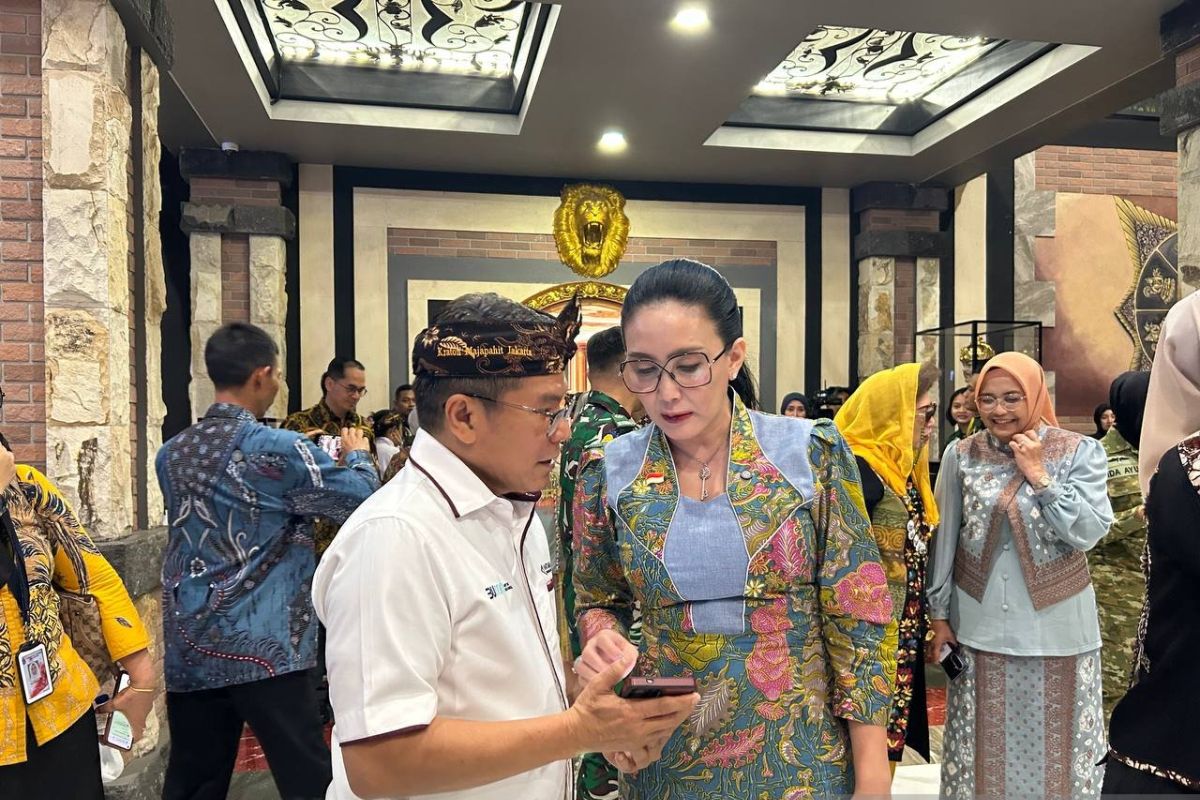
The asset recovery system must be complete from tracing, freezing, seizure, evidentiary proceedings, forfeiture, management, auction, to the return of assets, with a clear division of authority and accountability.
Jakarta (ANTARA) - Member of Commission XIII of the Indonesian House of Representatives Rieke Diah Pitaloka has said that the Asset Forfeiture Bill must build a single national asset recovery system within an integrated criminal justice system.
According to her, the Asset Forfeiture Bill must not create a new regime that overlaps with the Criminal Code (KUHP) and the Criminal Procedure Code (KUHAP).
“The authority of every institution from tracing to the return of assets must be firm, transparent, subject to oversight, and accountable,” Rieke said in her statement in Jakarta on Thursday.
However, she cautioned that the Asset Forfeiture Bill must not merely strengthen the state’s authority to confiscate. Given that Article 1 paragraph (3) of the 1945 Constitution of the Republic of Indonesia affirms that Indonesia is a state based on law, asset forfeiture must therefore be subject to legal certainty, due process of law, judicial control, human rights protection, and the prevention of abuse of power.
She stated that this bill must become an integral part of the Integrated Criminal Justice System, harmonised with Law Number 1 of 2023 concerning the Criminal Code and Law Number 20 of 2025 concerning the Criminal Procedure Code.
“The asset recovery system must be complete from tracing, freezing, seizure, evidentiary proceedings, forfeiture, management, auction, to the return of assets, with a clear division of authority and accountability,” she explained.
Including Non-Conviction Based Asset Forfeiture (NCB), she continued, namely the forfeiture of assets that does not depend on a person’s criminal conviction under conditions stipulated by law.
“NCB is necessary so that assets derived from crime do not escape, but it must be limited by standards of proof, judicial control, the right to object, and the protection of third parties acting in good faith,” she said.
Furthermore, she said, the government must conduct a regulatory review and comprehensive harmonisation of regulations and internal rules concerning seizure, forfeiture, auction, management and return of assets derived from crime, including evaluating Government Regulation Number 11 of 1947 in conjunction with Government Regulation Number 43 of 1948 and its derivative rules.
“The aim is to close legal gaps, eliminate disharmony of authority, prevent abuse of power, and guarantee due process of law and citizens’ rights,” she said.
The next recommendation is that the bill must clearly distinguish the legal regime for state confiscated goods, the rights of victims and third parties, and assets that have the character of fiduciary funds.
The experience of cases such as ASABRI, she continued, must serve as a normative evaluation so that assets are not automatically treated as state revenue before their origin, character, and rightful holders are determined.
“15 December 2026 must be a turning point. The state must be strong in confiscating the proceeds of crime, the law must be strong in protecting citizens’ rights, and the system must ensure that every recovered asset can be traced until it ultimately returns to the state, victims, fiduciary fund participants, or parties who are legally entitled,” she said.
Source: jawawa.id (https://jawawa.id/newsitem/legislator-asset-forfeiture-bill-must-build-national-asset-recovery-system-1787831661)
Originally published by Antara (Indonesian) (https://www.antaranews.com/berita/5713875/legislator-ruu-perampasan-aset-harus-bangun-pemulihan-aset-nasional), translated from Indonesian