
Legal Uncertainty in Forest Areas Threatens Sustainability of National Palm Oil Investment
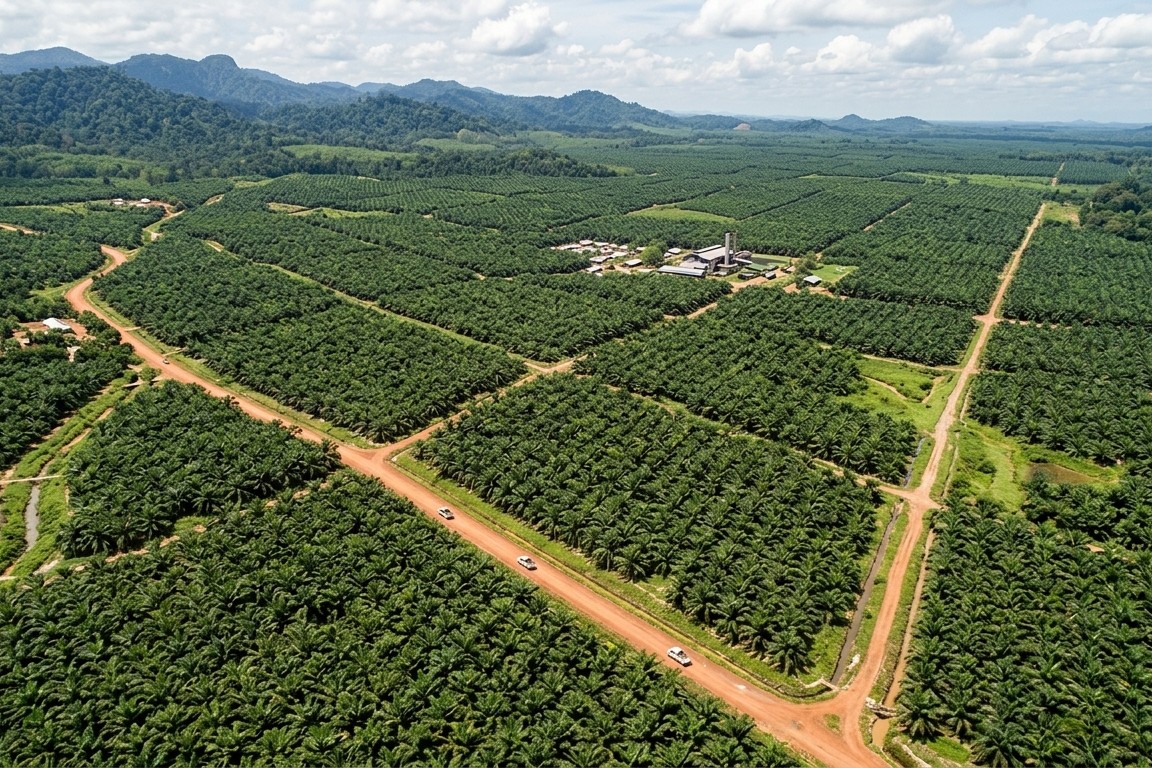
Legal uncertainty regarding the management of forest areas currently poses a serious threat to the sustainability of national palm oil industry investments, which serve as a primary pillar of Indonesia’s state foreign exchange. The issue arises from overlapping regulations and lack of synchronisation in geospatial data among government institutions. This situation creates legal vulnerabilities for business actors and smallholder farmers operating in the field daily. Referring to the IPOSS Outlook for the Indonesian Palm Oil Industry 2026 document, approximately 3.3 million hectares of current palm oil plantations still hold a status within forest areas that lack final legal determinations. The indicative land status creates concerns about potential administrative sanctions up to unilateral asset seizures. This disrupts long-term business planning and reduces interest from foreign investors. The government has actually formed a Task Force (Satgas) for Forest Area Regulation through Presidential Regulation (Perpres) Number 5 of 2025. However, the increased intensity of supervision has not been accompanied by acceleration in resolving land legality. Several main obstacles in resolving land status include: - Lack of synchronisation of data between the Ministry of Agrarian Affairs and Spatial Planning/National Land Agency (ATR/BPN) and other technical ministries. - Administrative processes for forest area release applications that take an extremely long time. - Limitations in field verification to ensure accurate dynamics of landscape changes. The Constitutional Court (MK) Decision Number 45/PUU-IX/2011 has actually instructed that the designation of forest areas must go through an affirmation process. In fact, many palm oil lands are still contested merely based on administrative designations. This condition hampers the realisation of the People’s Palm Oil Rejuvenation Programme (PSR) because land legality is an absolute requirement for financing. As a result, smallholder plantation productivity tends to stagnate at 3.3 tonnes of oil per hectare per year. Policy fragmentation is also evident from the involvement of at least 37 ministries and agencies holding different authorities. This situation creates high regulatory risks for operational certainty in the industry from upstream to downstream. Impacts of this legal uncertainty include: - Decline in the competitiveness of Indonesian Crude Palm Oil (CPO) in international markets. - Difficulties in meeting geo-coordinate tracking standards required by the European Union Deforestation Regulation (EUDR). - Emergence of horizontal conflicts between business actors and indigenous legal communities in areas around plantations. Resolving land claims requires a systemic approach to avoid disrupting the established economic ecosystem. Integration of a single and credible national database becomes an urgent need for all stakeholders. Without integrated legal certainty, the national productivity target of 35 tonnes of Fresh Fruit Bunches (TBS) per hectare will be difficult to achieve. Harmonisation of central and regional policies is the main foundation towards a sustainable vision.
Source: jawawa.id (https://jawawa.id/newsitem/legal-uncertainty-in-forest-areas-threatens-sustainability-of-national-palm-oil-investment-1777824463)
Originally published by haisawit.co.id (https://haisawit.co.id/news/detail/ketidakpastian-hukum-kawasan-hutan-ancam-keberlanjutan-investasi-sawit-nasional), translated from Indonesian