
Legal Risks in Factory Demolition Projects
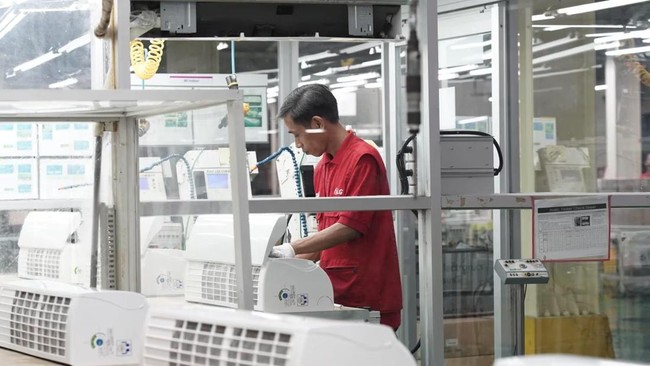
A decision to shut down a factory does not necessarily bring a company’s business obligations to an end. Behind the cessation of production lie the decommissioning of facilities, dismantling of equipment, transport of assets and environmental restoration, all of which involve substantial costs and multiple parties.
Without careful contract planning, a project intended to make operations more efficient can instead trigger commercial disputes, ranging from cost overruns to claims for compensation for damage to assets.
In industry, decommissioning is the planned process of ending a facility’s operations. It includes isolating systems, managing residual materials, dismantling equipment, and handling machinery and infrastructure. The process must be carried out safely and systematically, with due regard to relevant environmental obligations.
Factory demolition is not merely technical work. It involves contractual relationships between the facility owner, contractors, waste-management service providers and other parties. If responsibilities, work standards or payment mechanisms are not clearly defined, every stage of the project can become a source of dispute.
For a company, the key question is not only how to demolish a factory safely, but also how to keep legal and financial risks under control from the start of the work until all contractual obligations have been discharged.
Factory Decommissioning: Two Phases That Determine Business Risk
Whatever the reason, a company’s decision to decommission a factory should be accompanied by balanced technical and legal planning. In general, a factory decommissioning and demolition project can be divided into two phases.
The first is a critical phase, directly involving the shutdown and isolation of operational systems and site preparation before physical demolition begins. Work may include isolating energy sources and utilities, draining and disposing of residual media, shutting down the wastewater treatment plant in accordance with procedures, and remediating and cleaning the site.
Mistakes or an unclear allocation of responsibilities at this stage can affect worker safety, environmental conditions and the facility’s readiness for the next phase.
The second phase covers the dismantling of production equipment, utilities, buildings and supporting infrastructure. On production lines, work may include dismantling systems, carbonators, machinery, conveyors and palletising equipment. Equipment no longer in use may be processed as scrap metal in accordance with applicable rules, while equipment intended for reuse requires appropriate handling, packaging and transport procedures.
Similar work applies to utility equipment, such as compressors, chillers, reverse osmosis (RO) systems, boilers, water treatment plants (WTPs) and wastewater treatment plants (WWTPs). Demolition may also cover production buildings, warehouses, utility buildings, offices, pipe networks, cable routes, tanks and structural foundations.
From a legal perspective, all this work should be translated into a measurable contractual scope. The agreement should not merely refer in general terms to “factory demolition”; it should also specify the stages of work, required deliverables, completion standards, allocation of responsibilities and procedures for accepting the work.
Without such provisions, the parties may disagree over when work is complete, who is responsible for particular damage and whether additional costs are actually payable by the factory owner.
Contract Clauses That Determine the Scale of Potential Losses
Dispute-resolution clauses are important, but their effectiveness depends heavily on the clarity of the substantive obligations agreed by the parties. Even a contract that sets out the dispute forum in detail may offer inadequate protection if its scope of work, price, performance standards and liability for losses remain open to differing interpretations. At least four areas require particular attention.
First, pricing structure, payment and taxation. A factory-demolition contract may cover preliminary work, site preparation, health, safety and environment (HSE) equipment, project-office supplies, labour rates, material or waste handling, and equipment packaging and shipping.
Under a cost-plus arrangement, the contractor is paid for actual costs that meet the contract requirements, plus an agreed fee or markup. This model can offer flexibility when the work required cannot be fully determined at the outset. But that flexibility also creates risks if billable cost categories, budget limits and approval procedures for additional expenses are not clearly specified.
The contract should therefore set out cost documentation, supporting evidence, applicable rates, requirements to obtain approval before incurring certain expenses, and the factory owner’s right to verify or audit costs.
Tax treatment, including applicable taxes on service payments and material transactions, should also be addressed in accordance with the rules in force. Without these controls, disagreements over the difference between genuinely necessary costs and those chargeable under the contract can develop into payment disputes.
Second, waste management and environmental responsibility. Decommissioning work can generate various types of waste, including residual process materials, chemicals and other materials requiring special handling.
The parties may agree to engage third-party contractors with the licences and expertise appropriate to the work and waste involved. However, appointing a third party does not automatically remove all contractual responsibility from the main contractor.
The agreement should explain who is responsible for selecting the provider, supervision, transport, delivery to an authorised waste manager, and retaining documents that demonstrate the work was carried out as required.
That allocation of responsibility must also be aligned with applicable laws and regulations. This is important because failures in waste management can lead not only to additional costs, but also to compliance issues and legal claims.
Third, performance measures and work standards. The contract should establish performance measures covering assessment areas, key performance indicators (KPIs), targets and measurement methods.
For example, compliance with safety and environmental standards could be assessed by the number of recorded safety violations, with targets of zero lost-time injuries (LTIs) and no serious safety violations.
Measurement methods could include safety observation records, inspection reports and documentation of pre-work safety briefings (toolbox meetings). Targets should be accompanied by reporting and verification mechanisms, as well as consequences for failure to meet them.
The agreement should also specify the technical standards used to assess the work. If standards are not adequately defined, the parties risk disagreeing about the criteria for determining whether the services have been performed in accordance with the contract.
Standards set by the National Standardisation Agency (BSN) or relevant international standards may be used where appropriate to the nature of the work and applicable requirements. Such references should, however, be specified in the agreement rather than included only as a general clause.
Fourth, compensation and insurance coverage. Demolition may damage assets that are still to be used, facilities around the site or equipment that the company intends to retain.
The contract should therefore establish the allocation of responsibility for damage, incident-reporting procedures, inspection mechanisms and the basis for calculating compensation. These arrangements should be coordinated with insurance provisions, including the type and value of coverage, exclusions, liability limits and claims procedures.
Contractual liability limits should be formulated consistently with the insurance coverage and the project’s actual risks. Companies should not assume that all damage will automatically be covered by insurance or that the insured amount will always equal the recoverable loss. Both depend on the contract, the policy and the facts of the incident.
When a Project Runs into Trouble: Evidence and Mitigation Strategies for Commercial Disputes
Dispute risks often become apparent only after work is under way: Phase 1 is completed late, environmental remediation is unfinished, cost-plus invoices increase without adequate supporting documents, or equipment intended for reuse is damaged.
In such situations, it is not enough to show that the project has resulted in a loss. A company needs to prove which contractual obligation was breached, the nature of the breach and the link between it and the loss claimed.
The first step is to identify the unfulfilled obligation. Delays, failure to comply with specifications, failure to provide documentation, charges that do not follow the contractual mechanism and damage to assets caused by the work may provide grounds to assess a potential breach of contract, depending on the agreement and the facts of the case.
The company should check whether the contract requires written notice, an opportunity to remedy the breach (a cure period) or compliance with particular procedures before it can terminate the contract or claim compensation.
The second step is to secure evidence while the work is in progress. Documents created during the project can be crucial in a commercial dispute. Records of the factory’s condition before and after the work, technical inspection reports, HSE records, photographs and videos, minutes, waste-management reports, approvals for additional costs and correspondence about changes to the scope of work can help establish what was agreed and what was actually done.
These documents should be stored systematically, with dates, the parties responsible and clear links to the relevant work or invoices. If damage occurs, an independent technical inspection may be considered to document the condition of the asset, its possible cause and the repairs required.
This approach is not simply preparation for court or arbitration. Good documentation also strengthens a company’s position in negotiations and helps distinguish well-founded claims from disputes that could be resolved through administrative clarification.
The third step is to calculate losses that can be substantiated. Depending on the circumstances and contractual terms, business losses should be calculated on a clear basis and may include asset-repair costs, additional remediation costs, the cost of completing the work through a replacement contractor, and demonstrable losses caused by delay.
The company should also assess whether each element of loss is causally linked to the alleged breach, supported by adequate evidence and claimable under the applicable law and contract. A large claim is not necessarily a strong one. In commercial disputes, the quality of evidence supporting liability and the calculation of losses can determine the effectiveness of a recovery strategy.
The most important step is to determine the appropriate dispute-resolution route. Before taking a matter to court or arbitration, the company should review the dispute-resolution clause, governing law, jurisdiction, notice procedures and other contractual requirements.
Negotiation may be an option if the parties still have room to agree on costs, remedial work or an orderly termination of the contract. If no settlement is reached, however, the company needs to assess the merits of its claim, the strength of its evidence, the amount of the loss, the costs of proceedings and the risk of enforcing a decision.
Litigation or arbitration is not merely a last resort when business communication fails. These are legal routes that must be prepared on the basis of the contract documents, evidence of breach and substantiated losses. The chosen strategy should also account for preserving evidence, controlling legal costs and avoiding actions that could weaken the company’s legal position.
Source: jawawa.id (https://jawawa.id/newsitem/legal-risks-in-factory-demolition-projects-1794210652)
Originally published by CNBC Indonesia (https://www.cnbcindonesia.com/opini/20261109141724-14-783579/risiko-hukum-dalam-proyek-pembongkaran-pabrik), translated from Indonesian