
Legal Reform Still Far from Complete
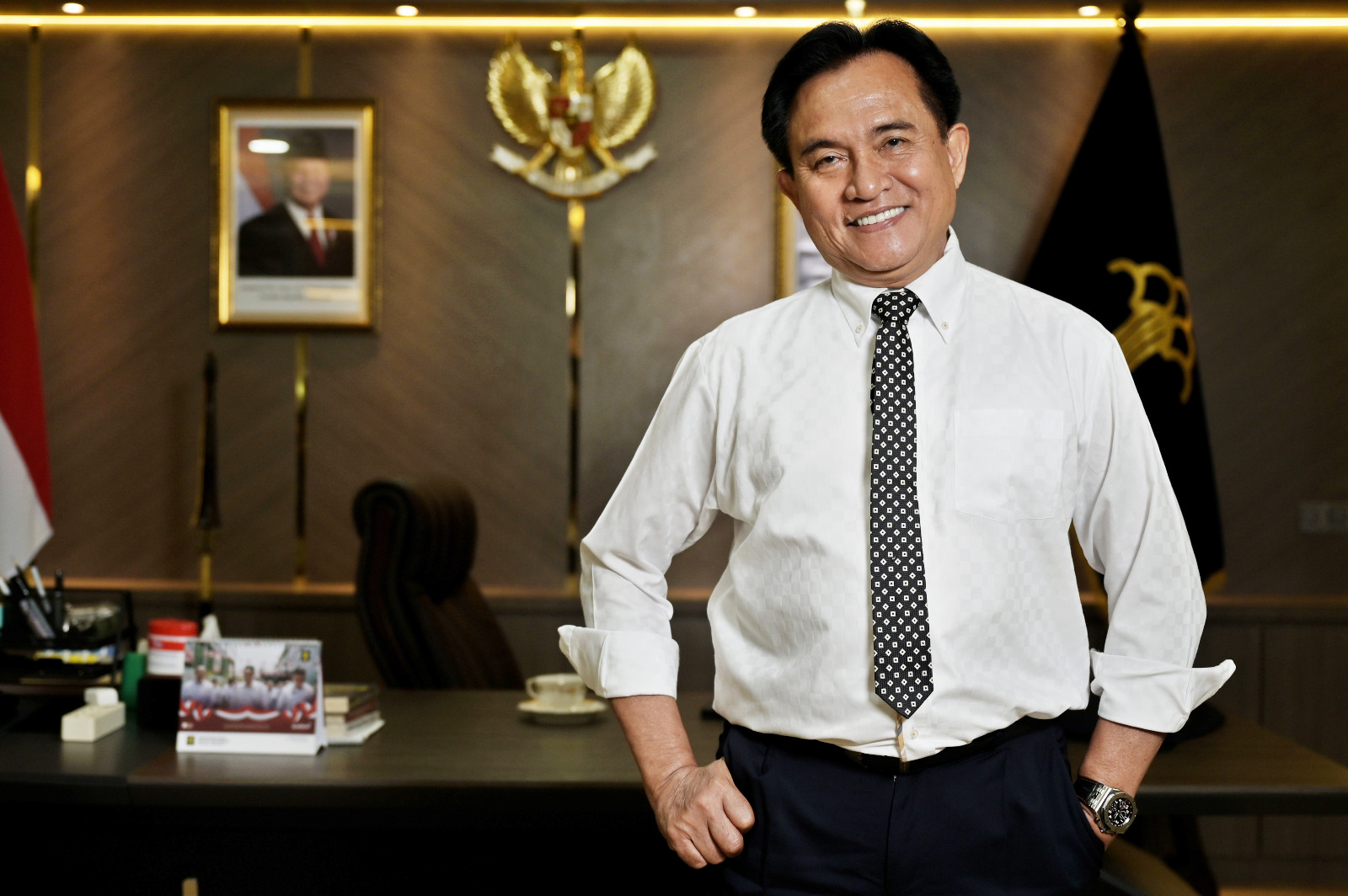
More than eight decades since the nation’s independence, Indonesia’s legal development feels incomplete in delivering full justice to the people. Even post-reform efforts to reform the law seem to be stagnating, despite fundamental changes in legislative renewal. The state has produced a vast number of regulations and carried out various institutional changes, but the end result has yet to provide ideal conditions for society. Coordinating Minister for Law, Human Rights, Immigration, and Corrections Yusril Ihza Mahendra highlighted the aspect of developing law enforcement personnel, which he believes is still stagnating. Yusril discussed three other aspects of legal development: the development of legal norms, the development of legal facilities and infrastructure, and the development of legal culture. Looking at the reform era, the effort to build national law has actually been extraordinary. There have been very fundamental legal changes, from constitutional amendments to changes in the structure of our state administration, and that process involved an enormously large process of changing legal norms. We also created new institutions. At the judicial level, there is the Constitutional Court, the corruption court, and other special courts. We then handed over the authority of the then Minister of Justice to handle the entire judiciary to the Supreme Court, and we created the Corruption Eradication Commission and so on, which made the corruption law much tougher. From a normative perspective, I think we have made a lot of changes. However, in terms of developing law enforcement personnel, we can say we have not made any progress at all. Institutions have been formed. For example, in handling corruption, the police have authority, prosecutors have authority, and the KPK has authority. We also gave authority to the inspectorate general, the Financial and Development Supervisory Agency, and the Audit Board to conduct supervision and auditing, and so on. But despite creating so many institutions and replacing so many law enforcement personnel, our law has not improved; instead, it has become more damaged. We now see bad examples from law enforcement officers themselves, whether committed by police personnel, prosecutors, or the KPK. When the situation is like this, with bad examples from top to bottom, how can we expect the people to obey the law? The Deputy Attorney General for Special Crimes specifically handles corruption. But there are still many bribery processes, gratification, extortion, and so on occurring, and it is spreading like an octopus down to the lower levels. I think it will take one generation to change this. Because we build structures and replace personnel, but if there is no strong ethical awareness and high morality in this nation, the law we build will be in vain. Regarding the revision of the Police Law, the task of the Police Reform Acceleration Committee was to formulate the current and future face of the National Police. However, the initiative for the revision came from the House of Representatives. So, it seems that what the committee submitted to the President is not connected to the draft proposed by the DPR. If the main points are the same, for example, the Police being under the President, that remains the same. What was not accommodated, for instance, was the strengthening of the National Police Commission. That was not visible at all. Another point that was emphasised was the placement of active police personnel in positions outside the police force. There was a recommendation submitted by the Police Reform Acceleration Committee on this matter, and the recommendation was included in the law, which will then be regulated in a Government Regulation. In terms of technology for law enforcement, our tools to detect and prevent crime are also far behind. Especially as we enter the era of cybercrime and artificial intelligence, where people can easily manipulate things, personal data can be erased, and proxy propaganda can run. Someone could suddenly make a speech with my voice, but the content is not from me, and it could end up as a political trap. These are things that we feel are imperfect. Our legal facilities and infrastructure are continuously lagging behind. For example, if we look at correctional facilities or detention centres, the facilities for law enforcement are insufficient to address these issues.