
Legal Practitioner: Military Court Jurisdiction Focuses on TNI Legal Subjects
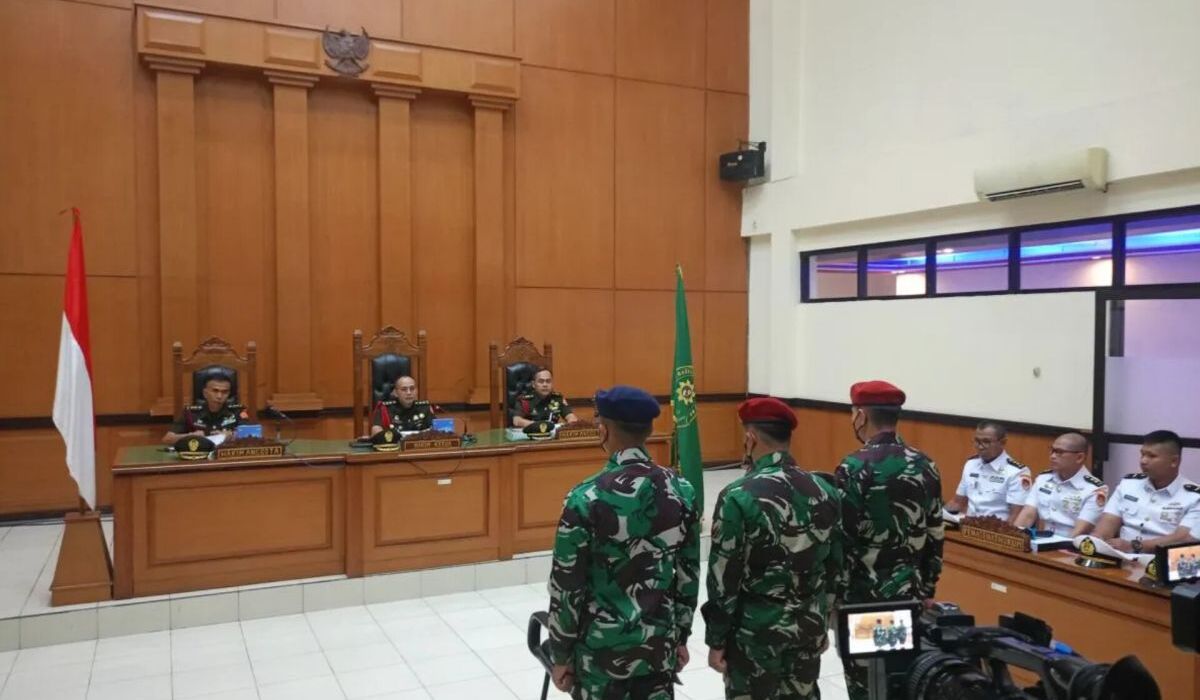
Legal practitioner Agus Widjajanto has stressed the importance of a comprehensive understanding of military court jurisdiction in handling legal violations involving TNI members. He emphasised that in the military justice system, the primary focus is on the legal subject, namely the military personnel themselves, rather than the legal object.
“The legal subject in military courts is the person committing the criminal act, namely the soldier or military member suspected of breaking the law. Therefore, in this case, the legal subject is the perpetrator of the crime, who must be tried in the military court, not the general court,” Agus Widjajanto stated in his comments on Monday (6/4/2026).
Agus explained that in legal construction, the legal subject is an entity with rights and obligations. Meanwhile, the legal object is the thing or item related to those rights and obligations. In this context, the TNI soldier suspected of committing a violation is the legal subject who must be accountable for their actions before the military court.
Furthermore, Agus outlined the legal basis strengthening this argument, namely Article 65 paragraph (1) of Law No. 34 of 2004 on the TNI. This regulation explicitly states that TNI members who commit criminal acts are tried by the military court.
This is also reinforced by Article 9 of Law No. 31 of 1997 on Military Justice, which grants exclusive authority to the military court to try TNI members involved in criminal acts.
“If the legal subject is an active TNI member, then they must be tried in the Military Court. The military court has exclusive jurisdiction to handle such cases,” Agus added.
This statement comes as a response to public dynamics regarding the acid attack case against activist Andrie Yunus, allegedly involving rogue TNI members. Agus affirmed that as long as the perpetrator holds active member status, the legal resolution must follow the corridors of the TNI Law and the Military Justice Law.
On the other hand, previously, Deputy Coordinating Minister for Law, Human Rights, Immigration, and Corrections, Otto Hasibuan, asked the public to continue entrusting the law enforcement process to the government. He assured that cases involving rogue TNI members, including the Andrie Yunus case, are being handled seriously.
“With what the President conveyed in Hambalang yesterday, I think there is no longer any doubt for us to believe in the President’s determination in resolving such issues,” Otto Hasibuan said.
Otto mentioned that President Prabowo Subianto’s directives are very clear: acts of violence such as acid attacks cannot be justified and must be processed legally. As a form of accountability, the position of Head of the Strategic Intelligence Agency (BAIS), previously held by Lieutenant General TNI Yudi Abrimantyo, has been handed over to facilitate the legal process.
“The legal process is underway, the person has been arrested. I think it’s already clear,” Otto asserted.
Although understanding public concerns regarding transparency, Otto guaranteed that Indonesia as a rule of law and democratic country continues to uphold justice. “We provide freedom of opinion to anyone to monitor this case, but entrust the process to the appropriate legal channels,” he concluded.