
Legal Experts Examine AI Challenges for Notaries in 17 Studies
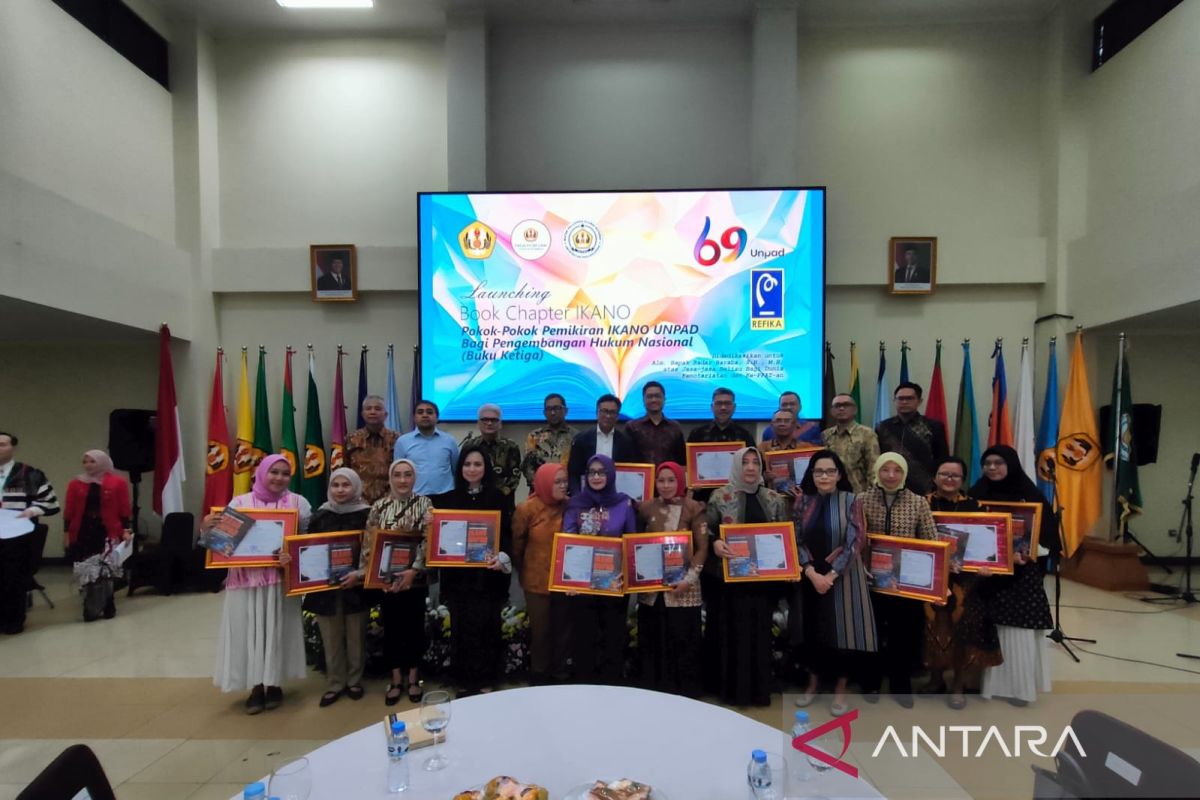
Bandung (ANTARA) – Legal experts and academics have examined the challenges posed by the use of artificial intelligence (AI) in the notarial profession in a collection of 17 legal studies launched by Universitas Padjadjaran’s Faculty of Law (FH Unpad) and the Unpad Notarial Alumni Association (Ikano Unpad).
The book, titled Book Chapter 2026, was launched at the Unpad campus in Bandung on Thursday as part of the Faculty of Law’s 69th anniversary. It presents a range of perspectives on developments in Indonesian law, covering notarial practice, business law, civil law, family law and inheritance.
One of the book’s editors, Dadang Epi Sukarsa, said the development of cyber notary—the use of digital technology in notarial practice—was among the issues examined by the contributors.
He said these technological developments needed to be considered in relation to existing regulations and the legal responsibilities of notaries.
Alongside digitalisation, the book also discusses the possible criminal liability of notaries in certain circumstances, including the preparation of deeds alleged to breach legal requirements.
The first section examines digital transformation and the challenges facing the notarial profession in the age of artificial intelligence.
The second section considers directors’ authority and responsibilities in business practice through the business judgment rule (BJR), notaries’ role in interpreting the law when preparing authentic deeds, and notaries’ liability from a criminal-law perspective.
The third section discusses the role of notaries in the changing landscape of business law, including agreements, guarantees and sharia-based law.
The fourth section addresses agrarian and land law, as well as civil law, while the fifth examines developments in marriage, family and inheritance law.
Dadang said the book had been edited without changing the substance of the contributors’ ideas.
The editing focused mainly on technical aspects, including formatting, typography, language, word choice and notes, as well as ensuring terminology complied with standard language rules.
Where a passage required substantive clarification, the editors first consulted the relevant author.
Dadang said he hoped the book would serve not only as a reference for academics and notarial practitioners but also contribute to the development of Indonesian law.
Meanwhile, Unpad Vice-Rector for Resources and Governance, Professor Widya Setiabudi Sumadinata, praised the publication as part of efforts to advance legal scholarship through the exchange of ideas.
She said dialogue between universities, the government and the public needed to be strengthened so that legal thinking could respond to change and emerging issues.
“I hope collaboration between the government, universities and the public can continue to be strengthened through various activities, including education, research and community service,” she said.
Published by PT Refika Aditama, the book is dedicated to the late Badar Baraba, a former adjunct lecturer in Unpad’s Master’s Programme in Notarial Studies and a founder of Ikano Unpad.