
Legal, Economic, and Democratic Review of the 14 August 2026 State Address
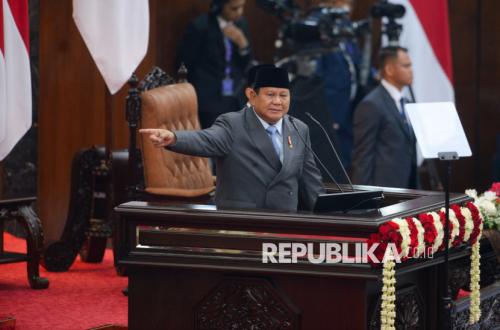
The Nusantara Building in the parliamentary complex once again bore silent witness to the delivery of the Government Performance Report at the Joint Session of the DPR-DPD RI on 14 August 2026. President Prabowo Subianto’s speech, which broadly recounted the achievements of his 21-month (663-day) leadership, arrived with strong rhetoric, implying burning optimism. With a claim of 121 transformative policies executed, at an average speed of one policy every five days, the government projects the image of a ‘bureaucratic machine’ running tirelessly. However, from a legislative perspective, this executive speed raises a fundamental question: to what extent is this speed directly proportional to legal precision, democratic balance, and equitable regional autonomy? The evaluation of this speech must not stop merely at applause for a series of growth figures, but must be critically dissected. Public policy is not merely a statistical commodity; it is a manifestation of the constitution that must be guarded so as not to slip into the euphoria of centralisation.
Economic Dimension
The President presented impressive macroeconomic data. Economic growth of 5.29 percent in the second quarter of 2026 and investment realisation reaching Rp1,010.6 trillion in the first half of 2026 are achievements that cannot be underestimated amidst global uncertainty. Furthermore, the success in achieving self-sufficiency in eight food commodities and energy self-sufficiency (B50), which saved up to Rp170 trillion in foreign exchange, represents a strategic leap for national sovereignty. Nonetheless, these figures demand a deeper policy study. The centralisation of export management through PT Danantara Sumber Daya Indonesia (DSI), which successfully monitored foreign exchange worth 14 billion dollars in two months, is a bold step to secure core and vital national interests. However, what is its impact on regional fiscal independence? Within the framework of legal policy design and study, particularly in the realm of regional autonomy, this kind of centralisation has the potential to reduce the manoeuvring space of resource-producing regions.