
Led by 'Cockroach Party', Gen Z Protests Indian Government Performance and Education
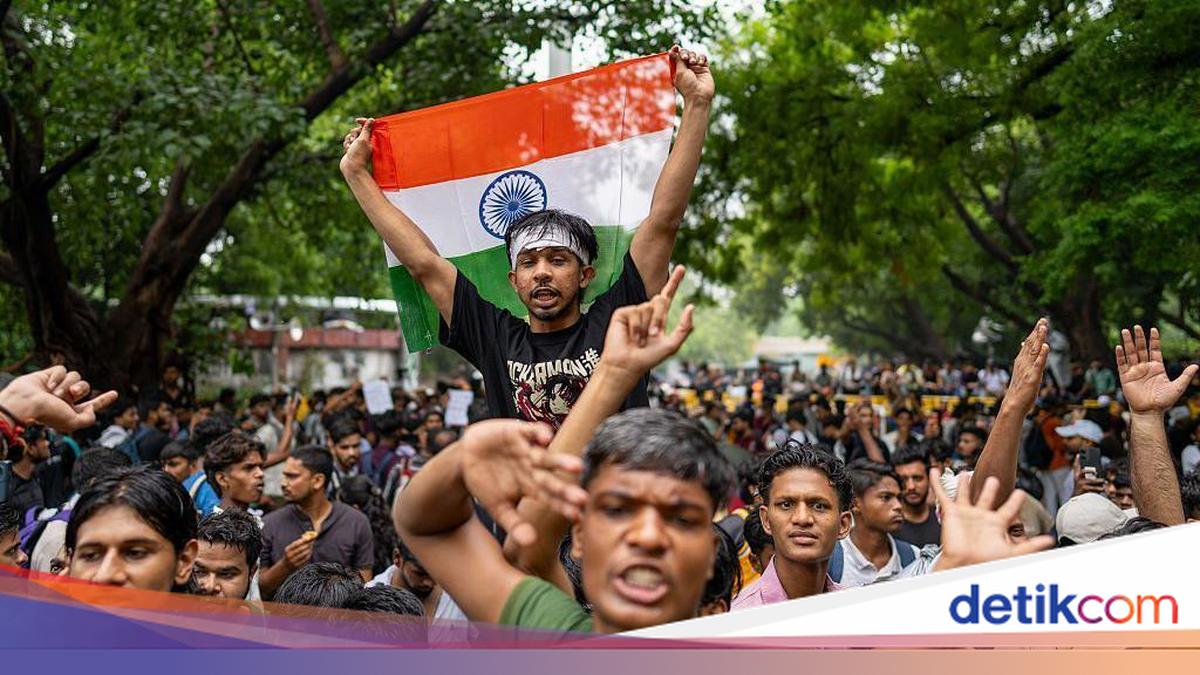
Thousands of Generation Z demonstrators took to the streets of the Indian capital, Delhi, calling for the country’s education minister to resign.
The demonstration was led by the “Cockroach Janta Party” (CJP).
What began as a satirical online movement several months ago has now become one of the most prominent youth movements in India.
Here is what you need to know.
Why are students demonstrating in Delhi?
Although it started as humour, the CJP quickly became a vehicle for young Indians dissatisfied with government policies, amid high youth unemployment in the country.
Despite containing the word “party” in its name, the CJP is not a political party.
The movement is led by Abhijeet Dipke, a 30-year-old political communication strategist and former Boston University student.
He told the BBC that it all began as a joke.
“I thought we should gather together, perhaps start a platform.”
Young people joining the “Cockroach Party” movement staged a protest at Jantar Mantar on 19 July. They demanded the resignation of Education Minister Dharmendra Pradhan over alleged irregularities in the conduct of the NEET exam. (Hindustan Times via Getty Images)
However, after inviting people to join the movement via a Google form, he received tens of thousands of responses.
This spurred the CJP’s development into a serious protest group.
On 9 July, they announced a march on parliament to be held on 20 July.
Tens of thousands of people then attended that rally in Delhi. Hundreds more joined protests and candlelight prayer vigils in other cities such as Mumbai, Bengaluru and Goa.
CJP supporters called for the release of Sonam Wangchuk. (Reuters)
The protests attracted increasing attention because of the authorities’ treatment of Sonam Wangchuk, a well-known engineer and activist.
Sonam began a hunger strike on 28 June in support of the CJP at Jantar Mantar, the 300-year-old observatory in central Delhi that frequently serves as a demonstration site.
On 18 July, the 59-year-old was forcibly taken to hospital by the authorities. The action sparked outrage among CJP supporters and drew wider attention to the protest movement.
In hospital, Sonam continued his hunger strike.
Why are the protesters called ‘cockroach’ demonstrators?
The name Cockroach Janta Party (Cockroach People’s Party) emerged as a response to remarks made by India’s Chief Justice, Surya Kant.
He later clarified that he had been referring to people with “fake and illegitimate degrees”, not young Indians in general.
However, by the time the clarification was issued, the remarks had already spread widely online and sparked anger.
Many people were injured when police tried to disperse the crowd of demonstrators on Monday (20/07) using batons and tear gas. (Reuters)
The name Cockroach Janta Party is also a play on the Bharatiya Janata Party (BJP) led by Prime Minister Narendra Modi, which has been in power since 2014.
Since the CJP was declared, various volunteers from the movement have attended clean-up activities and protests wearing cockroach costumes.
What does the CJP want?
The CJP is protesting against various issues it considers problematic within India’s education system.
The National Eligibility cum Entrance Test (NEET) is the nationwide university entrance exam for medical students.
Nearly 2.28 million candidates sat the exam on 3 May, having studied for months or even years for the notoriously difficult test.
However, days later, the exam was cancelled following allegations that its questions had been leaked.
Anger over this incident was one of the reasons the CJP began its protests.
The CJP and several families have also accused around 20 students of dying by suicide due to stress after the exam was cancelled.
The NEET exam was also mired in controversy in 2024.
The CJP has called for an overhaul of the education system and the resignation of Education Minister Dharmendra Pradhan.
Following the treatment of Sonam Wangchuk at the weekend, CJP leader Abhijeet Dipke also called for Modi to resign.
What impact have the CJP protests had?
It remains unclear whether the CJP will succeed in ousting the education minister and overhauling India’s education system. What is certain, however, is that the movement has had a significant impact in the country.
Monday’s protest (20/07) was the largest demonstration against the Modi government seen in Delhi in recent years.
A number of posters displayed by the Gen Z demonstrators in New Delhi, 19 July. (Getty Images)
Police tried to disperse the crowd with batons and tear gas after demonstrators attempted to break through barricades. The authorities also dismantled the stage and emergency tents at Jantar Mantar, the main base of the protests.
At least 60 demonstrators were injured as a result of the authorities’ actions, and 70 protesters were detained. Meanwhile, Indian police claimed 118 of their officers were injured.
The demonstrators, however, refused to leave.
People continued to gather at the site around the clock, braving rain as well as Delhi’s scorching heat and humidity.
Congress Party parliamentarian and opposition leader Rahul Gandhi said his party had decided to demonstrate outside Modi’s residence because they were not permitted to raise the issue in parliament.
The Congress Party subsequently shared footage showing Gandhi and MPs from other parties being detained and taken away in police buses.
They were released several hours later.
Opposition leader Rahul Gandhi was detained while demonstrating outside PM Modi’s residence. (Reuters)
Several other opposition leaders also criticised the police response and demanded accountability.
Meanwhile, the education minister, in his first comments since Monday’s violence (20/07), criticised the Congress Party for “shamelessly exploiting students as political tools”.
“Even after the government expressed its readiness to hold a thorough discussion, the Congress Party chose political theatrics over democratic debate.
“Their aim was never to find solutions for students, but to create disruption for the sake of political headlines,” Education Minister Dharmendra Pradhan said in a post on X, adding that the government remained committed to addressing the students’ concerns.
However, Pradhan did not directly refer to the ongoing protests. The CJP also did not respond to his statement.
Source: jawawa.id (https://jawawa.id/newsitem/led-by-cockroach-party-gen-z-protests-indian-government-performance-and-education-1784807625)
Originally published by detikcom (https://news.detik.com/bbc-world/d-8587190/dipimpin-partai-kecoak-gen-z-india-protes-kinerja-pemerintah-pendidikan), translated from Indonesian