
Lebaran Train Passengers Reach 4.9 Million, Up 25.7 Percent
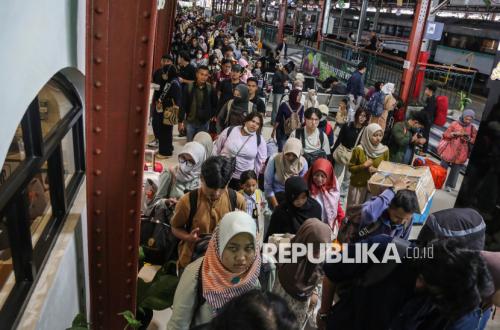
PT Kereta Api Indonesia (Persero) recorded a surge in public mobility during the 2026 Lebaran transportation period. Over 20 days, the number of train passengers exceeded 4.9 million across various regions in Indonesia.
As of 30 March 2026 at 3:00 p.m. WIB, bookings for the travel period from 11 March to 1 April 2026 reached 4,923,309 tickets. This figure represents an increase of approximately 25.7 percent compared to last year’s Lebaran transportation realisation, which recorded 3,915,546 passengers.
KAI President Director Bobby Rasyidin explained that this increase demonstrates the high public interest in using rail transport during the Eid mudik and return flow period.
He noted that the high travel demand is also reflected in the peak long-distance train service on H+1 Eid, or 23 March 2026. On that day, the number of passengers reached 247,025 with an occupancy rate of 154.1 percent.
Overall, KAI provided a capacity of 4,498,696 seats during this year’s Lebaran transportation period. The difference between capacity and bookings reflects the high public interest in rail services as a mode of long-distance travel.
Of the total ticket bookings recorded, long-distance train services dominated with 4,130,168 passengers. Meanwhile, local train services accommodated 793,141 passengers.
Throughout the period from 11 to 29 March 2026, KAI served 4,493,485 passengers. This comprised 3,751,188 long-distance train passengers and 742,297 local train passengers.
For departures on 30 March 2026 up to 3:00 p.m. WIB, the number of long-distance train passengers reached 168,111 and is still expected to increase until evening.
Amid this high mobility, KAI’s operational performance remained well-maintained. During the 2026 Lebaran transportation period, the company operated 8,844 train trips with a departure punctuality rate of 99.80 percent and an arrival punctuality rate of 98.86 percent.
Bobby stated that this achievement results from ongoing operational planning and evaluation.
According to him, the travel experience felt by passengers is the outcome of the operational system continuously running behind the transportation services. Each Lebaran transportation implementation also serves as material for evaluation to improve service quality in the next period.
He also expressed appreciation to all KAI personnel who remained on duty during the Lebaran transportation period to ensure safe and punctual public travel.
Public mobility during this Eid period also drives activities in various regions. Travel by train is considered to contribute to increased economic and tourism activities in several destination cities.
Bobby added that KAI appreciates the public’s continued trust in choosing trains as a transportation option during the Lebaran mudik period.
“We thank all passengers for the trust given to KAI. Every input is an important part of improving service quality going forward,” said Bobby.