
Lebaran Celebration for Orphans and Disabled Children Raises Rp23.5 Billion in Aid
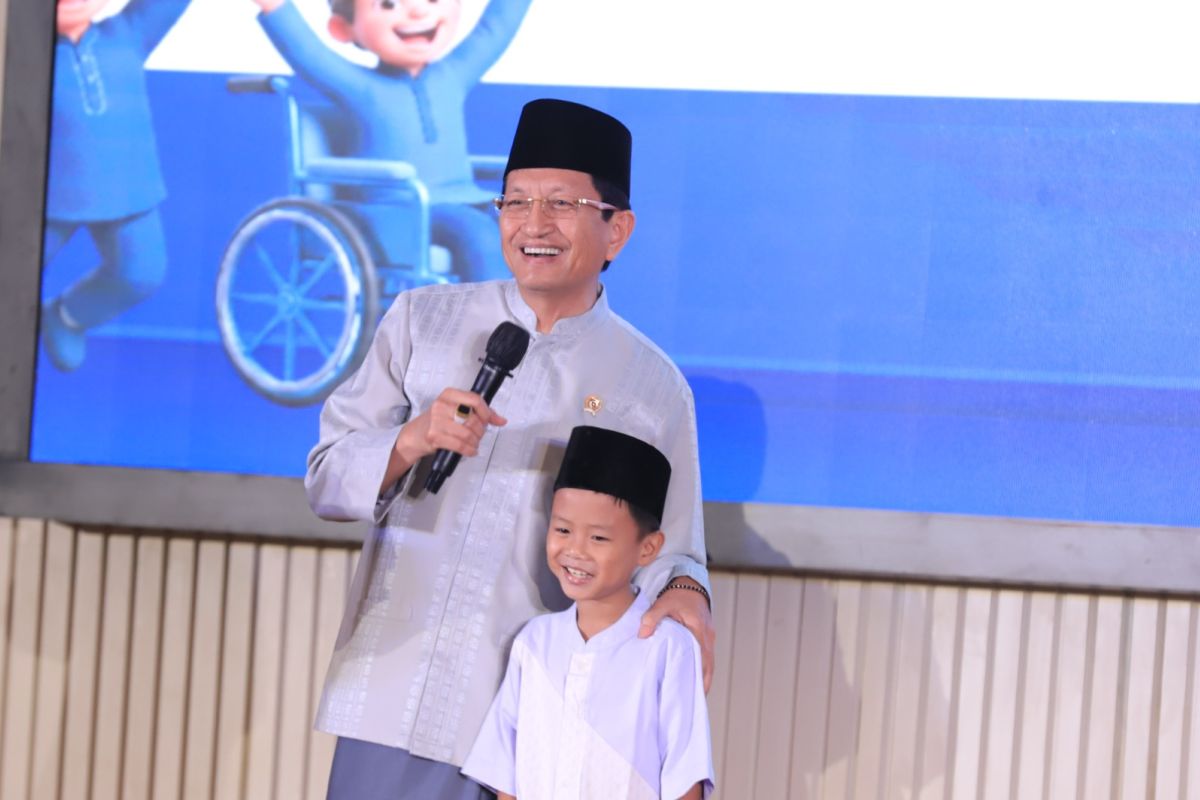
The Ministry of Religious Affairs, together with a number of philanthropic institutions, successfully raised and distributed aid worth Rp23.5 billion for orphans and people with disabilities during the Lebaran Anak Yatim dan Difabel celebration in Jakarta on Thursday. “The main strength of this programme is collaboration. When the government, zakat institutions, waqf institutions, the business world, and the community move together, the benefits felt by the children become much greater,” said the Director General of Islamic Community Guidance at the Ministry of Religious Affairs, Abu Rokhmad. The collection and distribution of aid involved cross-sector collaboration from Baznas, the Indonesian Waqf Board (BWI), Islamic banking, and various National Amil Zakat Institutions (Laznas). Of all the provinces, West Kalimantan was recorded as the region with the largest aid distribution value, amounting to Rp7,575,980,800. Meanwhile, Rumah Zakat was the institution with the largest distribution contribution in the collaborative programme. Abu emphasised that this achievement demonstrates the strong synergy between the government, zakat institutions, waqf institutions, the business world, and the community in expanding benefits for orphans and people with disabilities. “This collaboration proves that social care can become a widespread collective movement. The more parties involved, the greater the benefits that can be felt by orphans and people with disabilities throughout Indonesia,” he said. He explained that the 2026 Lebaran for Orphans and People with Disabilities was designed not merely as a charitable activity, but as an integrated ecosystem of appreciation and empowerment for orphans and people with disabilities. According to Abu, the approach used this year positions children as the subjects of the activity. They are given space to learn, showcase their talents, develop skills, and present their work in public. “We want to provide a wider space for orphans and people with disabilities to express their best potential. They are not just beneficiaries, but an important part of socio-religious development,” said Abu. To support this goal, the Lebaran Anak Yatim dan Difabel event was packaged through five integrated festival zones: the Tumbuh Zone as an educational space, the Berdaya Zone for capacity building and soft skills, the Barokah Market as a showcase for empowerment products, the Ekspresi Zone for creativity and arts, and the Cahaya Zone as an auction area for works by fostered children. Abu explained that the activity involved 14 institutions at the central level and was attended directly by 395 orphans and 55 people with disabilities. The implementation also took place nationally with the participation of 34 Regional Offices of the Ministry of Religious Affairs and hundreds of regencies and cities.