
Lebaran 2026 Return Flow: ASDP Accelerates Ketapang-Gilimanuk Services
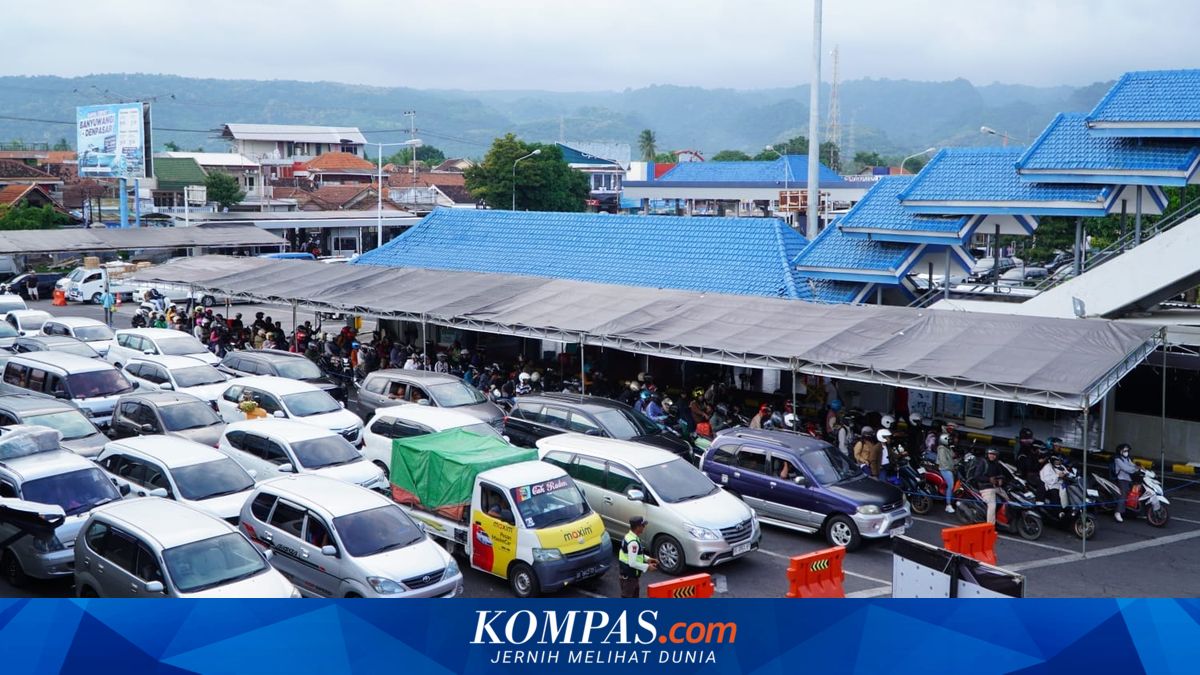
JAKARTA, KOMPAS.com - During the Lebaran 2026 return flow, the Ketapang–Gilimanuk route continues to operate under dynamic conditions. To address congestion issues, PT ASDP Indonesia Ferry (Persero) is accelerating services. Deputy Director Yossianis Marciano emphasised that the key to controlling density lies not merely in the number of ships, but in the speed of services at each point. To support this acceleration, ship loading and unloading times are continuously optimised, with an average duration of around 35 minutes per service cycle. With shorter durations and maintained operational discipline, ship rotations can occur more quickly, significantly increasing service capacity. He added that queues are unavoidable during peak conditions. Based on monitoring on Monday (30/3/2026) at 14:00 WIB, the vehicle queue tail was recorded at around 5.8 km from the Ketapang Port access entrance, dominated by small vehicles, medium trucks, large trucks, and large buses continuously moving towards the port. To respond to this surge, ASDP along with other ship operators is deploying a total of 34 ships. Of these, 22 ships implement the TBB pattern at Dermaga 3, MB 4, LCM, and Bulusan, supported by 4 auxiliary ships to accelerate rotations and keep the service rhythm stable. Up to H+7, 154,313 vehicles have entered Ketapang Port, with a remaining potential of 10,568 units estimated to still be heading to the port. General Manager of ASDP Ketapang Branch, Arief Eko, explained that service acceleration at the dock is reinforced by vehicle flow management from the land side. “We control the vehicle rhythm through buffer zones, so arrivals at the port remain measured and do not pile up,” he stated. The composition is dominated by 12,458 motorcycles and 4,995 private cars. Several buffer zones have been optimised, including Grand Watudodol, Terminal Sri Tanjung, Bulusan, and PT Pusri, as parking pockets and traffic control points. “Intensive coordination with the police, Transportation Department, and all stakeholders continues to be strengthened to keep vehicle distribution under control,” Arief stressed.