
Lebanon-Israel Pact Fragile After Hezbollah Vows to Derail It
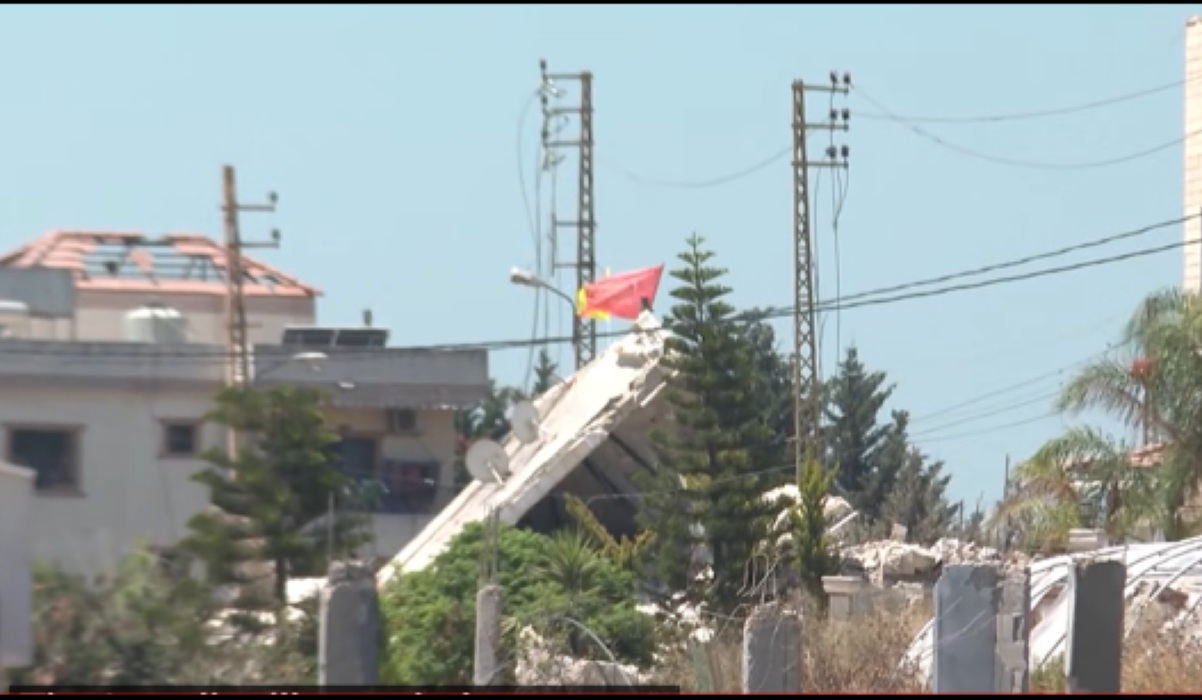
The latest peace agreement between Israel and Lebanon faces an uncertain future after Hezbollah, Iran’s most powerful proxy militant group, vowed this week to thwart its implementation. The framework agreement, signed in Washington, details a plan for the phased withdrawal of Israeli forces from southern Lebanon, contingent upon the verified disarmament of non-state armed groups directly linked to Hezbollah.
Under the agreement, the Lebanese army is scheduled to move into the areas vacated by Israel to assert state control. This US-mediated deal represents the first agreement between the two nations since 1983. Previous pacts have collapsed due to opposition from various politically and religiously divided groups within Lebanon.
US Central Command Admiral Brad Cooper is currently in Lebanon, meeting with President Joseph Aoun and Lebanese army commander Rodolphe Haykal to discuss the execution of the plan. However, signs of a smooth implementation are minimal. Lebanese Parliament Speaker Nabih Berri, a close ally of Hezbollah in the government, warned that the deal will not hold and could potentially trigger civil unrest.
Hezbollah Member of Parliament, Hussein Al Hajj Hasan, issued a harsh condemnation of the government, stating, “What you are doing is a project of discord. You have presented yourselves on behalf of America and Israel to create this strife.”
Shortly after the announcement of the deal, Hezbollah supporters took to the streets and attempted to blockade a major highway in Beirut leading to the airport, before eventually being dispersed by the army.
The agreement is designed to help the Lebanese government and military overcome Hezbollah’s dominance while marginalising Iran’s role. The US has committed to providing aid to the Lebanese army, which has struggled to confront the better-resourced Hezbollah. Robert Satloff of the Washington Institute noted that the agreement’s authors explicitly reject Iran’s legitimate role in determining Lebanon’s future security.
Historically, the Lebanese government has had very little influence over Hezbollah. The group frequently undermines government decisions and has even assisted in toppling administrations deemed a threat.
Recent tensions follow Hezbollah rocket attacks on Israel a day after the US and Israel launched airstrikes on Iran on 28 February, which resulted in the death of Supreme Leader Ali Khamenei. Israel responded with an air and ground campaign to push Hezbollah away from the border for the security of communities in northern Israel. This war has claimed at least 4,250 lives and caused one million people to be displaced.
Earlier in 2024, Israel launched a similar military operation following nearly a year of cross-border fire that occurred parallel to the war in Gaza. That conflict ended with a ceasefire in November 2024 after Israel successfully killed high-ranking Hezbollah officials and degraded their weaponry.
Despite fierce rejection from Hezbollah, several cabinet members and political opponents of the group support the deal. Samir Geagea, leader of the Lebanese Forces (a Christian political party), called the pact the most significant political step in half a century to liberate Lebanon from the influence of Hezbollah and Iran.
Support has also come from the Gulf Cooperation Council (GCC). The United Arab Emirates expressed its readiness to assist Lebanon economically and socially, a signal of support from Gulf nations for the US-backed president.
On the Israeli side, the agreement was welcomed positively but with doubts regarding whether Lebanon can fulfil its obligations. Avi Dichter, a member of Netanyahu’s security cabinet, stated that the deal is very frightening for Hezbollah.
However, he also warned of the possibility of civil war if the Lebanese government chooses to actively crack down on the militant group.
Israeli Rabbi Eliyahu Zini urged the military to remain in Lebanon, claiming entire Lebanese territories belong to Israel amidst the troop withdrawal plans.
The Israeli Defence Minister stated that Donald Trump insisted on linking the Lebanon and Iran conflicts in ceasefire negotiations for US interests.
Hezbollah has utilised fibre-optic FPV drones that are resistant to jamming to attack Merkava tanks and the Iron Dome, leaving Israel struggling to find technological countermeasures.
Syrian President Ahmad Al Shara opened the possibility of dialogue with Hezbollah for the sake of Lebanon, despite describing the group’s past role as a great wound.
President Ahmed al-Sharaa emphasised that Damascus chooses the path of diplomacy and economics over military action for Lebanon’s stability, denying US-driven motives.
Hezbollah leader Naim Qassem stated that they will resist any violation of the ceasefire by Israel, even as Israel begins to lift territorial restrictions.