
Lebanese woman recalls wartime duty of washing and burying the dead in Nabatieh
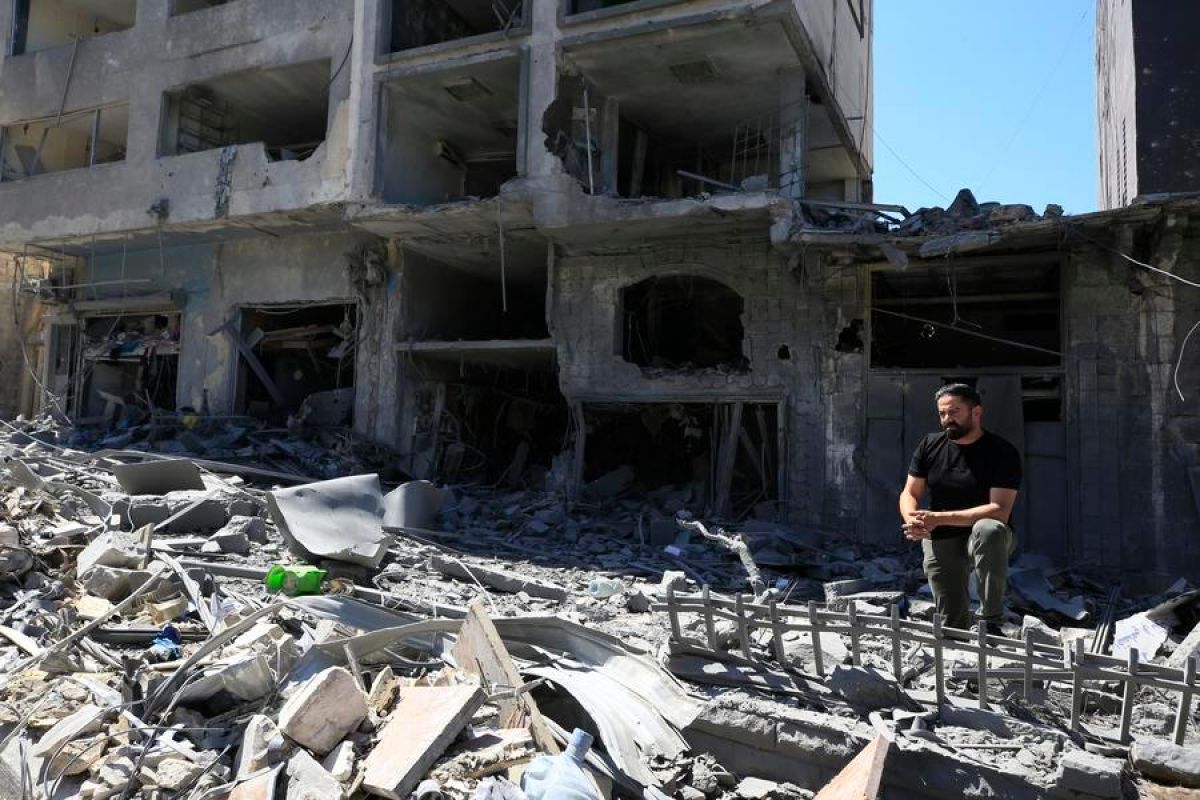
Dressed in a long black robe and headscarf, Maryam Aqil walks through the devastated streets of Nabatieh, passing buildings damaged by artillery fire and roads still ruined by war. To many, Aqil may look like a local woman making her way through her hometown, a city in southern Lebanon. But every corner of the city takes her back to the war, when Aqil shouldered one of the heaviest tasks: washing the bodies of air strike victims, collecting their remains and burying them.
Aqil, who is in her sixties, stayed in Nabatieh when many others chose to leave. She told Xinhua that she did not seek an extraordinary role, but felt that the families of victims needed someone to honour their departed loved ones and prepare them for a final farewell. “Often, I was alone because there was no one else who could do this task,” Aqil said.
Aqil still remembers the relentless artillery shelling, and the sound of ambulance and Red Cross vehicle sirens racing towards her, carrying victims whose lives were taken indiscriminately by the attacks, including the elderly, women and children. The story that left such a deep mark unfolded amid the war launched by Israel in Lebanon, which has taken a heavy toll, with 4,346 people killed and 12,301 others wounded since 2 March, according to the latest data from the Lebanese Ministry of Health.
The task left a profound impact on Aqil. Amid the still fragile calm in Nabatieh and surrounding villages, Aqil walks streets that hold memories of exploding bombs. “No one can see a human body without being affected. And what stays with me most are the children whose bodies were torn apart through no fault of their own. I suffered greatly,” she said.
Aqil herself lost her cousin to an air strike. Pointing to places around her, Aqil recalled the dangers she had faced. “Here, a house was hit by artillery. Another house was destroyed. There is a street where families disappeared, and every corner bears witness to an event that left behind memories of someone I knew.” “There is only a thin line between life and death,” she said.
Although it was painful to see charred and torn bodies, Aqil viewed her work as a responsibility that had to be carried out seriously. “Those families were waiting for their loved ones, and I considered it my duty. They needed someone to be by their side,” she said. Aqil typically used camphor and traditional Arab soap, which she obtained from health centres, to wash the bodies.
“Despite all the difficulties, I never thought of leaving,” Aqil said. Amid the still fragile calm in Nabatieh and surrounding villages, Aqil walks streets that hold memories of exploding bombs. “Time may erase some details, but places never forget. Here, there was an air strike; there, a family lost one of its members; and elsewhere, I carried the body of someone who died,” Aqil said. “These places have become part of my memory.”