
Lebanese Displaced Face New Test as Ceasefire Deal Signed
Beirut (ANTARA) - As television screens broadcast the signing of a US-mediated framework agreement between Lebanon and Israel in Washington, Abu Ali Jalal Awada sat in silence in a modest apartment in southern Lebanon, where his family has resided since fleeing the border town of Khiam.
He paid little heed to the speeches delivered during the event, which officials described as a milestone in diplomacy. Instead, his thoughts were fixed on a place nearly 30 km away—the home he was forced to abandon several months ago.
“Has our suffering truly ended?” Awada asked. “Will all parties adhere to this agreement, or will disputes arise during its implementation?”
For Awada, the agreement is more than just a political document; it represents an opportunity to reclaim the life he was forced to leave behind. His hopes reflect those of thousands of displaced citizens across southern Lebanon. For many, the deal marks the beginning of a test: whether diplomacy can restore security, allow families to return home, and revitalise shattered communities.
The framework agreement, signed at the conclusion of the latest round of ambassador-level negotiations in Washington DC on Friday (26/6), calls once again for the implementation of a fragile ceasefire between the two Middle Eastern nations. However, for many residents, the loss they have endured extends beyond homes and livelihoods.
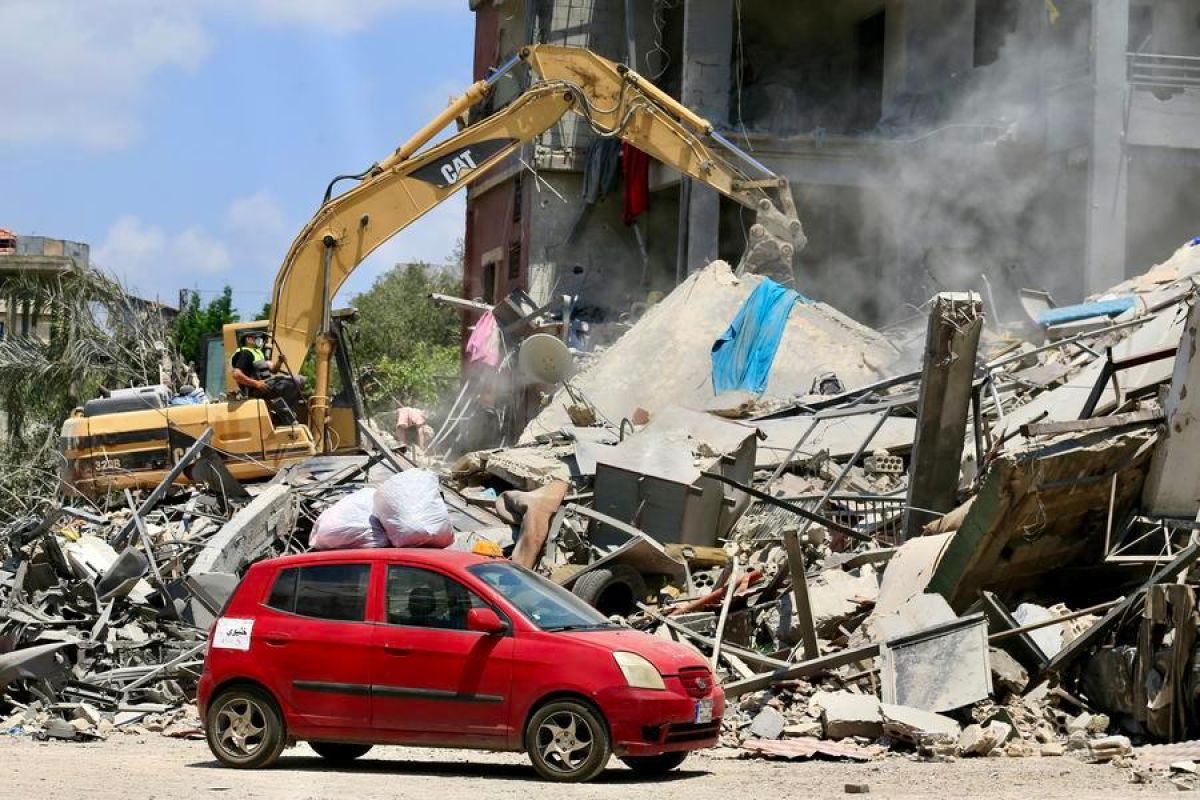
For many inhabitants of southern Lebanon, attention has now shifted from the signing ceremony to how the agreement will be implemented on the ground in the coming days and months. Along the border regions, the challenges remain immense. Dozens of areas have suffered severe damage due to the conflict, with houses, roads, schools, and water and electricity networks destroyed or heavily damaged.
Currently, several areas in southern Lebanon, including Kfar Kila, Adaisseh, and Mays al-Jabal, remain heavily scarred. Numerous residential neighbourhoods have been reduced to rubble, while damaged infrastructure and limited public services continue to hinder the return of displaced families.
For Hazem Farhat (60), who fled from Dibbine to Ain Qenia in the Hasbaya District of southern Lebanon, returning home is far more important than the political language contained within the agreement.
“What we want is simple,” he said. “We want to return to our homes and our land. We hope this agreement can make that happen and initiate a real reconstruction process so that we can rebuild our lives and secure a future for our children.”
Other residents noted that their experiences have taught them to approach optimism with caution. Salwa Hamid, another displaced person, remarked that various previous initiatives failed to bring lasting stability. “We have heard about various agreements many times. What matters now is seeing real change on the ground, not just promises,” she said.
These concerns resurfaced on Saturday (27/6) following new attacks. According to the Lebanese National News Agency (NNA), an Israeli drone attacked an intersection in the town of Nabatieh al-Fawqa, southern Lebanon, while another drone dropped a flash grenade near the outskirts of Kfar Tebnit.
For many families, returning home also means restoring livelihoods lost to conflict. In the town of Daher al-Ahmar, eastern Lebanon, displaced farmer Jamal Dhib harvests apricots in the orchard of a local resident who has hosted his family since they left their home village.
“War has taken not only our homes but also our livelihoods,” he said. “The land is our life. Only if the land is restored and can be farmed again will any agreement truly change our reality. What we want most is to return to our fields.”
For others, the loss is even more profound. In her temporary residence in the town of Al-Rafid, eastern Lebanon, Najla Hamdan (50) holds a photograph of her two sons who were killed in the conflict.
“No agreement can replace the loss of my children,” she said. “However, I hope this agreement can prevent other families from suffering the same fate and allow citizens to return to their villages safely.”
Beyond individual stories, many citizens ask the same question: will the agreement bring meaningful change? University lecturer Hossam Moussa believes that, ultimately, citizens will judge the agreement based on the tangible changes it brings to their daily lives.
“People in the southern region are no longer just looking at political statements,” he said. “They want to see displaced families returning home, reconstruction projects commencing, the agricultural sector recovering, and schools and healthcare centres reopening. That is the benchmark they will use to evaluate this agreement.”