
Lebak Regency Government Allocates Rp 75 Billion for Construction of 53 Road Sections
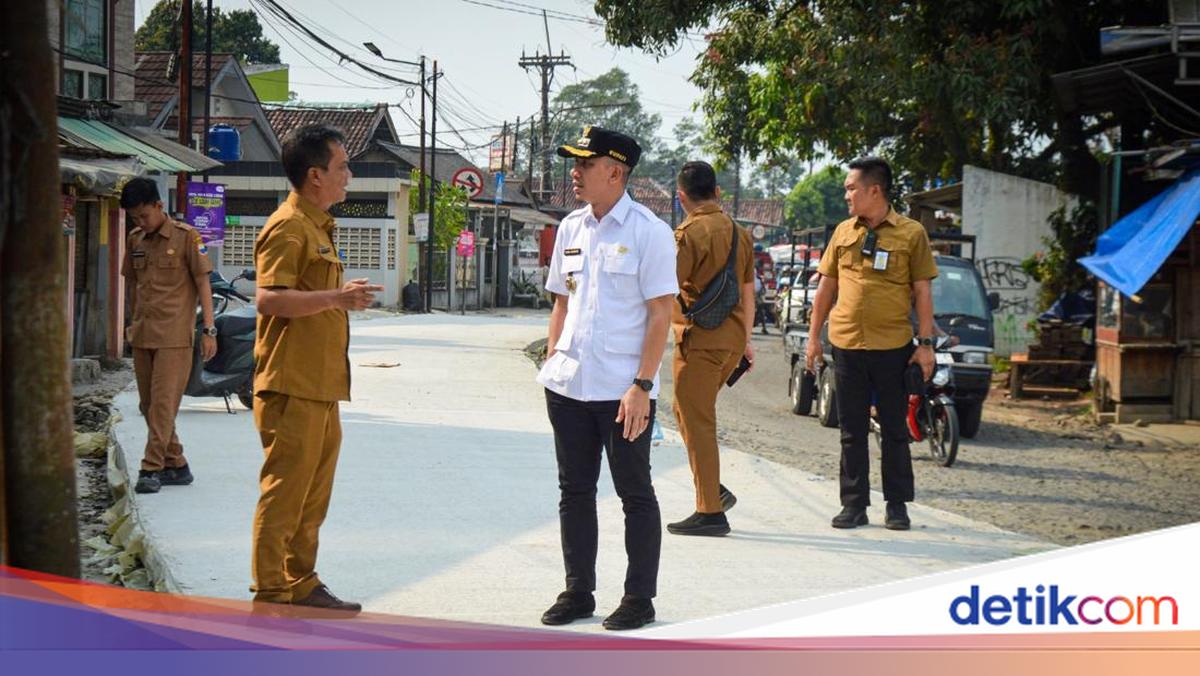
The Lebak Regency Government, through its Public Works and Spatial Planning Agency (PUPR), has allocated approximately Rp 75 billion for the construction and improvement of 53 road sections in 2026. The funds will cover 11 regency roads and 42 village arterial roads spread across various areas in Lebak Regency.
Acting Head of the Lebak PUPR Agency, Dade Yan Apriandi, stated that the 2026 road management budget is divided into two work groups: regency roads and village arterial roads. According to him, the development is an effort to strengthen connectivity within the Lebak Regency area.
“The value is approximately Rp 75 billion. It is divided between regency roads and village arterial roads,” Dade said in a written statement on Thursday (25/6/2026).
He detailed that for the 11 regency road sections, the prepared budget reaches around Rp 47.4 billion, with a total handling length of 13.3 kilometres. Meanwhile, for the 42 village arterial road sections, a budget of around Rp 27.8 billion has been allocated, with a total work length of 21.05 kilometres.
“Thus, the total number of road sections targeted by the 2026 road infrastructure development and improvement programme reaches 53 sections, consisting of regency roads and village arterial roads,” he said.
Dade explained that the implementation of road works in Lebak is carried out in stages, in line with the tender and contract processes that adjust to the readiness of each work package. For regency roads, out of the 11 planned sections, 9 sections have been contracted and have entered the implementation phase, while 2 other sections are still not contracted.
“The regency road works are progressing in stages. Some have been contracted and are in the implementation phase, and some have even been completed. However, there are still two sections that have not been contracted,” he revealed.
Meanwhile, for village arterial roads, the contract progress is also not yet fully complete. Out of the total 42 sections, 30 sections have been contracted, while 12 other sections are still awaiting the contract process.
“For village arterial roads, some have not been implemented because they have not been contracted. Some have been contracted, and among those that have been contracted, some works have also been completed,” Dade said.
If combined, the total length of roads handled by the Lebak Regency Government in 2026 reaches 34.35 kilometres. The breakdown is 13.3 kilometres for regency roads and 21.05 kilometres for village arterial roads.
This road management is considered strategic because it targets two needs at once: strengthening routes under regency authority and improving access to village arterial roads, which are the lifeblood of community activities.
“The road infrastructure plays an important role in supporting residents’ mobility, the distribution of agricultural products, access to education, and connectivity to basic services in rural areas,” he explained.
He stated that with a substantial budget allocation, the Lebak Regency Government aims for the road construction to encourage equitable infrastructure distribution between regions and accelerate village economic growth.
The injection of tens of billions of rupiah for road construction in 2026 is part of the Lebak Regency Government’s strategy to accelerate equitable infrastructure distribution. Not only targeting main routes under regency authority, the local government is also paying great attention to village arterial roads so that the benefits of development are felt more deeply in remote areas.
“If all work packages can be completed according to target, this project will become one of the strategic road infrastructure programmes in Lebak in 2026, especially in strengthening accessibility, cutting mobility barriers, and supporting the economic activities of communities at the village level,” he concluded.