
Learning to Lead from Pineapple Peels
The country’s waste problem is often imagined as mountains of rubbish at landfill sites. Yet most of that waste originates in our own kitchens. Data from the National Waste Management Information System for 2024 show that households were the largest source, accounting for 46.31 per cent of total waste, while food scraps were the most common type, at 39.36 per cent. This means the key to reducing waste lies at family level, where vegetables are peeled and fruit is cut every day.
At home, waste-related tasks almost always fall to women. Mothers cook, and mothers also sort, dispose of and clean up the leftovers. Ironically, women are more often treated as the targets of appeals than as drivers of change.
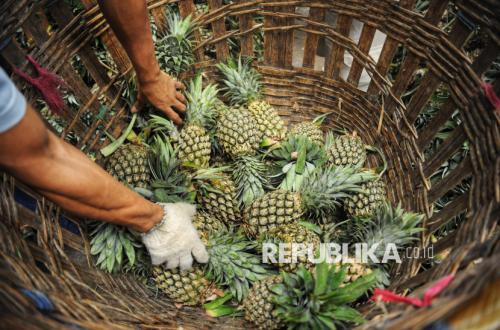
Take pineapple peels. In many homes, they go straight into the bin, even though they can be processed and offer a starting point for learning how to manage organic waste.
Recently, workshops on making dishwashing soap from pineapple peels have become widespread in various parts of the country. The intention is good, but there is something to be wary of. Many activities describe the homemade product as antibacterial or antiseptic, and even ready for sale, without adequate testing. This raises an important question: who will lead change in the community in a way that remains safe, honest about the evidence and sustained after the workshop ends?
I believe nurses should play that role. Nurses are usually associated with hospital wards and syringes, but human health cannot be separated from the health of the environment in which people live. This is the principle known as green nursing: nursing practice that cares about environmental sustainability. If households are the largest source of waste, families and communities are legitimate places for nurses to work—not just hospitals.
I put this belief to the test through the PINEA-GREEN NURSE project, part of the Innovative Leadership course in the Doctoral Nursing Programme at Jenderal Soedirman University. On 2 October 2026, I joined 50 women who are members of ’Aisyiyah in Puri Kedungwuni housing complex, Pekalongan Regency, to learn how to turn pineapple peels into a dishwashing-soap prototype, which we named NANASRI. The results were encouraging. Participants’ average knowledge score rose from 68.20 to 86.80, and 49 of the 50 participants improved. But for me, the most important lesson was how the change was led, rather than the soap itself.
The first lesson is that change should begin with residents’ questions, not a lecture. During the initial discussion, one woman asked: “Can the pineapple peels we have been throwing away still be put to use?”
That simple question was more powerful than any slogan, because awareness grows from within the group itself. We held the activity as part of a regular religious study gathering, rather than as an unfamiliar event. We linked the message of environmental care to the values of cleanliness and the responsibility to care for the Earth, which the congregation has long embraced.
The second lesson is that leaders must be honest about the limits of the evidence. Research does indicate that pineapple peels may have potential as a cleaning ingredient. However, the soap we made together has not been tested for antibacterial efficacy, skin safety or shelf life. We therefore labelled NANASRI from the outset as an educational prototype—not an antiseptic, not an antibacterial product and not a product ready for sale. Amid the flood of claims about “natural” products on social media, this kind of honesty is a way of protecting the community.