
Learning from the Wiretapping Case: The People’s Bhayangkara at the Crossroads of Law and Power
Many labels have appeared in the media over the past week. Some have called the incident treason, while others have immediately linked it to the legal definition of an attempt to overthrow the government. Whatever the terminology, the public agrees on one thing: this is a major event in the history of the Republic’s police force.
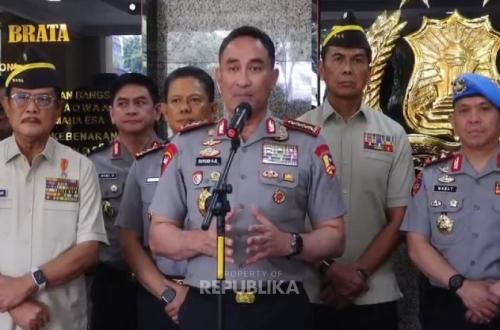
On Tuesday, 3 November 2026, the National Police’s Criminal Investigation Department named retired Police General Listyo Sigit Prabowo a suspect in the illegal wiretapping of President Prabowo Subianto. Criminal Investigation Department chief Commissioner General Asep Safrudin announced three suspects, identified by the initials LSP, ASN and EH. The other two are senior officers with the rank of inspector general.
Investigators have accused them of illegal interception, unauthorised access and deletion of electronic data. The following day, the President dismissed Listyo Sigit from his position as Presidential Chief of Staff.
A four-star general and former National Police chief must now face investigators who were once his subordinates.
The irony would have been hard to imagine two years ago. The alleged wiretapping began in 2025, when relations between the President and Listyo Sigit were at their closest. According to investigators, the targets included not only the President but also state officials, political figures, media organisations, mass-organisation leaders, non-governmental organisations and businesspeople. The suspects are also alleged to have deleted log records in October 2026.
I want to make one point clear from the outset: suspect status does not mean guilt. The presumption of innocence applies to everyone, including a former head of the National Police. That is precisely why this case must be tested in court, not in newsrooms or on social media timelines.
As a social event, however, the case touches on a deeper issue. Betrayal by someone close is always the most dangerous. No one understands “us” better than those closest to us and those we trust. History records many powerful figures brought down from within. Julius Caesar fell in the Roman Senate, and among those who stabbed him was Brutus, whom he regarded almost as a son. Saddam Hussein was found in a hiding place in December 2003 after information from someone he trusted. The history of Islam, too, including the era of the Prophet’s companions, was marked by discord that arose within their own ranks.
The lesson is simple but bitter. Power is most vulnerable not to visible enemies, but to allies who hold the keys. In a modern state governed by the rule of law, those keys often take the form of technical authority: access to surveillance equipment, databases and telecommunications networks. Whoever holds them has knowledge about other people. That knowledge can protect the state, but it can also become an instrument of pressure.
The House of Representatives’ Commission III has scheduled a working meeting with National Police Chief General Suyudi Ario Seto for 12 November 2026. Commission chair Habiburokhman said the meeting would discuss who was behind the wiretapping and why it was carried out. This is the kind of legislative oversight we should expect. Jimly Asshiddiqie has also urged that the case be investigated fully, down to its roots.
The central question that must be answered clearly is motive. Was the wiretapping politically motivated? Was it intended to weaken the President’s office? Or was it part of preparations to overthrow the lawful government? Each answer carries very different legal consequences. Each will also shape how the nation views the National Police over the coming decade.
Source: jawawa.id (https://jawawa.id/newsitem/learning-from-the-wiretapping-case-the-peoples-bhayangkara-at-the-crossroads-of-law-and-power-1794221521)
Originally published by Republika (https://opini.republika.co.id/berita/to8b5d415/belajar-dari-kasus-penyadapan-bhayangkara-rakyat-di-persimpangan-hukum-dan-kekuasaan), translated from Indonesian