
Learning from the Fly: The AI System of the Future Will Be Faster and More Energy-Efficient
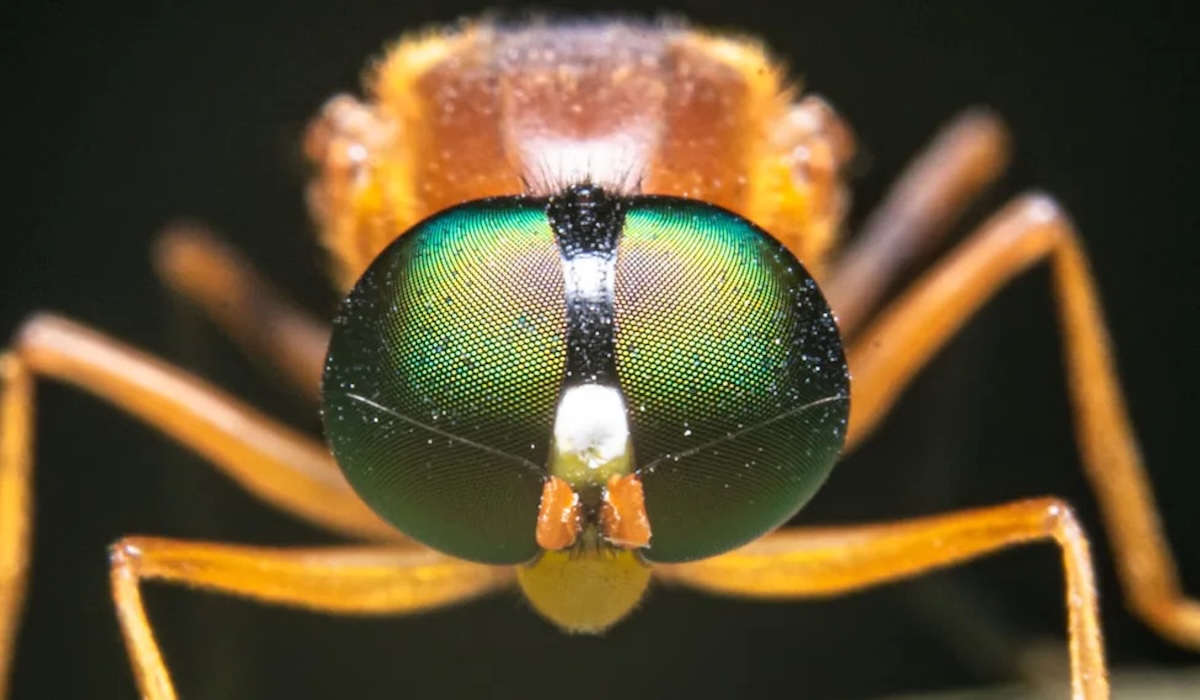
Researchers from the University of Sheffield have uncovered a mechanism—the ‘shortcut’ in the fruit fly’s visual system—that could revolutionise energy efficiency in Artificial Intelligence (AI) and robotics. The finding shows that insects do not simply passively absorb visual information; they actively sharpen perception through rapid body and eye movements.
The study, published in Nature Communications, identifies a mechanism called ‘high-frequency jumps’ or turbo boosting. When the fly makes a sudden movement, its visual system switches to a faster mode, sending data to the brain up to three times faster than normal on a millisecond timescale.
Professor Mikko Juusola, senior author of the study, says the finding changes the long-standing paradigm about how information is processed in the brain. ‘This work demonstrates a fundamentally new way of thinking about how the brain computes information, where speed and efficiency emerge from active interaction with the environment,’ he says.
The implications of this research are significant for the development of autonomous vehicles and robotics, which have long relied on substantial computing power to interpret their surroundings. By mimicking the way the fly brain works, engineers could design machines that process only the most relevant data at the right time, thus markedly reducing energy usage.
Dr. Jouni Takalo, the lead model developer in the team, adds that the coordination of small sensors in the fly enables instant attention shifts to the most important areas. This becomes an inspiration for developing artificial vision systems and more adaptive, low-latency neuromorphic engineering.
This research reinforces that future intelligence may not always require bigger computers, but more efficient design by emulating nature’s efficiency in processing data with precision.