
Learning from Sweden's Free School Meals: An Annual Budget of Rp14 Million Per Student
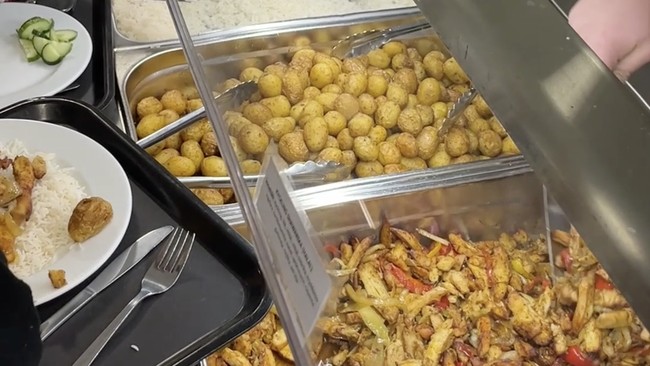
Free school meal programmes are not a new concept in Sweden. The Nordic nation has provided free lunches for students for decades.
Sweden’s experience shows that merely providing food is insufficient. The country continues to develop its school meal system to ensure that the food served is not only free and nutritious but also genuinely consumed by children, enjoyable, environmentally friendly, and integrated into the learning process.
According to The Guardian, one experiment was conducted at Mariebergsschool, a secondary school in Karlstad, Sweden. In the mornings, students can visit the canteen to choose from various drinks, such as ginger and lemon, milk, lemon and mint, or strawberry and orange. Oats with caramel milk are also available.
The ingredients used are sourced from surplus fruits and vegetables donated by local supermarkets. In addition to providing healthy food to students, this scheme serves as a method to reduce food waste.
The programme is part of a project launched in 2018 by Vinnova, Sweden’s national innovation agency, involving seven government agencies, including the Swedish Food Agency (Livsmedelsverket).
Students Help Determine How They Eat
Students are involved through workshops to redesign school canteens. As a result, dining areas have been created to resemble comfortable restaurants, featuring cream-coloured walls, curtains to dampen sound, and various seating options.
Linnea Olchar Lee, a food strategist in Karlstad, stated that students desired seating that could be chosen according to their mood. There are bar stools facing windows for students who wish to eat alone without feeling observed, as well as communal tables for large groups and smaller areas for more intimate gatherings.
“We tried to create different zones. Now, students are truly proud of their school restaurant,” said Olsson Lee, as quoted by The Guardian.
This approach has yielded results. Students are reported to be more interested in staying at school rather than going to nearby shops to purchase sweets.
Teachers have also observed increased student engagement. During one workshop, Olsson Lee recalled a student saying they would prefer healthy food if free alternatives were available at school.
“If there are free alternatives at school, I might consider eating something healthy,” the student remarked.
A Budget of Rp14 Million Per Student
The national effort to provide free school meals began in the early 1900s and reached the majority of Swedish schoolchildren by the 1970s. Since 2011, the Swedish School Act has even mandated that school lunches meet nutritional standards.
The national school meal guidelines published by the Swedish Food Agency also refer to the Nordic Nutrition Recommendations, which establish nutrient intake references based on scientific knowledge to support bodily development and function while reducing the risk of diet-related diseases. Approximately 1.3 million portions of food are served daily in Swedish schools, or about 260 million portions per year.
The meals provided are hot and generally offer several options, including vegetarian and gluten-free menus. Salads, bread, butter, milk, and water are also available.
The average cost of school meals reaches 7,700 Swedish Krona (SEK), or approximately Rp14 million per student per year. This cost covers ingredients, labour, and transport. Everything is free, funded through local taxes.
Local governments are responsible for organising school lunches. In most schools, food is cooked directly in the school kitchen. If a school lacks a kitchen, food can be delivered warm or cold to be reheated later.
Not Just About Nutrition
One interesting lesson from Sweden is how the government measures the success of school meals. The Swedish Food Agency’s guidelines use an approach called ‘The Meal Model’. There are six elements that must be considered in the provision of free school meals:
Tasty
Safe
Nutritious
Environmentally friendly
Enjoyable
Integrated as part of education
Thus, the success of school meals is not measured solely by the nutritional content of the menu. The environment where students eat, serving times, student involvement, food safety, and environmental impact are all taken into account.
National guidelines even state that school lunch must be part of education. Students who eat lunch are assessed to be in a better condition for learning. Education regarding food and nutrition can also be integrated into various subjects, particularly home economics.
Food Waste is Also a Priority
The issue of food waste is also a major focus. In one ongoing initiative in Karlstad, students were promised a fund of 1 million SEK for group activities, on the condition that they help reduce food waste.
Every kilogram of food wasted reduces the promised amount. Progress is monitored via digital counters in the school canteen and can be viewed online.
The programme successfully reduced food waste by 1.7 tonnes compared to the previous year. This step aligns with Swedish national guidelines, which include environmental sustainability as a vital part of school meals.
Choosing more environmentally conscious ingredients and reducing food waste is expected to mitigate environmental impacts.
What Can Be Learned from Sweden’s MBG?
Sweden’s experience shows that school meal programmes require a long period of continuous refinement. A programme that initially focused on providing free food has evolved into a policy that also addresses…