
Learning from European success in developing cooperatives
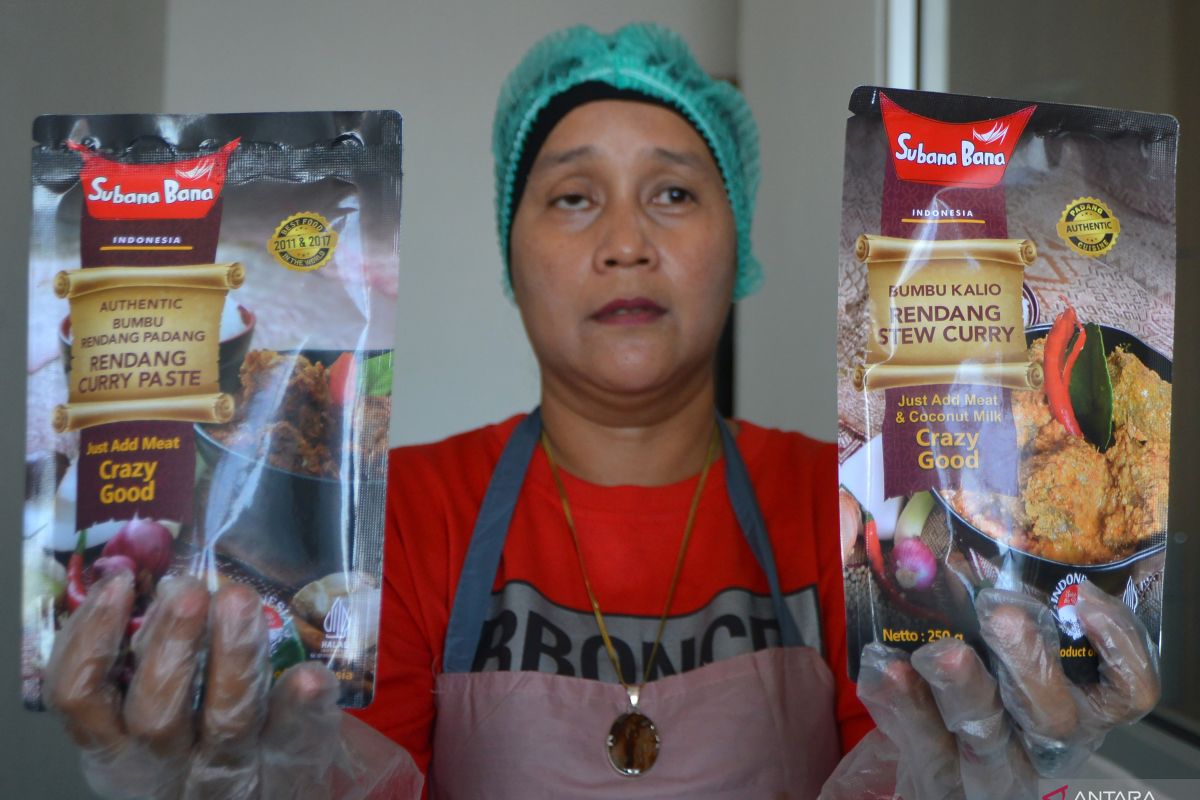
Cooperatives must be seen not as an economic organisation of the past, but as one of the business ownership models of the future, owned collectively.
Jakarta (ANTARA) - Since their inception, cooperatives were formed to achieve a simple yet fundamental idea: that people must be at the centre of economic activity.
Therefore, a cooperative is not merely a profit-seeking company, but a joint enterprise owned and controlled by its members.
The International Cooperative Alliance (ICA) defines a cooperative as an association of persons who voluntarily unite to meet common economic, social and cultural needs through a jointly owned and democratically controlled enterprise.
This principle is in fact deeply rooted in Indonesia. The traditions of gotong royong (mutual assistance), togetherness, deliberation and kinship have long been ingrained in the life of society.
The Constitution, through Article 33 of the 1945 Constitution, also provides a strong foundation for an economy organised as a joint endeavour based on the principle of kinship.
The problem is that this substantial social capital has not yet fully transformed into a commensurate cooperative economic strength. Many cooperatives still face limitations in business scale, management professionalism, human resources, capital, technology, marketing and member regeneration.
Therefore, studying the experience of European countries in developing cooperatives is highly relevant for Indonesia today. Not to be copied outright, but to understand how to translate the value of togetherness into a modern economic organisation.
The European Union places the social economy as an important part of the economy and the labour market. The European Commission estimates that there are around 2.8 million social economy entities in the European Union employing around 13.6 million workers.
This fact shows that cooperatives and social economy organisations should not be viewed merely as social activities or small-scale enterprises, but as part of the economic system.
One of the most well-known examples is Mondragon in the Basque region of Spain. This network of worker cooperatives has expanded into various business fields and demonstrates that the principle of worker ownership can coexist with professionalism and the ability to face global competition.
The most important lesson from Mondragon is not how to create one giant cooperative. Rather, what is interesting is its ability to build networks. Cooperatives can jointly develop purchasing centres, distribution, marketing, financing, technology, education and training.
A similar principle can be seen in Germany. The cooperative tradition there shows that small entrepreneurs do not have to become large companies on their own in order to achieve economies of scale. They can remain independent businesses while carrying out some of their business needs collectively.
Imagine 10 entrepreneurs buying raw materials individually compared with 1,000 entrepreneurs making purchases through a cooperative. The bargaining power would certainly be different. The same logic applies to warehousing, distribution, technology, financing, training, machinery procurement, marketing and even exports.
This is the essence of cooperative strength: transforming small individual economic power into great collective power.
The experiences of Denmark and the Netherlands offer different but valuable lessons. Cooperatives do not have to be trapped in sectors that have long been identified with cooperatives, such as savings and loans, agriculture, consumption or trade.