
Learning from China on leveraging AI sophistication
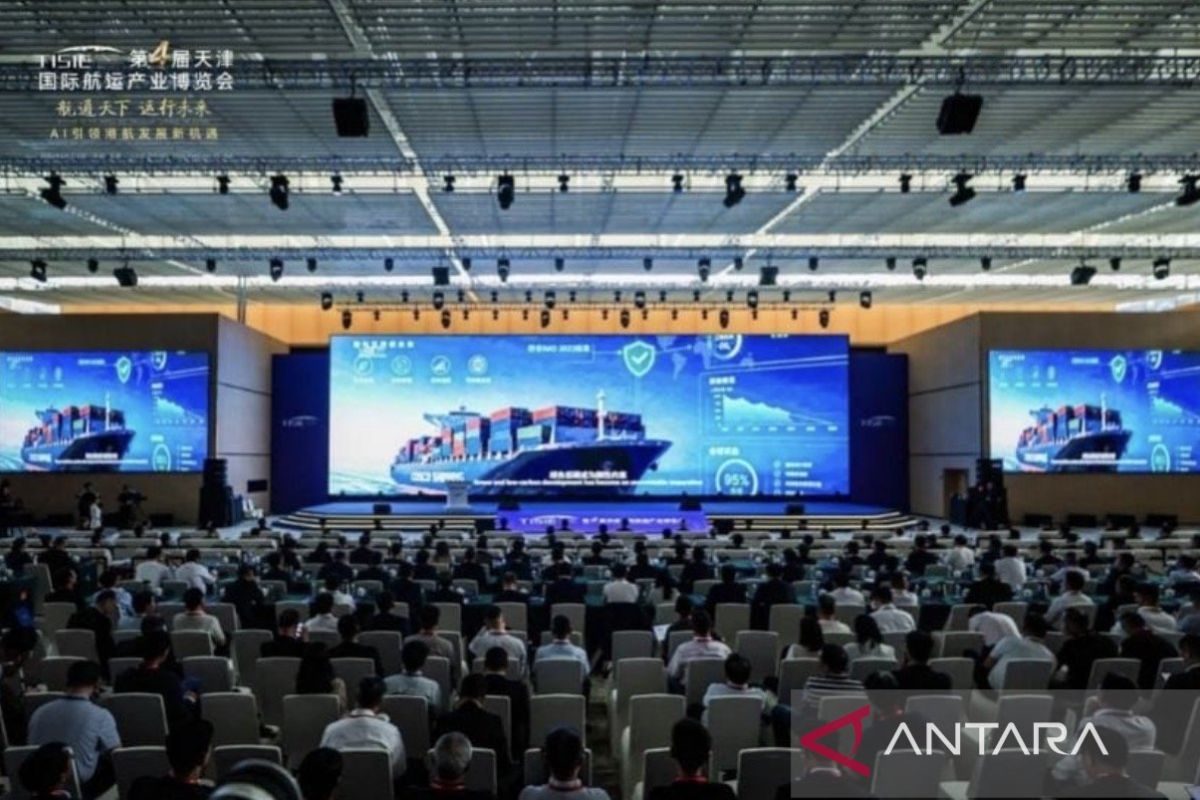
In many developing countries, including Indonesia, people may just be starting to learn about and utilise artificial intelligence (AI). In China, however, the conversation about AI is moving towards something more concrete. The technology is no longer seen as something standalone, but as a tool to solve real problems faced by industry and society. This picture was clearly visible at the fourth Tianjin International Shipping Industry Expo (TISIE) in Tianjin, northern China. The exhibition, held in early June 2026, adopted the theme of global shipping and a future opened up by AI. At first glance, the theme sounds technical and focused only on the maritime world. Upon closer inspection, there is a much larger lesson to be drawn by developing countries, including Indonesia. The lesson is not solely about the technology, but about a way of thinking in facing such dynamic changes. China, for several decades known as the world’s largest manufacturing nation, is now trying to step further by making digital technology and AI a part of its national industrial system. The interesting focus is not on creating merely spectacular-looking technology, but on how that technology can make systems work better, more efficiently, and more responsively to change. At the exhibition, various fields were showcased, ranging from green shipping and maritime equipment to logistics services. All these sectors are essentially the arteries of global trade. Amidst increasing global trade volumes, supply chain complexity, and higher efficiency demands, the use of AI is seen as an unavoidable necessity. The Head of Information at the Shanghai International Shipping Institute, Xu Kai, provided an interesting picture of this development direction. According to him, China has built the world’s largest network of automated container terminals. Various breakthroughs have been made in port crane technology, intelligent guided vehicles, and automated goods stacking systems. But the more interesting point is not the existence of these machines. Xu stressed the next challenge relates to how all this equipment can adapt to changing conditions in real time. Ships can arrive earlier or later. The weather can change suddenly. The flow of goods can surge unexpectedly. In such situations, it is not enough for machines to simply execute pre-programmed orders. AI is required to understand changing conditions, perform reasoning, and then make decisions that help the system work optimally. This provides an important lesson. In the previous era, many organisations pursued digitalisation merely by transferring manual processes to computer systems. Now, the challenge is different. Technology must be able to help humans understand increasing complexity and make better decisions. Indonesia, in fact, faces challenges that are not much different. As the world’s largest archipelagic nation, port and logistics efficiency is a critical factor determining economic competitiveness. When AI is utilised to accelerate the movement of goods, reduce logistics costs, and improve decision-making accuracy, the benefits are not only felt by large corporations, but also by MSME entrepreneurs who depend on smooth distribution. On the other hand, China is also known as a country that is very bold in building long-term visions.