
Learning from Australia-Portugal: How to Restore Burned Forests
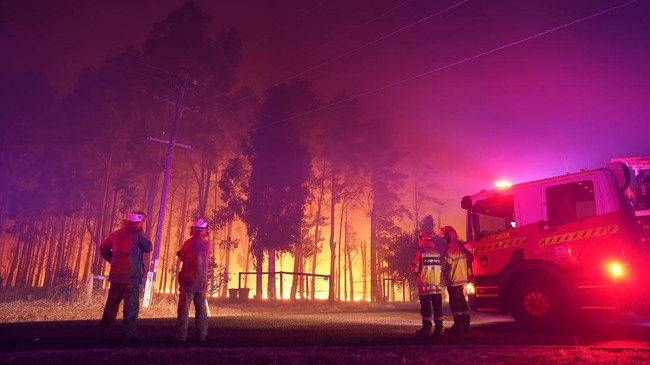
The National Disaster Management Agency (BNPB) has recorded forest and land fires (karhutla) as one of the dominant disaster events this year. Fires have been reported in Jombang, Subang, Toli-Toli, and Klaten. Several days earlier, the government also strengthened integrated operations to control forest and land fires in Kalimantan and Sumatra due to an increase in hotspots and smoke haze.
The government’s current response is quite extensive. The government has deployed 12,880 joint personnel, ground firefighting operations, water bombing helicopters, air patrols, hotspot monitoring through SiPongi, and Weather Modification Operations (OMC). BNPB has designated six priority operational areas: Riau, Jambi, South Sumatra, West Kalimantan, Central Kalimantan, and South Kalimantan.
These measures show that Indonesia already has various instruments for handling forest and land fires. However, the experience of several countries shows that fire control cannot rely solely on extinguishing fires after they appear. Prevention, land management, technology, regulation, and law enforcement need to function as a unified system.
Australia: Learning to Manage Fire Before It Grows
Australia is one of the countries with the longest experience in dealing with large-scale forest fires. During the Black Summer season of 2019-2020, more than 10.3 million hectares of bushland and natural forest burned, damaging habitats, settlements, and economic activity in various states.
After the fires, Australia not only rebuilt affected areas but also carried out specific ecosystem recovery. The government allocated more than A$200 million for wildlife and habitat recovery, including rapid assessment of hundreds of affected species and ecosystems, habitat restoration, control of invasive species, and protection of areas that still serve as wildlife refuges.
Recovery was then accompanied by efforts to reduce the risk of subsequent fires. Australia strengthened vegetation management through prescribed burning and cultural burning, which is a fire management practice based on indigenous knowledge.
For Indonesia, the lesson is not to directly imitate controlled burning, especially on peatlands, but to ensure post-fire restoration while making ecosystems more resilient to future fires.
California, USA: Winning in the First Minutes
Unlike Australia, which places much emphasis on ecosystem recovery, California uses technology to determine how severe the damage is and what risks remain after the fire is extinguished. One of the technologies used is the Burned Area Reflectance Classification (BARC), a satellite-based mapping method to assess the severity of fire damage to vegetation and soil.
By comparing images before and after the fire, BARC helps identify areas with light to heavy damage. This information is then used to determine areas that require soil stabilisation, erosion control, and post-fire vegetation rehabilitation.
California also uses AVIRIS-3, a spectral imaging sensor owned by NASA JPL that can map ash, surface conditions, and post-fire material changes in greater detail. Meanwhile, X-band radar is used to monitor rainfall intensity in burned areas, as these areas are more vulnerable to flash floods and debris flows. Drones with LiDAR can then map topographical changes and estimate the path of material that could move after rain.
For Indonesia, technology as advanced as California’s may not yet be entirely economical to implement. However, more detailed mapping of vegetation and soil damage, erosion risk, and debris flow potential can help the government determine post-fire restoration priorities more accurately.
Portugal: Regulation as the Backbone of Wildfire Management
Portugal is not the country with the largest forest fires in the world. However, in Europe, it is among the most vulnerable to wildfires. In 2017, major fires killed more than 100 people and became a turning point for reforming Portugal’s fire control system.
After that, Portugal established the Integrated Rural Fire Management System (IRFMS), which unites the entire fire management cycle, from planning, preparation, prevention, pre-suppression, suppression and rescue, to post-fire recovery. The government also formed the Agency for Integrated Rural Fire Management (AGIF) as coordinator, involving civil protection authorities, forestry agencies, security forces, regional and local governments, and relevant ministries in a single framework.
Regulations were then tightened through obligations to manage vegetation up to 50 metres around isolated buildings and 100 metres from settlements, increased penalties, and building standards more resistant to wildfires.
In terms of budget, fire management spending increased from €143 million, or around Rp2.96 trillion (€1 = Rp20,678), in 2017 to €638 million, or around Rp13.19 trillion, in 2024, with more than half of the 2024 budget directed towards prevention. The results are beginning to show in response capability. In 2024, around 92% of fires were successfully extinguished within 90 minutes, up from 79% in 2017.
What Can Indonesia Learn?
The experiences of Australia, California, and Portugal show that post-fire recovery cannot stop at extinguishing and temporary rehabilitation. Australia emphasises ecosystem recovery and risk management before the fire season. California relies on technology to map vegetation and soil damage more precisely. Portugal has built a framework that unites prevention, response, recovery, stakeholders, and budget in a single system.
Source: jawawa.id (https://jawawa.id/newsitem/learning-from-australia-portugal-how-to-restore-burned-forests-1787824334)
Originally published by CNBC Indonesia (https://www.cnbcindonesia.com/research/20260827130628-128-762718/belajar-dari-australia-portugal-ini-cara-pulihkan-hutan-yang-terbakar), translated from Indonesian