
Learning Economic Independence from 17 August Competitions
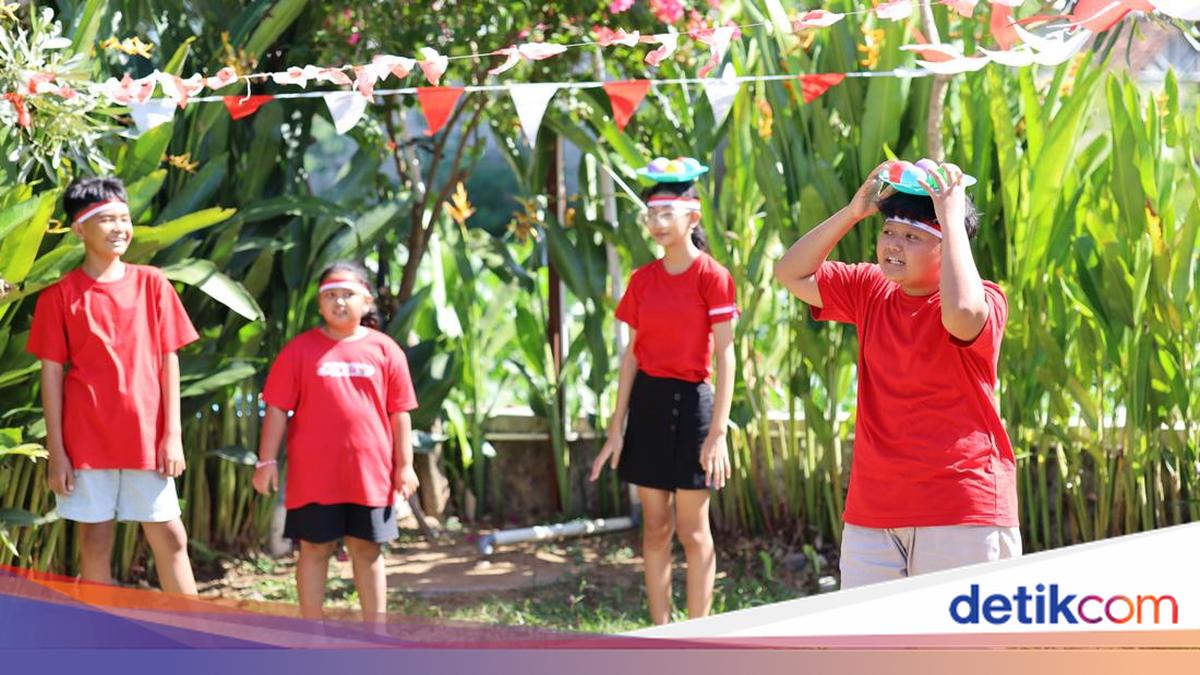
Today I took part in a 17 August competition. It was simple. There was no big stage, fantastic prizes, or television camera spotlight. Just competitions filled with laughter, cheers, and a spirit of togetherness. Some ran fast, some fell, some tried again, and some eventually became winners. Yet, from that simple competition I went home carrying a question: is the Indonesian economy not also like a competition?
In the competition arena, all participants stand at the starting line. When the whistle blows, everyone tries to be first. But in economic life, the starting line is never truly the same. Some are born with good education, adequate nutrition, decent housing, access to technology, capital, and networks. Others begin their journey with various limitations. Both run equally, but the distance to the finish line is not always the same. From this I learned that the 17 August competition is not merely a story about winning and losing. It is a story about opportunity.
Indonesia itself is running. The national economy grew 5.61 percent in the first quarter of 2026 year-on-year. This figure shows the economic engine is still moving. However, growth is not the finish line. The more important question is: who is enjoying the fruits of growth and who is still being left behind?
That question brings us to inequality. BPS recorded Indonesia’s Gini Ratio in September 2025 at 0.363, down from 0.375 in March 2025. This decline deserves appreciation. However, equal distribution is not yet complete. The bottom 40 percent of the population by expenditure enjoys only 19.28 percent of national expenditure distribution. This figure makes me think again about the starting line of the competition. In a 17 August competition, the organisers can make the starting line the same. In economic life, the starting line is never truly uniform.
A child born into a family with access to education, health, capital, and technology certainly has different provisions from a child from a family with severe limitations. Both have dreams, but the path to the finish line is not always the same. Therefore, economic independence cannot be understood merely as the freedom to compete. Economic independence must deliver fairer opportunities to compete.
The good news is that poverty is also declining. BPS recorded the percentage of poor people in March 2026 at 8.07 percent, or around 22.93 million people. However, regional disparities remain visible. The rural poverty rate reached 10.67 percent, higher than the urban rate of 6.34 percent. This decline is progress, but the figure also reminds us that millions of people are still in a race to meet their most basic needs.
This is where the greased pole climbing competition becomes an interesting metaphor. A slippery areca palm trunk stands upright. Prizes are hung at the top. Everyone wants to get them. But no one can reach the top alone. Those at the bottom support those in the middle. Those in the middle help others climb higher. When someone finally reaches the top and takes the prize, the victory is actually the victory of the whole group.
That is how economic development should be. Those already at the top must not merely enjoy the summit. They must be part of the process of helping more people climb. Large companies must open space for MSMEs. Investment must create quality jobs. Industry must build domestic supply chains. Universities must become bridges of social mobility. The government must ensure economic policy does not only produce growth, but also expands opportunity.
At this point, Free Nutritious Meals (MBG) deserves to be seen more broadly than merely a nutrition fulfilment programme. If its supply chain involves farmers, livestock breeders, fishers, cooperatives, and local MSMEs, MBG can become one of the drivers of the economy from below. The government’s economic growth framework for 2026 places MBG as a priority programme with a budget of Rp335 trillion, a target of 70 million recipients, and 35,270 SPPG. The government also links it to local economic empowerment and agriculture.
But this is where the measure of its success must be clarified. Do not only count how many food portions are distributed. We also need to ask: how many farmers gain a market, how many livestock breeders obtain certainty of demand, how many MSMEs enter the supply chain, and how much economic value circulates in the regions? If state money only stops at spending, its benefits will be limited. Conversely, if that spending creates a market for local producers, it can become a ladder of economic mobility.
The same applies to the Red and White Village/Sub-district Cooperatives (KDKMP). The government positions KDKMP as an instrument to strengthen the national supply chain, increase local economic competitiveness, and expand economic efficiency to the lowest layers of society. The idea is interesting because cooperatives can become a link between community production and the market.
However, cooperatives must not stop at being signboards and organisational structures. They must become living economic institutions. Farmers must gain a market, MSMEs must obtain distribution access, communities must receive efficient services, and more added value must remain in the village. If that happens, KDKMP is not merely a cooperative, but a ladder that helps village communities move up in class.
This is where MBG and KDKMP can meet. MBG creates demand and a market, while cooperatives can help organise production, distribution, and local supply chains. Farmers produce food ingredients, livestock breeders provide protein, fishers supply seafood, MSMEs process, cooperatives connect, and communities receive benefits. State money is not merely spent, but circulated back within the community.
Of course, all of that requires good governance.