
Leaked! US Planning Ground Assault on Iran, Risking Uncontrollable War
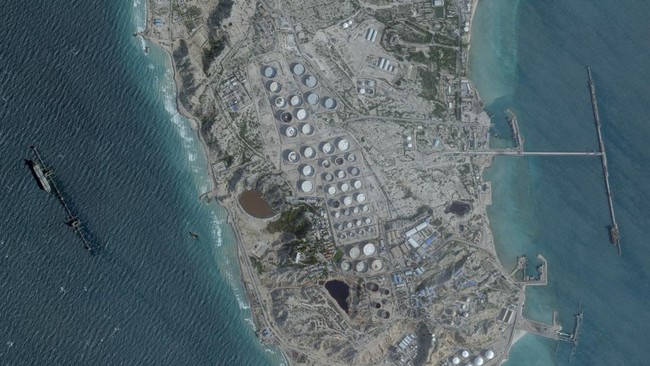
Jakarta, CNBC Indonesia - The United States (US) is reportedly preparing options for limited ground operations in Iran, a move that could expand the conflict now in its fifth week. The plans include the possibility of swift strikes on Iran’s strategic facilities, including oil export centres and coastal locations near the world’s vital shipping lanes.
According to a report by The Washington Post citing US officials, the Pentagon has been preparing ground operations in Iran for several weeks. The operations could involve strikes on Kharg Island as well as coastal sites near the Strait of Hormuz.
The plans do not reach the level of a full invasion but could involve special forces and conventional infantry operations. The report also mentions that US personnel would face risks from Iranian drones and missiles, ground fire, and improvised explosive devices.
It remains unclear whether US President Donald Trump will approve the plans. In response to the report, White House spokesperson Karoline Leavitt emphasised that developing military options is part of standard procedure.
“It is the Pentagon’s duty to make preparations to provide the Commander-in-Chief with maximum options. That does not mean the president has made a decision,” Leavitt said in a statement, quoted from Al Jazeera, on Monday (30/3/2026).
The Trump administration has also deployed US Marines to the Middle East as the conflict in Iran continues. Additionally, Washington plans to send thousands of soldiers from the 82nd Airborne Division of the US Army to the region.
On Saturday, US Central Command stated that around 3,500 additional troops had arrived in the Middle East aboard the USS Tripoli.
The sailors and Marines are from the 31st Marine Expeditionary Unit and arrived on 27 March with “transport aircraft and attack fighter jets, as well as amphibious and tactical strike assets,” according to CENTCOM.
Officials speaking to The Washington Post said discussions within the administration over the past month have included the possibility of seizing Kharg Island, Iran’s key oil export hub in the Gulf, as well as strikes on other coastal areas near the Strait of Hormuz to locate and destroy weapons that could target commercial and military shipping.
According to the report, one source said the operation’s objectives could be achieved in “weeks, not months,” while another estimated a potential timeline of “several months.”
The Pentagon has not responded to requests for comment from the media, while Iran has also not responded to the report.
The report emerges as Pakistan, which shares a 900-kilometre border with Iran, seeks to mediate between Washington and Tehran. Islamabad hosted two days of talks starting Sunday involving foreign ministers from Saudi Arabia, Turkey, and Egypt.
Meanwhile, Iranian officials have issued stark warnings. Iran’s parliamentary speaker Mohammad Bagher Ghalibaf said on Sunday that “the enemy openly sends messages of negotiation and dialogue while secretly planning a ground assault.”
“Without realising that our people are waiting for the arrival of American troops on the ground to burn them and punish their regional partners forever. Our fire continues. Our missiles are ready,” Ghalibaf said, quoted by Tasnim news agency.
“Our determination and conviction have increased. We recognise the enemy’s weaknesses, and we clearly see the impact of fear and terror in the enemy army,” he added.
It is unclear whether the statement directly responds to the Washington Post report.
On the previous Wednesday, Ghalibaf warned that intelligence reports indicated Iran’s “enemy” was planning to occupy an Iranian island with the support of an unnamed regional country. He stressed that any such effort would be met with strikes on that country’s “vital infrastructure.”
Tasnim news agency also quoted an anonymous military source saying Iran could open a new front at the entrance to the Red Sea if military action occurs on “Iranian islands or anywhere in our territory.”
The source said Iran is capable of presenting a “credible threat” in the Bab al-Mandeb Strait, located between Yemen and Djibouti.
Tasnim then quoted a “knowledgeable source” claiming that Iran-backed Yemeni Houthi rebels are ready to play a role “if needed to control the Bab al-Mandeb Strait to further punish the enemy.”