
LCGC Sales Slump as Boxy SUVs Gain Traction in Indonesia
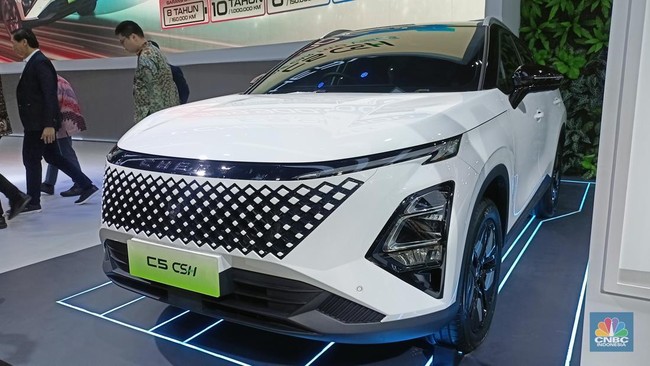
The competitive landscape of Indonesia’s car market is beginning to show change. While the Low Cost Green Car (LCGC) segment is under pressure, sport utility vehicles (SUVs) are experiencing rising sales.
Data from the Association of Indonesian Automotive Industries (Gaikindo) shows that national wholesale car sales in the first half of 2026 reached 436,564 units. That figure is up around 15.9% compared with the same period a year earlier. Amid this market growth, SUVs have become one of the segments that continues to attract consumer attention.
This situation is the opposite of what is happening with LCGCs. Throughout January–June 2026, LCGC distribution was recorded at 55,506 units, down 18.4% compared with the same period a year earlier, which reached 68,038 units. The shift in consumer taste is visible in the growing number of SUV options available in the market. Not only conventional SUVs, models with boxy body designs are also starting to receive greater attention.
“We see that the boxy SUV trend is increasing. For example, in 2024 it was only 1.6 percent. But in 2025 it rose to 6 percent,” said Irwan Nugraha Kurnia, Senior Product Manager at PT Jetour Sales Indonesia, at ICE BSD Tangerang on Monday (10/8/2026).
Boxy design has indeed become one of the differentiators that is increasingly easy to find in the SUV market. An upright body silhouette and high ground clearance make this type of vehicle offer a different appearance compared with conventional family cars.
“Consumers need a tough vehicle, one that represents ruggedness. But of course they use it for journeys not only within the city but also out of town,” Irwan said.
The change is also visible in the increasingly diverse range of SUV products in the domestic market. If previously boxy-design SUVs were more associated with premium vehicles, manufacturers are now starting to offer options across a wider range of prices and technology.
“They usually see that in a boxy SUV that is luxurious and also expensive. But of course there are now more affordable boxy SUVs that suit their needs,” he said.
Indonesian consumers are also starting to find a number of similarly styled SUVs from other Chinese brands. There is the Chery J6, which brings a boxy design with an electrification approach, the BAIC BJ40, which emphasises the character of an adventure SUV, and the GWM Tank 300, which appears with large proportions and a retro-rugged design. The presence of these models makes the choice of boxy-faced SUVs in Indonesia increasingly diverse, while also showing the growing penetration of Chinese brands in this vehicle segment.
Meanwhile, Japanese players still have a fairly strong name in this niche. The Suzuki Jimny, for example, has long been known as a small SUV with a boxy design and strong off-road character.