
LCGC Prices Already Around Rp200 Million, Will Honda Brio Satya Price Be Held or Increase?
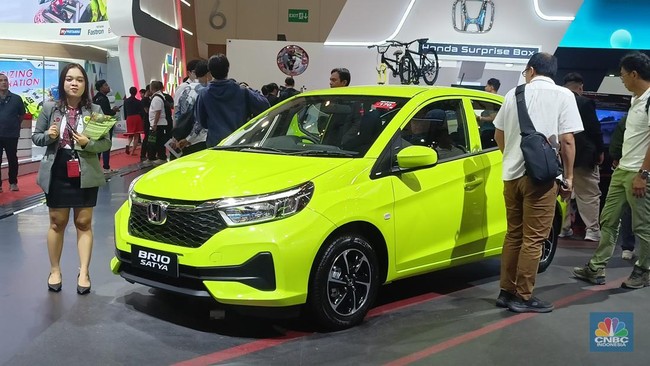
The price of eco-friendly low-cost green cars (LCGC) has surpassed Rp200 million. One model drawing attention is the Honda Brio Satya E CVT, now priced at Rp206.7 million. The question is, how long can this price be maintained to prevent further increases? Sales & Marketing and After Sales Director of Honda Prospect Motor, Yusak Billy, affirmed that the company continues to strive to balance price and the value received by consumers. “Certainly, we provide more value to consumers. So, whatever the price will be, we will discuss it internally here. What is certain is that we must see what consumers want, what the value is. So, we study it thoroughly so that consumers are not disappointed,” Billy said at the HPM Sunter office on Monday (30/3/2026). Amid cost pressures and market dynamics, Honda acknowledges that pricing decisions cannot be made unilaterally. There are regulatory factors that influence this, particularly for the LCGC segment, which has specific government rules. Under this scheme, manufacturers’ room to manoeuvre in holding prices remains within the corridor of government policy. This means that even as production cost pressures continue to rise, the final decision still goes through an approval mechanism. “Yes, yes. Because the Brio Satya’s price is regulated by the government, we propose something like that. So everything is based on approval,” he continued. When it was first launched in Indonesia in 2013, the Brio Satya emerged as one of the backbones of the LCGC programme with a much more affordable price tag, still in the range of Rp100 millions. That position made it quickly accepted by the market as an entry-level car targeting first-time buyers. Over time, various adjustments have occurred, from feature enhancements and safety standards to production cost pressures and exchange rate values. The price has gradually climbed to nearly double its initial tag.