
Layoff Storm Threatens Textile and Tobacco Industries
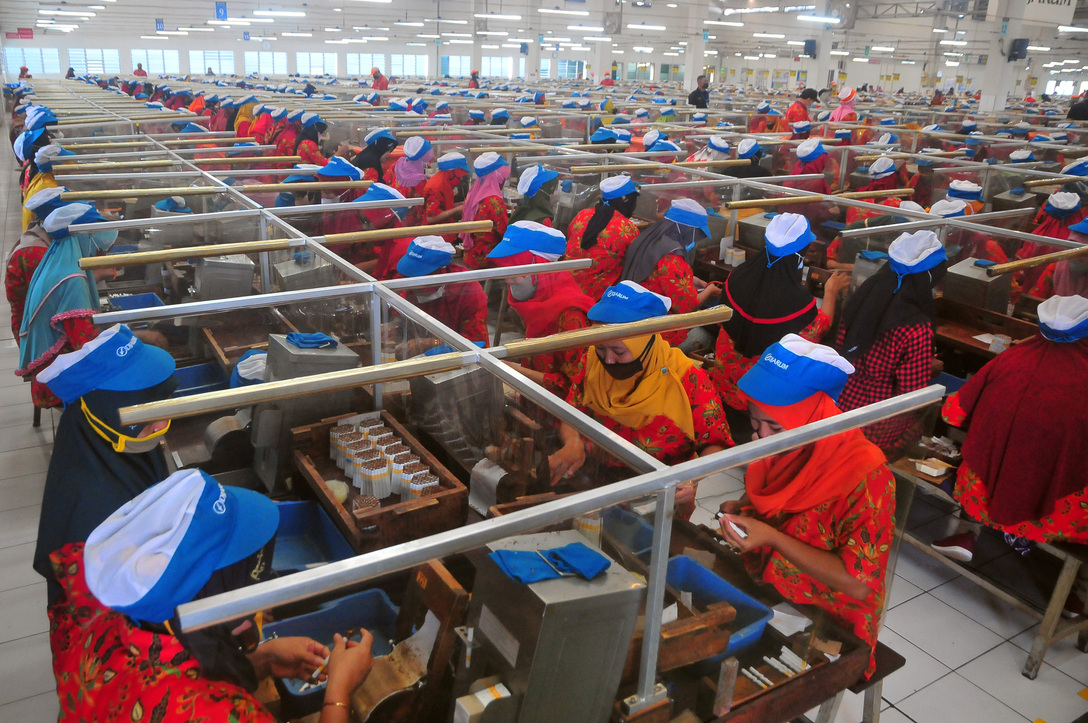
A wave of layoffs has struck several sectors this year, with textiles and textile products (TPT) being the hardest hit. The Indonesian Filament Yarn and Fibre Association (APSyFI) stated that the recent rupiah depreciation has further pressured the cash flow of several domestic upstream textile companies. APSyFI Chairman Redma Gita Wirawasta said the weakening rupiah has triggered a rise in the price of raw materials, the majority of which are imported. Companies have also terminated many contract workers. “To manage their cash flow and keep it turning, many companies have reduced purchases of raw materials and production. It has not yet reached the stage of permanent layoffs, but many contract workers have been let go,” he said in a statement quoted on Wednesday (24/6). The worrying state of the national economy, particularly the financial sector, has recently caused many textile industries in West Java to collapse. The province has become the area with the worst layoff rate in Indonesia, contributing more than 21% of national layoff cases. According to data from the Ministry of Manpower, 23,470 workers became unemployed during January-May 2026 alone. This number is expected to continue rising over the next three months if economic conditions do not improve significantly. The dismissal storm also threatens to spread to other strategic sectors. The latest are the processing (manufacturing), retail, and tobacco products industries (IHT). Statistics Indonesia (BPS) recorded that in Q1 2026, the tobacco industry contracted with growth of -4.05% year-on-year, continuing a decline of 4.97% yoy in the previous quarter. Two other contracting sectors were the transport equipment industry (-5.02%) and the rubber, rubber goods and plastics industry (-9.01%). Novita Hardini, a member of House of Representatives Commission VII overseeing industry and SMEs, called the tobacco industry a strategic sector that contributes hundreds of trillions of rupiah to the state while sustaining millions of people. “Therefore, policies towards the tobacco sector must be implemented in a balanced manner because IHT is not merely a consumption industry, but a national strategic sector that supports a long economic chain from upstream to downstream,” said Novita. BPS recorded that the tobacco processing industry absorbs 1.58 million workers across micro, small, medium and large-scale enterprises. This figure excludes its supporting ecosystem, such as farmers and retail, which according to Ministry of Industry data could total 6 million workers. Amid pressure from financial market conditions, the tobacco industry feels threatened by various planned regulatory tightenings in the health sector. The latest is the Ministry of Health’s plan to implement plain packaging without branding, limits on nicotine and tar, and a ban on cigarette flavouring substances. Plain packaging is said to trigger a rise in illegal cigarettes that will erode the legal cigarette market. This situation is considered likely to cause a decline in legal cigarette production. Meanwhile, tar and nicotine limits are deemed impossible for local farmers to meet, alongside the ban on cigarette flavourings. Almost all elements within the tobacco sector ecosystem have voiced rejection of all these planned regulatory tightenings. Henry Najoan, Chairman of the Indonesian Cigarette Manufacturers Association (GAPPRI), rejected and demanded the cancellation of the plain packaging policy discourse in the draft Minister of Health Regulation. Henry noted that in 2019, when excise tariffs did not increase, national cigarette production reached 357 billion sticks. However, throughout 2020-2025, production figures continued to shrink, including a 3% decline in 2024-2025. “Increasingly strict regulations have the potential to encourage the circulation of illegal cigarettes. Ultimately, this condition will actually harm the state and create distortions in the market,” said Henry. Similar rejection has also come from other groups, including farmers, traders, and retail players. They demand that unbalanced and subjective non-fiscal policies be cancelled because they will only bring negative impacts to the tobacco industry.