
Lawyer Challenges Social Organisations Law at Constitutional Court, Claiming Foundation Regulations Should Not Apply to Foundations
“Peace is not merely the absence of war. It is a virtue,” wrote philosopher Baruch Spinoza.
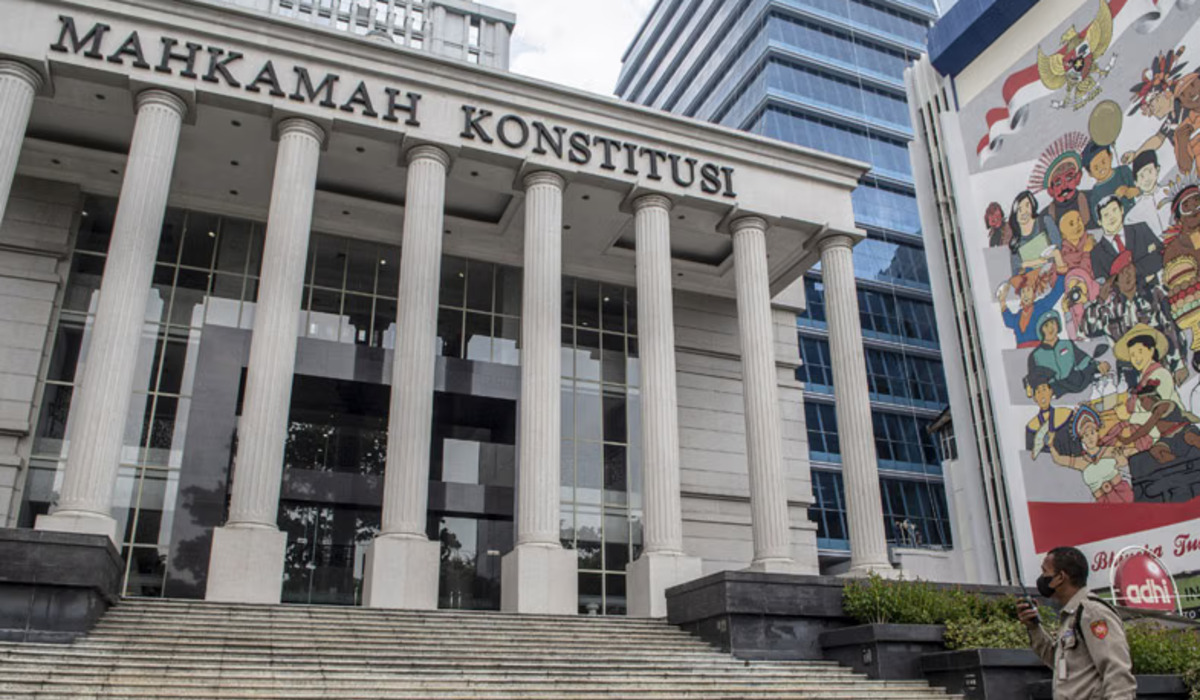
An advocate has challenged the Social Organisations Law (UU Ormas) at the Constitutional Court (MK) because he believes that regulations meant solely for social organisations are being applied to foundations as well.
Advocate Viktor Santoso Tandiasa has filed a material review against Article 59 of Law No. 16 of 2017 on Social Organisations. He questions the application of that article, which he deems to exceed its bounds by being used against foundations.
According to Viktor, Article 59 of the Ormas Law contains prohibitions for social organisations, such as the use of certain names, symbols, or attributes that are not permitted. However, in practice, those rules are also applied to foundations, which should be regulated under a different law.
“If the Constitutional Court does not provide a constitutional interpretation to exclude foundations from that article, it will create a legal precedent where every restriction on social organisations can be forcibly applied to foundations,” Viktor stated during the MK hearing on Wednesday (1/4/2026).
He explained that legally, social organisations and foundations are two different entities. Social organisations are regulated under the Ormas Law, while foundations are regulated under the Foundations Law.
The issue arose when the Directorate General of General Legal Administration (Ditjen AHU) of the Ministry of Law and Human Rights rejected his foundation’s name application, namely the Constitutional Rights Defenders Foundation, on the grounds that it violated Article 59 of the Ormas Law.
“The application of Ormas Law norms to foundations creates a blurring of boundaries between legal regimes, which contradicts the principle of legal certainty,” said Viktor.
According to him, if this is allowed to continue, the government could easily apply rules from one law to another without clear boundaries.
In addition, Viktor claimed to have suffered material losses due to the registration fees he had already paid being forfeited as a result of the rejection.
He believes that the prohibitions in Article 59 of the Ormas Law should be interpreted narrowly and not extended to other entities such as foundations.
In his petition, Viktor requests that the MK declare Article 59 paragraph (1) of the Ormas Law conditionally contrary to the 1945 Constitution, namely insofar as it is not interpreted as “not applicable to foundations”.
On that occasion, Constitutional Court Justice Arsul Sani said that the petitioner should clearly elaborate the arguments and reasons for excluding foundations from the provisions of Article 59 paragraph (1) of the Ormas Law. Because, referring to Article 11 of Law No. 17/2013 on Social Organisations, social organisations with legal entity status may take the form of associations or foundations.
“Why must foundations be excluded, because if foundations are excluded, then that article would only apply to social organisations with legal entity status in the form of associations, and it should also apply to social organisations without legal entity status,” said Arsul.