
Lawmakers and Practitioners Push for Complaint Post to Prevent Human Trafficking
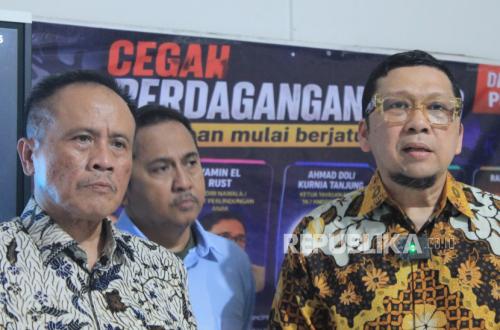
Member of the Indonesian House of Representatives and Chairman of the Perhimpunan Insan Cita (PELITA 16), Ahmad Doli Kurnia, is pushing for the establishment of a TPPO (Human Trafficking) Complaint Post. This initiative aims to strengthen prevention efforts while providing assistance to victims. He stated that human trafficking is a serious issue requiring collaboration between the government, law enforcement, the community, and various stakeholders.
Ahmad Doli expressed his concern over the alleged case of four residents from Semper Barat, North Jakarta, who became victims of TPPO in Cambodia. He assessed that this case serves as a warning that human trafficking remains a real threat and requires more concrete preventive measures. “We need to create a post to help the community if they experience TPPO,” said Ahmad Doli. According to him, the Complaint Post could serve as a centre for information, consultation, and assistance for people facing human trafficking issues. He also reminded school graduates and job seekers not to be easily tempted by offers to work abroad without clear procedures.
Furthermore, Doli emphasised that the House of Representatives continues to push for the completion of the Draft Law on the Protection of Indonesian Migrant Workers. The goal is to make the placement process easier, faster, and to provide stronger legal protection from pre-departure until return to Indonesia. “Besides the economic loss due to high costs, the social losses are also significant,” he said.
Meanwhile, social observer Radian Azhar highlighted the substantial economic impact of human trafficking. He noted that Indonesia ranks third as a source country for TPPO victims in Southeast Asia. While remittances from Indonesian migrant workers reached approximately Rp253.3 trillion in 2024, many non-procedural workers remain vulnerable to becoming trafficking victims. Radian argued that TPPO is not only a humanitarian issue but also a national economic problem, as the state loses potential foreign exchange and must bear large costs for repatriation, rehabilitation, and victim protection. He calculated that if 50,000 migrant workers depart through illegal channels, with each capable of sending an average of Rp20 million per year, the potential foreign exchange loss could reach Rp1 trillion. Furthermore, the cost of repatriation, rehabilitation, and shelter for thousands of victims could burden the state budget by an estimated Rp57 billion to Rp152 billion, excluding law enforcement operations and care for victims with chronic illnesses.
Radian also highlighted the prevalence of high-salary job offers in Cambodia targeting young people. Victims are promised administrative roles with salaries around Rp15 million per month, but upon arrival, their passports are confiscated, and they are forced to work up to 16 hours a day, often facing torture. He stressed that TPPO must be viewed as an extraordinary crime because the losses far exceed the visible economic value. To mitigate these losses, Radian proposed five strategic steps: creating jobs in migrant worker source regions, expanding digital registration for migrant workers through official applications, mandating insurance and savings for migrant workers, designating TPPO as an extraordinary crime with severe penalties and asset seizure, and strengthening public campaigns. He added that with a 2025 remittance target of Rp433.3 trillion, if 10 percent of workers still use illegal channels, the potential state loss could reach around Rp43 trillion.
Source: jawawa.id (https://jawawa.id/newsitem/lawmakers-and-practitioners-push-for-complaint-post-to-prevent-human-trafficking-1786074738)
Originally published by Republika (https://news.republika.co.id/berita/tjdqei430/anggota-dpr-dan-praktisi-dorong-pembentukan-posko-pengaduan-untuk-cegah-tppo), translated from Indonesian