
Lawmaker urges stronger education system for juvenile inmates in LPKA
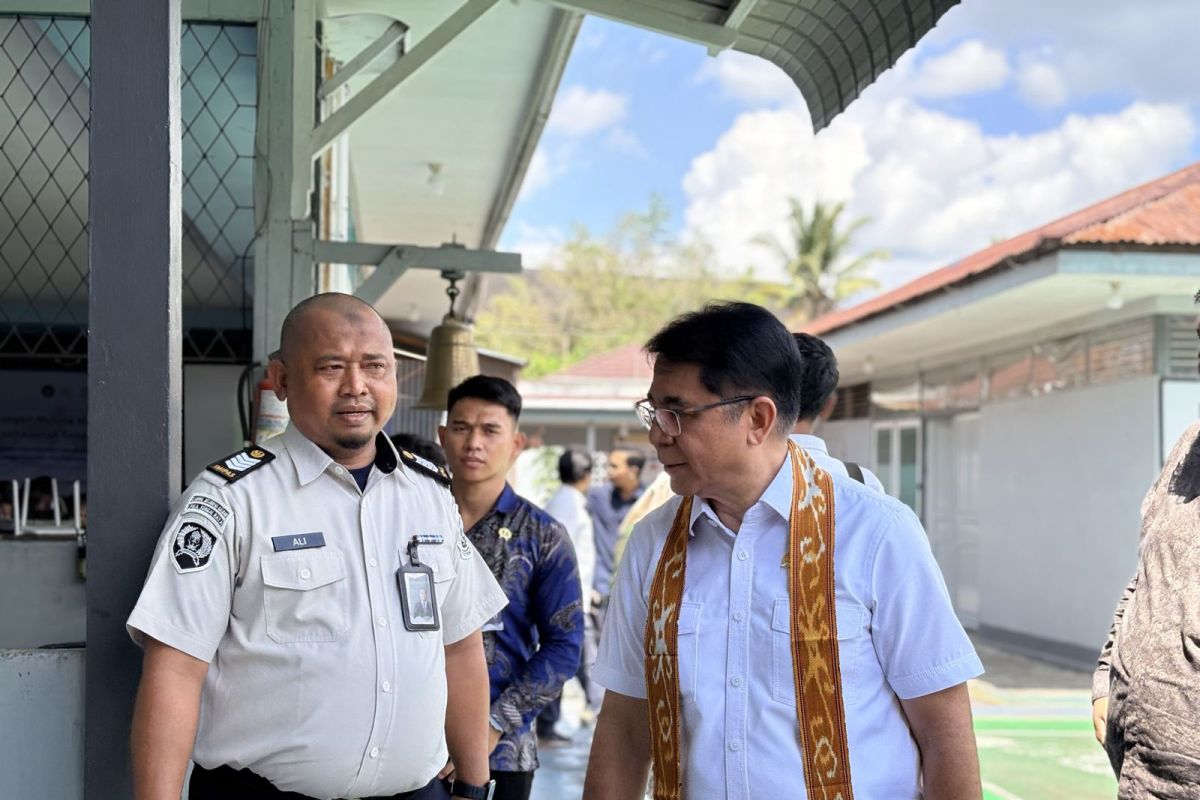
Member of Commission XIII of the Indonesian House of Representatives (DPR RI), Franciscus Maria Agustinus Sibarani, has urged the strengthening of education for juvenile inmates through the direct provision of learning activities within the Special Child Development Institution (LPKA). “I see the need for stronger support so that education can be facilitated directly inside the LPKA. Apart from reducing various obstacles, this step also creates a more conducive learning environment,” Sibarani stated in Jakarta on Friday. The remarks followed his working visit to the Class II LPKA in Sungai Raya, Kubu Raya Regency, West Kalimantan, where he inspected the implementation of educational programmes for juvenile inmates and engaged in dialogue with administrators and students. “If the children have to pursue education outside, the adaptation process is not easy for either party. The children must adjust to a new environment, while the educational institutions also have to adapt to their special conditions,” he said. Beyond social adaptation challenges, the mobility of inmates to and from external educational locations also carries risks that are often overlooked. On this basis, Sibarani recommended that the Ministry of Immigration and Corrections strengthen educational schemes conducted directly within the LPKA environment through closer cooperation with local governments and educational units. He assessed that this approach also yields positive psychological impacts. When some juvenile inmates are actively learning, it can serve as contagious motivation for others to prepare for their future. He further stressed that the state must not stop educating children simply because they are undergoing rehabilitation in a special child development institution. Sibarani acknowledged the existence of the Sanggar Kegiatan Belajar (SKB) under the auspices of the Education Office, which has partnered in providing education at LPKA, but emphasised that existing support still needs significant reinforcement. He asserted that the primary goal of juvenile rehabilitation is not merely to serve a sentence, but to ensure they return to society equipped with education, skills, and improved character. He therefore encouraged stronger synergy between the Ministry of Immigration and Corrections, local governments, education offices, and all stakeholders to realise this objective. “Every child deserves a second chance. Education is the most crucial instrument to ensure they can grow, develop, and contribute positively to society again,” Sibarani concluded.