
Law Must Deliver Justice Protecting the Vulnerable, Says Yusril
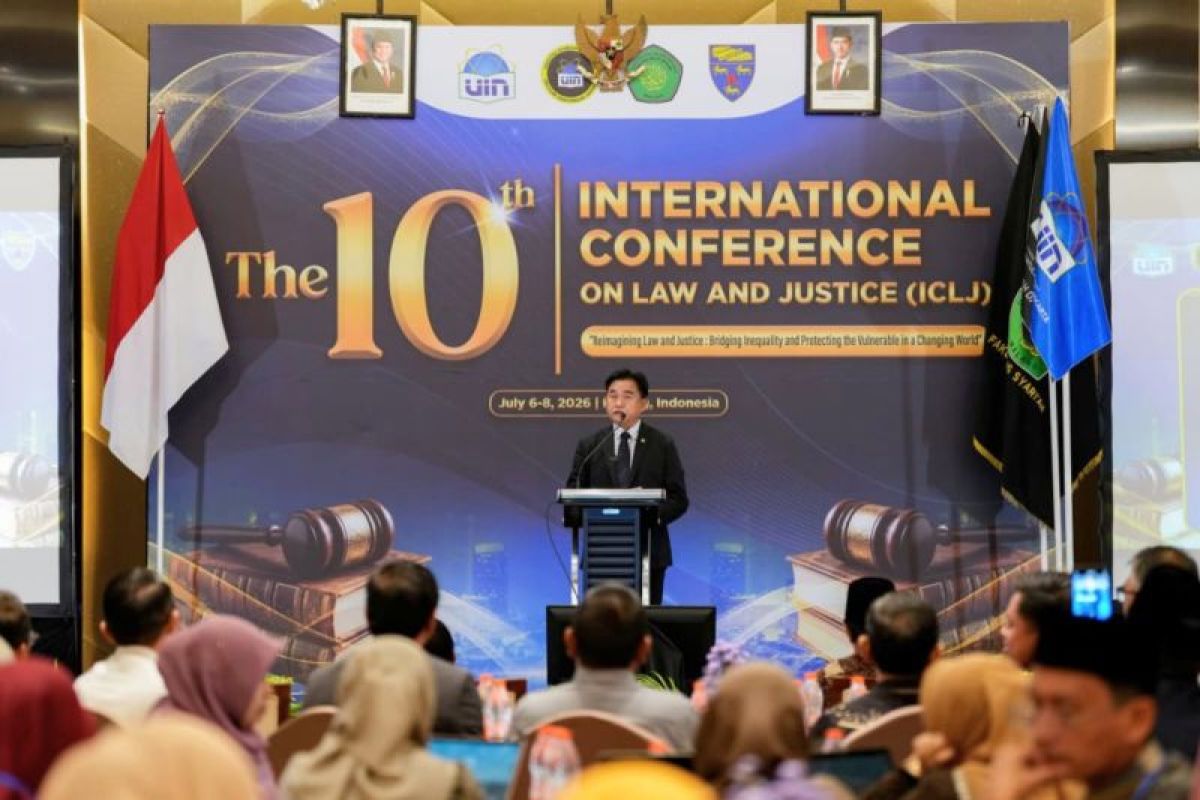
Coordinating Minister for Law, Human Rights, Immigration, and Corrections Yusril Ihza Mahendra has stated that the law must be capable of delivering justice that protects human dignity, especially for vulnerable groups. At the opening of the 10th International Conference on Law and Justice (ICLJ) 2026 in Malang, East Java, on Tuesday (7/7), Yusril emphasised that the law must not stop at the text of regulations and procedures. ‘Legal certainty and procedure are the foundation of a state of law, but the law must not lose its ethical dimension because ultimately the law governs human beings with all their problems and limitations,’ Yusril said, as confirmed in Jakarta on Wednesday. Yusril explained that articles regulate actions, but it is human beings who are regulated. Likewise, procedures tend to govern processes, but those undergoing the process are individuals who have fears, hopes, limitations, and often suffer. Therefore, the success of the law is not only measured by the existence of rules, but by the law’s ability to provide real protection for society. If the law only functions well for people who have power, education, and access, he said, it cannot yet be considered justice. Yusril explained that changing times present new challenges for the legal system, ranging from social inequality, migration, the development of digital technology, to artificial intelligence. ‘Because of that, the law must continue to adapt without losing the principles of justice and humanity,’ he said. He added that criminal law reform through Law Number 1 of 2023 concerning the Criminal Code and Law Number 20 of 2025 concerning the Criminal Procedure Code is part of an effort to build a legal system that is not only oriented towards punishment, but also restoration. He stressed that criminal law reform is not merely about replacing the code of laws; rather, this reform is an effort to change the face of the law from a system more focused on punishment towards a legal system that also aims to restore. Yusril also affirmed that the restorative justice approach does not mean eliminating legal accountability, but rather ensuring that victim recovery, offender responsibility, and the repair of social relations remain part of the justice process. In addition, he also highlighted the development of artificial intelligence (AI), which must remain controlled by ethics and human consideration. ‘Artificial intelligence can help judges search for patterns of rulings, but AI must not replace a judge’s conscience. Technology should submit to the principles of human ethics, not the other way around,’ Yusril said. On the other hand, he also encouraged academics to present legal studies that stem from the real problems of society. He argued that the law must be able to bridge legal certainty with substantive justice so that its benefits are truly felt by all citizens. Yusril expressed hope that the 10th ICLJ could become a space for collaboration between academics, legal practitioners, and policymakers in strengthening an inclusive and just legal system. An advanced state of law is not the state that punishes most harshly. ‘An advanced state of law is the state most capable of limiting its own power, most effective in protecting the weak, and most honest in admitting when its system is not yet functioning properly,’ he said. The conference, themed ‘Reimagining Law and Justice: Bridging Inequality and Protecting the Vulnerable in a Changing World’, discussed the challenges of law and justice amidst social, technological, and global dynamic changes.