
Law Ministry to Review Tariffs for Citizenship Services Following Public Outcry
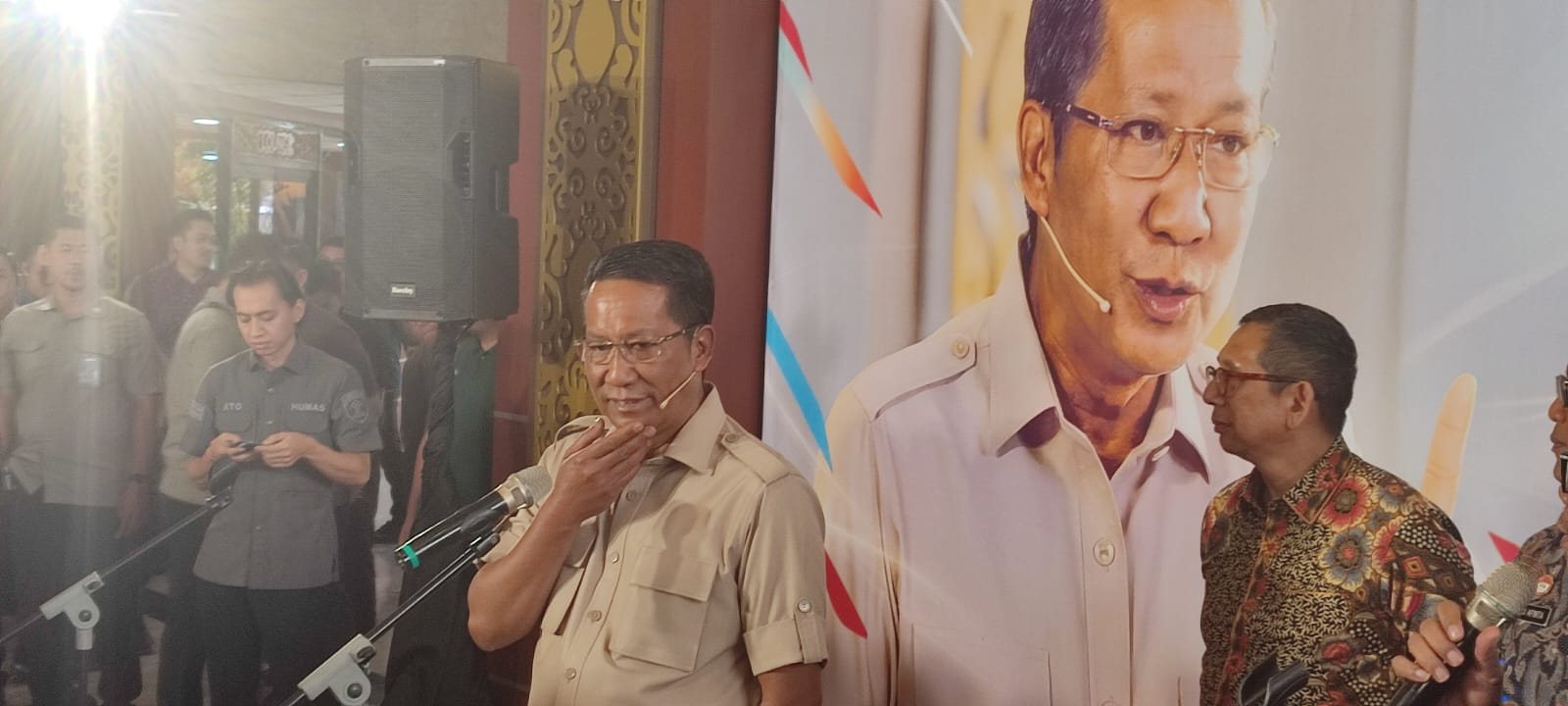
Minister of Law Supratman Andi Agtas has confirmed that the Ministry of Law will re-evaluate a number of service tariff increases that have drawn public scrutiny, including those related to citizenship services and notary regulations. The evaluation follows the government’s receipt of various inputs from the public.
During a press conference at his office in Jakarta on Friday (24/7), Supratman stressed that the tariff increases were not a sudden decision. According to him, all proposals had undergone a very lengthy study process, comparing similar policies in various countries.
“Everything we have done, everything we have proposed, has gone through a very, very long study,” Supratman said.
Nevertheless, he acknowledged that the government still needs to listen to the public response. In the near future, he will hold a meeting with the Directorate General of General Legal Administration (AHU) to review a number of tariffs that have become a concern.
“Therefore, I will hold another meeting to evaluate matters raised by the public, both regarding citizenship and other tariffs,” he said.
Supratman explained that the tariff adjustments were made in line with the Ministry of Law’s efforts to build a better, digitally-based service system. He dismissed the notion that the tariff increases were intended to pursue state revenue.
“The Ministry of Law is building a system that will ultimately be aimed at serving the public. The state is certainly not seeking profit; that is not the goal at all,” he stated.
According to him, if there is a spike in costs during the initial phase of implementing digital services, the government will review it again. All inputs will be discussed internally before further steps are decided.
In explaining the citizenship service tariff policy, Supratman asked the public to look at practices implemented in other countries. He cited examples where, in several countries, applicants must pay from the application stage, even if the application is not necessarily approved. Meanwhile, in Indonesia, payment is only made after the application is granted.
He also touched upon policy differences in various countries. The United States, for example, imposes an exit tax on citizens renouncing their citizenship, whereas Japan waives the fee. In Singapore, administrative costs are relatively low, but there are still other cost components that must be borne by the applicant.
Supratman emphasised that the policy is not intended to burden people who wish to relinquish their Indonesian citizenship. According to him, the tariff setting is carried out so that the service burden is not borne by only one group of people.
“Solely because this one service component must not be charged to just one party; we cross-subsidise. There are those we exempt, those whose tariffs we set to zero, and of course there are new ones, so it must be balanced as well,” he said.
In addition to citizenship matters, Supratman also explained the regulation of fees for notary relocation, particularly to Jakarta. The policy, according to him, is not to restrict the notary profession but to ensure a more even distribution of notaries across various regions while preventing potential abuse of authority in the relocation process.
He said the relocation of a notary depends entirely on the approval of the professional organisation, namely the Indonesian Notaries Association (INI). On the other hand, the high cost in Jakarta also considers the different operational consequences compared to other regions.
Supratman asserted that he takes full responsibility for the policy proposal. If an error is found in the tariff-setting process, he is ready to make corrections through an evaluation that will be held soon.
“If there is a mistake, the one who is wrong is me as the minister in a position of not checking,” Supratman said.
It is known that the government issued Government Regulation (PP) Number 30 of 2026, which regulates new types and tariffs of Non-Tax State Revenue (PNBP) within the Ministry of Law. The regulation, enacted on 2 July 2026 and effective from 1 August 2026, replaces PP Number 45 of 2024.
The regulation sets the tariff for citizenship or naturalisation applications for foreign nationals at Rp75 million for the general route and Rp25 million through the marriage route. Additionally, the fee for relocating a notary’s jurisdiction to Jakarta is set at up to Rp500 million. Meanwhile, the application for a decree on the loss of citizenship at one’s own request is Rp5 million.
On the other hand, the government also provides a Rp0 tariff or free service for the poor, underprivileged groups, and micro and small business operators under certain conditions.
Source: jawawa.id (https://jawawa.id/newsitem/law-ministry-to-review-tariffs-for-citizenship-services-following-public-outcry-1784875831)
Originally published by Media Indonesia (https://mediaindonesia.com/politik-dan-hukum/914299/kemenkum-bakal-evaluasi-aturan-soal-tarif-status-wni), translated from Indonesian