
Law Minister Trials E-Voting for Regional Office Head Selection in East Java
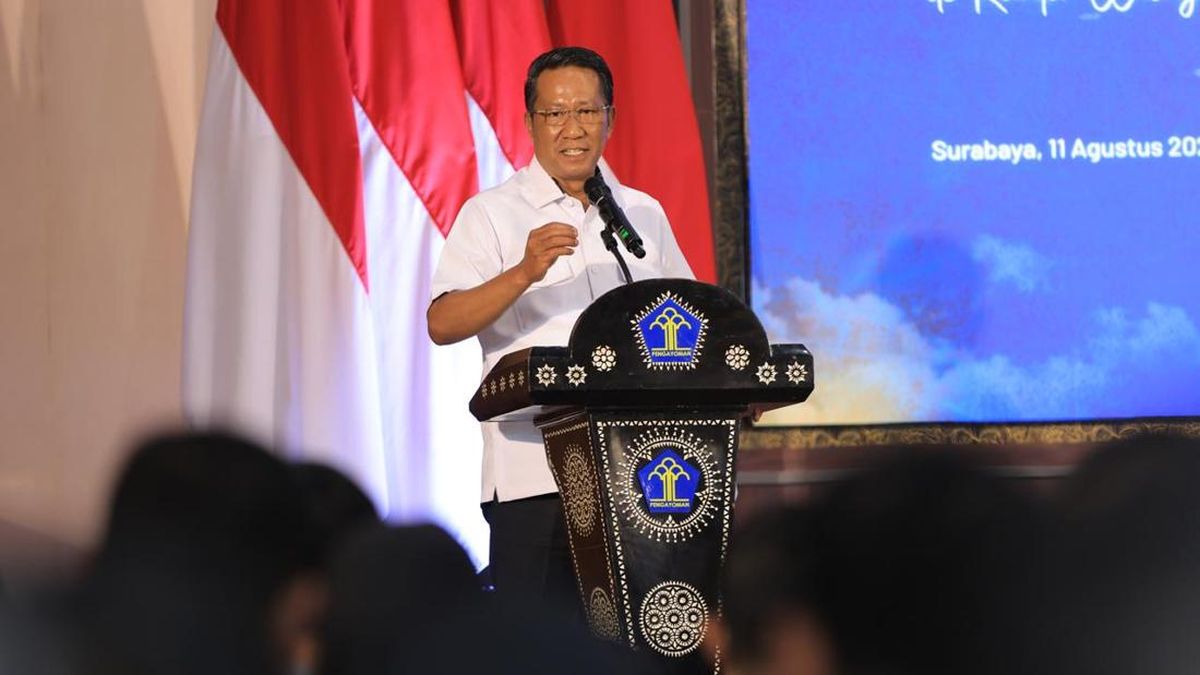
Indonesian Law Minister Supratman Andi Agtas has conducted a trial of electronic voting (e-voting) at the Ministry of Law’s Regional Office in East Java, involving employees in the process of determining suitable candidates for leadership positions. This initiative represents a new approach by the Ministry in filling bureaucratic posts, forming part of its digital transformation efforts while aiming to strengthen transparency and the application of talent management in the appointment process.
The Minister emphasised that e-voting is not intended to replace the existing bureaucratic system. Instead, he described the mechanism as a delegation of the minister’s authority to provide employees with a participatory space in determining candidates for office. ‘This e-voting is an effort to strengthen the structure in regional offices, especially for those who will be entrusted as managerial officials, whether as Regional Office Head or other positions,’ Supratman stated in an official release on Tuesday (11/8).
He reminded that the implementation of e-voting does not eliminate the structure, functions, duties, or authorities regulated within the government system. The Minister added that he has signed a Ministerial Decree concerning the formation of a Talent Committee at both the central and regional office levels. At the central level, the Talent Committee is chaired by the Secretary General of the Ministry of Law, and its presence is expected to ensure that the appointment process is conducted transparently, based on qualifications and employee track records.
‘The most important thing is transparency in the recruitment of those who can fill certain required positions,’ he explained. Secretary General of the Ministry of Law, Nico Afinta, added that technological developments must be utilised to build faster, more precise, and accountable governance. He noted that the Minister’s digital transformation programme aims to serve both the public and internal stakeholders swiftly and accountably.
Nico explained that the Ministry has developed several digital systems to support human resource management, including the Satria system, which allows employees to submit data regarding competencies, achievements, and track records as part of the talent management development process. The e-voting programme is designed to map employees with potential and achievements for consideration in filling specific positions. He expressed hope that all employees would exercise their voting rights freely and without pressure in selecting candidates deemed capable of carrying out leadership duties.
Supratman described the e-voting trial in Surabaya as an experimental step to find a new model for the appointment process within the government. He admitted to searching for references on whether a similar mechanism had ever been applied in selecting structural officials in government organisations. The results from East Java will serve as evaluation material to determine whether the mechanism is suitable for expansion. ‘If this is successful, then of course it can be used as a basis that in the future this can be implemented throughout the Ministry of Law,’ he said.
Despite giving employees a say, Supratman assured that the elected officials must still comply with all rules and regulations applicable to civil servants. He stressed that candidates included in the e-voting process are not arbitrary selections, as all have undergone assessment and met qualifications within the Ministry’s talent management framework. The success of the system, he noted, will ultimately be determined by the ability of all organisational elements to build effective working relationships. The East Java trial is expected to be a first step towards more participatory, transparent, and competency-based bureaucratic governance.